 How-to
Pressure Washing Mold Off Stucco: Safe Steps That Work
Last Updated: November 7, 2026
Quick Summary
Yes, pressure washing stucco to remove mold is possible, but only with low pressure and the right technique. A direct blast from a standard wand will crack the surface, force water behind the wall, and spread spores instead of removing them. The safe method is a gentle rinse paired with a cleaning solution that kills mold at the root.
- On synthetic or painted stucco, even 1,500 PSI at close range can etch the finish.
- Apply cleaning solution from the bottom up, let it dwell, then rinse top down.
- Soft washing uses low pressure and a cleaning solution to kill mold at the source.
- A garden hose, soft brush, and good cleaner handle most jobs without a pressure washer.
- Never mix bleach with ammonia or other cleaners, which creates dangerous fumes.
Table of Contents
- Can You Pressure Wash Mold Off Stucco? The Honest Answer
- Mold, Algae, or Dirt? Identify the Stain Before You Spray
- How to Clean Stucco With a Pressure Washer Without Cracking It
- How to Soft Wash Stucco: The Method Most Pros Use
- How to Clean Stucco Without a Pressure Washer
- Choosing the Best Exterior Stucco Cleaner and Mixing It Safely
- Protecting Plants, Pets, and Runoff Before You Start
- Common Mistakes That Damage Stucco and Spread Mold
- Frequently Asked Questions
Can You Pressure Wash Mold Off Stucco? The Honest Answer
Yes, pressure washing stucco to remove mold is possible, but only with low pressure and the right technique. A direct blast from a standard wand will crack the surface, force water behind the wall, and spread spores instead of removing them. Stucco is a delicate surface, not a driveway. The safe method is a gentle rinse paired with a cleaning solution that kills mold at the root. Below, we show you exactly how to do it without wrecking your exterior walls. But first, here is what most guides get wrong: they talk about pressure when they should be talking about chemistry and dwell time.
Mold, Algae, or Dirt? Identify the Stain Before You Spray
Mold is a fungus that grows in damp, shaded spots and usually looks black or dark green. Algae is a green, powdery growth that loves humidity. Mildew is a lighter, powdery fungus that spreads in thin layers. Plain dirt and dust settle evenly and rinse away easily.
Here is how to tell them apart before you spray:
- Black or dark blotches that cling: likely mold
- Green streaks on the north wall: algae
- White or gray powder: mildew
- Brown, even film that washes off: ordinary dirt
This matters because mold needs a treatment that kills it. Blasting the surface with water alone just spreads spores. Watch out: spraying mold without killing it first can push it into the porous surface, and it will return within weeks. The U.S. Environmental Protection Agency's mold guidance explains why moisture control matters more than cleaning alone.
How to Clean Stucco With a Pressure Washer Without Cracking It
The safe process takes patience, not force. Stucco is a porous, textured surface, and high pressure drives water into cracks and behind the wall.
Assess the stucco type and condition first:
- Hard-coat (traditional) stucco: Cement-based and the most pressure-tolerant, but still porous. Small hairline cracks are common and let water in.
- Synthetic (EIFS) stucco: A thin acrylic finish over foam. It dents, chips, and delaminates under pressure and is the least forgiving.
- Painted stucco: Check for chalking, peeling, or blistering. Pressure strips failing paint and drives water behind the coating.
- Previously sealed stucco: A sealer can trap moisture if applied over damp walls; pressure can break the film and create patchy failure.
- Cracked or crumbling stucco: Do not pressure wash. Water intrusion worsens spalling and feeds mold inside the wall.
If you find soft spots, widespread cracking, or bubbling paint, stop and treat the wall as a repair job, not a cleaning job. A common pattern is homeowners pressure washing a wall that needed patching first, then watching mold return within weeks.
Once the surface passes inspection, follow these steps:
- Pre-wet the wall and nearby plants with plain water to reduce chemical shock.
- Apply a cleaning solution from the bottom up so it does not streak.
- Let it dwell for the time the label states, usually a few minutes.
- Rinse with low pressure from the top down.
- Work in small sections so the solution never dries on the surface.
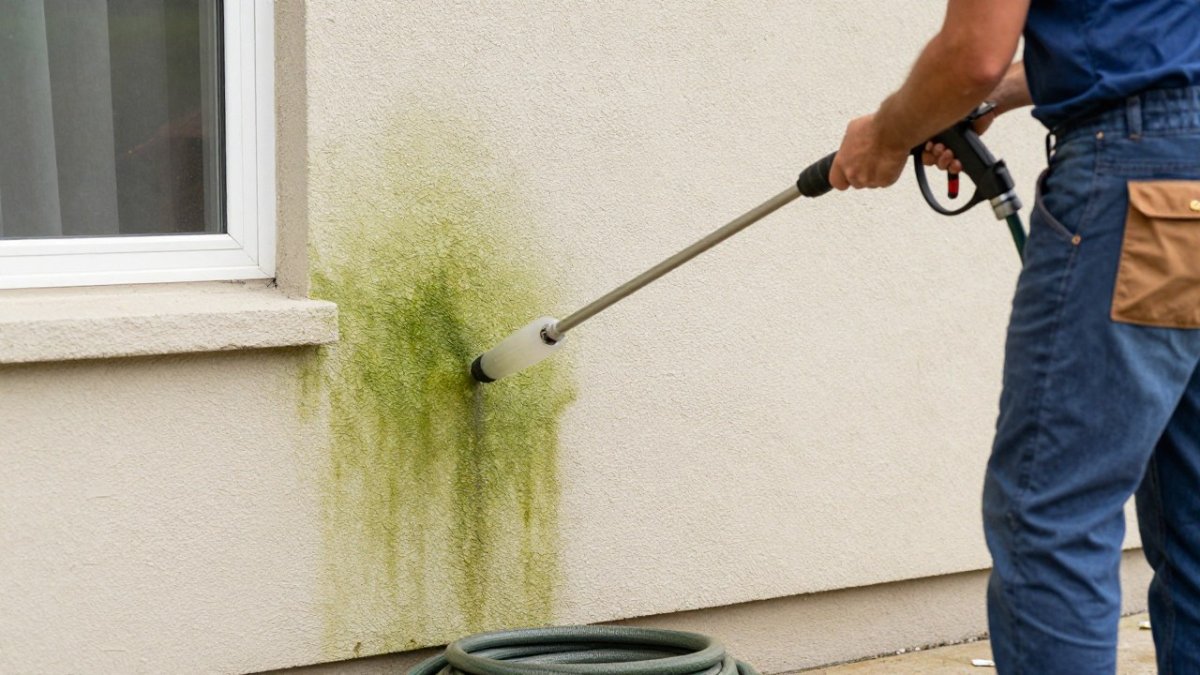
The key is distance and a wide fan. Never hold the nozzle close to the wall.
PSI, Nozzle, and Safe Distance Settings
Keep pressure as low as the surface allows, and lower is better. Use a wide-angle nozzle rather than a pinpoint tip, and hold the wand well back from the wall. Always run a surface test on a hidden patch first. If the stucco is painted, check for chalking or peeling before you start. For tougher stains, the right pressure washing equipment for stubborn stains makes a real difference, but pressure alone still will not fix mold. A common mistake is turning up the PSI to save time. That is exactly how cracking and paint stripping begin.
Watch out: on synthetic or painted stucco, even 1,500 PSI at close range can etch the finish. Start at the lowest setting your machine allows and increase only if the surface test shows no damage.
Here is the safe sequence the article lays out, from pre-wetting to rinsing.
| Step | What to do |
|---|---|
| 1 | Pre-wet the wall and nearby plants with plain water |
| 2 | Apply cleaning solution from the bottom up |
| 3 | Let it dwell for the label time, usually a few minutes |
| 4 | Rinse with low pressure from the top down |
| 5 | Work in small sections so solution never dries |
How to Soft Wash Stucco: The Method Most Pros Use
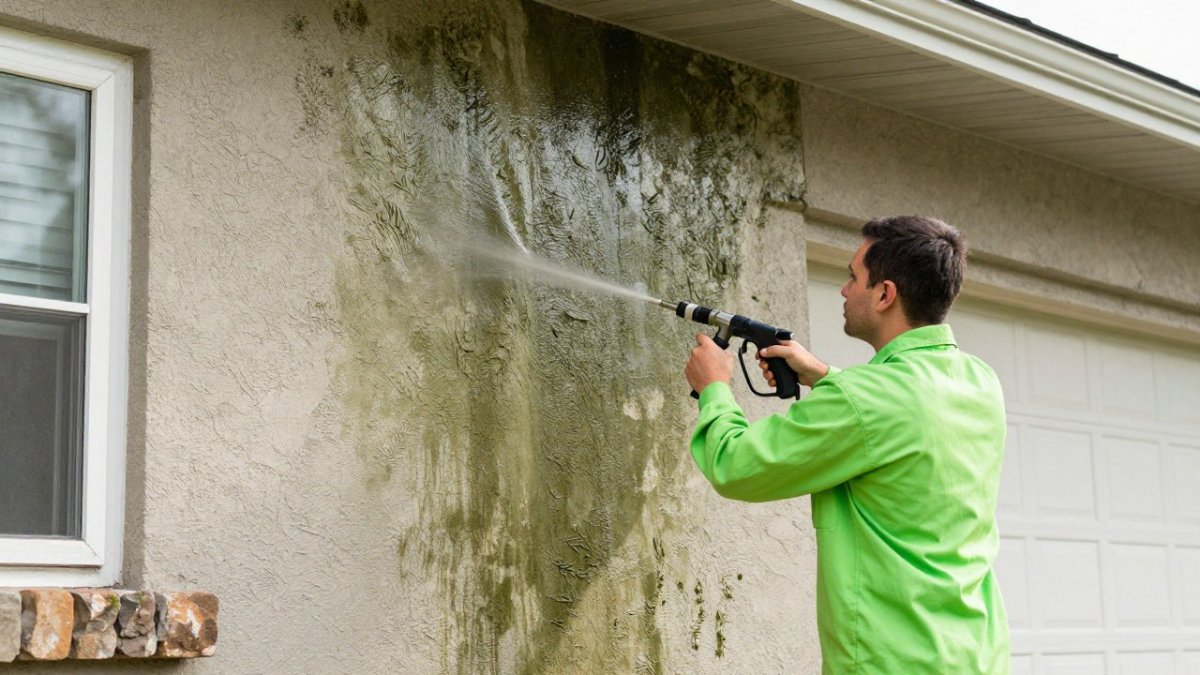
Soft washing is the safest way to approach pressure washing stucco. It uses low pressure and a cleaning solution to do the work. Pros apply the mix, let it dwell, then rinse gently. This method kills mold and algae at the source instead of just knocking off the top layer.
The steps:
- Mix a solution of water, detergent, and a mildew treatment.
- Apply from the bottom up with a soft-wash nozzle.
- Dwell for the label time, then rinse top down.
- Repeat on heavy growth after a few days.
If you want to see how gentle methods compare to high pressure on delicate siding, read soft washing vs. pressure washing before you decide.
How to Clean Stucco Without a Pressure Washer
You do not need a pressure washer at all. A garden hose, a soft brush, and a good cleaner handle most jobs. This is the safest route for painted stucco or older walls.
Here is the no-machine approach:
- Wet the wall with a hose.
- Apply your cleaning solution with a pump sprayer or brush.
- Scrub lightly with a soft-bristle brush on textured spots.
- Rinse with the hose from the top down.
- Let it dry and check for missed patches.
It takes longer, but it is nearly impossible to damage the surface. For homeowners worried about cracks, this is the smart first move. A soft brush and steady rinse remove algae and light mildew without any risk of water intrusion.
Choosing the Best Exterior Stucco Cleaner and Mixing It Safely
The best exterior stucco cleaner is one made for masonry: a detergent plus a mildew treatment, mixed to the label ratio. Never guess the strength. Too much bleach strips paint and harms plants. The gap most guides leave is the actual ratio and dwell time, so here is safety-qualified guidance you can act on, always subordinate to the product label.
A common, safety-qualified starting mix:
- Water: the base for dilution. Start with a mild mix and follow the label for the right strength.
- Laundry soap or masonry detergent: lifts dirt and grime. A few ounces per gallon is typical.
- Bleach or a mildew treatment: kills mold and algae. Use the label dilution, and never stronger than the label allows.
Always add the treatment to water, never the reverse. Follow the label dwell time, typically a few minutes and often no more than 10 to 15 minutes before the solution dries. Test on a hidden patch first: apply, dwell, and rinse, then check for discoloration or paint damage after it dries.
Safety and surface rules:
- Ventilation and PPE: wear eye protection and gloves, and keep the area ventilated.
- One cleaner at a time: mixing bleach with ammonia or other cleaners creates dangerous fumes.
- Surface test: always test on a hidden patch, especially on painted or synthetic stucco.
- Dwell time: do not let cleaner dry on the wall, which leaves streaks and can etch the finish.
For more options, see these cleaning solutions for residential siding. Watch out: mixing bleach with ammonia or other cleaners creates dangerous fumes. Keep it to one cleaner at a time.
Protecting Plants, Pets, and Runoff Before You Start
Runoff carries cleaner into soil and storm drains. Protect your yard before the first spray.
- Cover plants with plastic sheeting or pre-wet them heavily.
- Keep pets indoors until surfaces are dry.
- Block storm drains with sandbags or absorbent socks.
- Rinse nearby grass with plain water after the job.
The U.S. EPA's guidance on managing wash water explains why runoff control protects local waterways. Never let cleaner pool on the ground. A little prep prevents dead grass and costly cleanup.
Common Mistakes That Damage Stucco and Spread Mold
The biggest mistake is too much pressure. It cracks the surface, strips paint, and forces water behind the wall, which feeds mold instead of killing it. Other common errors:
- Skipping the surface test on a hidden patch
- Letting cleaner dry on the wall, which leaves streaks
- Spraying mold without killing it, so it returns
- Ignoring the moisture source, so the mold comes back
- Working in direct sun, which dries the solution too fast
Mold grows because of moisture, not dirt. If a wall stays damp, cleaning is temporary. Fix leaks and improve drainage first. For a closer look at why gentle methods protect your home, read why professional pressure washing prevents damage. If you would rather not risk it, you can trust the pros for your house washing and skip the guesswork.
Cleaning stucco safely comes down to low pressure, the right cleaner, and patience. If you want the job done without cracks, streaks, or a mold comeback, Soul Cleanse can help. As a family-run company, we use gentle methods and trained crews to protect your exterior. We handle mold, mildew, and stubborn stains on homes and commercial properties. Get started with Soul Cleanse and protect your property's value today.
Frequently Asked Questions
What is the best way to remove mold from stucco?
The safest approach is soft washing: apply a diluted cleaning solution, let it dwell for the time the label states, then rinse at low pressure. Mold on stucco grows because the surface is porous and holds moisture, so killing the growth matters more than blasting it off. If you do use pressure washing on stucco, keep the nozzle well back from the wall and test a hidden patch first. Cleaning alone will not stop mold from returning if a leak or poor drainage keeps the wall wet.
Is it safe to pressure wash stucco?
It can be, with limits. Hard-coat stucco in good condition usually handles a gentle rinse at low PSI, but high pressure on a textured or painted surface can crack the finish, strip paint, and force water behind the wall. Damage often shows up weeks later as bubbling paint or soft spots. Run a surface test on an inconspicuous area, use a wide-angle nozzle, and keep the stream moving. If the stucco is already cracked or chalky, skip the pressure washer and clean by hand.
How do you clean stucco without a pressure washer?
A pump sprayer, a soft-bristle brush, and a garden hose handle most mold and mildew jobs. Wet the wall first, apply a diluted detergent or bleach solution, let it dwell for the time the label states, scrub lightly if needed, then rinse from the top down. This method is slower but far gentler on painted stucco and older surfaces. It is also the better choice when you are worried about water intrusion around windows, vents, or hairline cracks.
What cleaner should you use on exterior stucco?
A mix of laundry soap or a mild detergent and water works for dirt and light algae. For mold and mildew, a diluted bleach solution mixed to the label directions or a dedicated stucco cleaner is common, but never mix bleach with ammonia or other chemicals. Always pre-wet the wall and plants, apply from the bottom up, and rinse thoroughly. Check the label for the surface type, and test on a small area before treating the whole wall.