 blog
blog
5 Best Cleaning Solutions for Residential Siding
Table of Contents
- Soft Washing vs Pressure Washing Siding: Which Method Wins
- Solution 1: Store-Bought Sodium Hypochlorite Cleaners
- Solution 2: DIY Siding Cleaning Solution Recipe
- Solution 3: Oxygen Bleach and Detergent Mixes
- Solution 4: Vinegar and Water for Mild Mildew
- How to Remove Mold from Siding Without Damage
- Siding Compatibility and What to Avoid
- Post-Cleaning Maintenance and When to Call a Pro
- Frequently Asked Questions
Last Updated: September 25, 2026
Soft Washing vs Pressure Washing Siding: Which Method Wins
Soft washing wins for residential siding in almost every case. It uses low pressure and a cleaning solution to kill mold and mildew at the root. Pressure washing relies on force alone, which can crack vinyl, strip paint, and push water behind the panels.
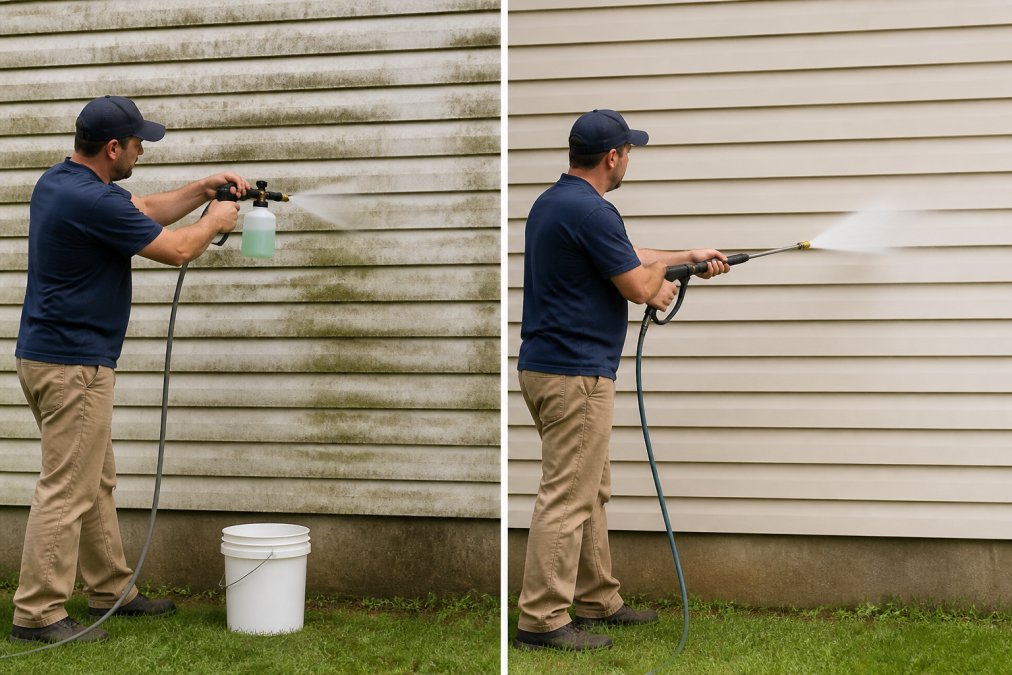
The difference comes down to how each method removes dirt. Pressure washing blasts it off. Soft washing dissolves it.
For siding, that distinction matters. A soft wash applies a detergent solution at low pressure, lets it dwell, then rinses with a garden hose.
Here is how the two methods compare:
| Factor | Soft Washing | Pressure Washing |
|---|---|---|
| Pressure level | Low, garden-hose range | High, 1,500+ PSI |
| Best for | Vinyl, wood, painted siding | Concrete, brick, driveways |
| Mold removal | Kills spores at the root | Rinses surface only |
| Risk of damage | Low | High on siding |
| Water use | Less | More |
Solution 1: Store-Bought Sodium Hypochlorite Cleaners
Store-bought sodium hypochlorite cleaners are the fastest way to kill mold and mildew on siding. These products use the same active ingredient as pool chlorine, diluted for exterior use.
How to use it:
- Put on protective eyewear and gloves
- Wet the siding with a garden hose first
- Spray the cleaner from the bottom up
- Let it dwell for 5-10 minutes
- Rinse thoroughly with low pressure
- Repeat on stubborn discoloration
Solution 2: DIY Siding Cleaning Solution Recipe
A DIY siding cleaning solution recipe saves money and lets you dial the strength to your siding and the type of grime. The trick is matching the mix to the surface, a recipe that is safe on vinyl can dull aluminum, and one that lifts black mildew streaks can strip fresh paint.
- 1/2 cup mild liquid dish soap (not dishwasher detergent)
- 1 gallon warm water (roughly 100-110°F, warm, not hot)
- Optional booster: 1 cup white vinegar for light mildew, or 1/2 cup oxygen bleach powder for heavier growth
Adjusting the recipe by siding type
| Siding Type | Base Recipe | Add This | Skip This |
|---|---|---|---|
| Vinyl | Dish soap + water | 1/2 cup oxygen bleach for mildew | Vinegar (can haze some vinyl finishes) |
| Painted wood | Dish soap + water | 1 cup vinegar for light growth | Bleach on paint less than 30 days old |
| Aluminum | Dish soap + water | Nothing, keep it mild | Vinegar and bleach (both attack the finish) |
| Fiber cement | Dish soap + water | 1/2 cup oxygen bleach | Vinegar (etches the surface over time) |
| Composite | Dish soap + water | 1/2 cup oxygen bleach | Abrasive powders |
Concentration and dwell time
More soap is not better. Over-concentrated mixes leave a film that attracts dirt and can streak on dark siding. Keep the ratio at roughly 1 part soap to 32 parts water (the 1/2-cup-per-gallon ratio above) and let dwell time do the work:
- Light dust and pollen: 3-5 minutes
- General grime: 5-10 minutes
- Mildew or algae: 10-15 minutes with an oxygen bleach booster
Common DIY mistakes
- Mixing bleach with vinegar or ammonia. This creates toxic gas. Never combine them. The CDC guidance on mixing household cleaners safely warns that bleach reacts badly with many common products.
- Using hot water with bleach. Heat accelerates the reaction and can damage siding finishes.
- Scrubbing dry. Always pre-wet the siding so the solution spreads evenly and does not abrade the surface.
- Rinsing top-down only. Rinse top-down, but also flush the bottom edge of each course so residue does not collect behind the panels.
Solution 3: Oxygen Bleach and Detergent Mixes
Oxygen bleach and detergent mixes clean siding without the harsh fumes of chlorine. Oxygen bleach releases bubbles that lift dirt and mildew from the surface.
- Best for: painted wood, composite, vinyl
- Dwell time: 10-15 minutes
- Rinse: garden hose, low pressure
Solution 4: Vinegar and Water for Mild Mildew
Vinegar and water is the plant-based, biodegradable option most competitors skip past, and it is the right pick when you want zero chlorine runoff near a vegetable garden, a rain barrel, or a pet door. The active compound is acetic acid, which drops the surface pH low enough that mildew and light algae stop reproducing. It does not bleach stains out the way sodium hypochlorite does; it kills the growth so it stops spreading and weathers away.
The mix that actually works
Household white vinegar is already about 5% acetic acid. Straight vinegar is stronger than most people need, so dilute it:
- Light surface mildew: 1 part white vinegar to 1 part water
- Established mildew on shaded walls: 3 parts vinegar to 1 part water
- Prevention rinse (monthly): 1 part vinegar to 3 parts water
What vinegar is safe on, and what it is not
This is where most guides stop short. Acetic acid is mild, but it is still an acid, and it reacts with certain siding finishes:
| Siding Type | Vinegar Safe? | Notes |
|---|---|---|
| Vinyl | Yes, diluted | Can dull high-gloss finishes with repeated use |
| Painted wood | Yes, on cured paint | Wait 30+ days after painting |
| Aluminum | No | Acid attacks the oxide layer and can pit the finish |
| Fiber cement | No | Etches the surface over repeated applications |
| Composite | Yes, diluted | Rinse thoroughly to avoid residue |
| Brick and stone | Yes, diluted | Avoid on limestone and marble, acid etches them |
Where vinegar fits in a maintenance routine
Vinegar is a maintenance tool, not a rescue tool. It handles:
- Light green algae film on north-facing walls
- Powdery mildew on shaded siding
- Pollen and dust buildup between full washes
- Spot-treating around door frames and window trim
EPA information on safer household cleaning ingredients
How to Remove Mold from Siding Without Damage
To remove mold from siding without damage, kill the spores first, then rinse at low pressure. Scrubbing live mold just spreads it.
Follow these steps:
- Protect plants and outlets
- Apply a mildewcide or bleach-based cleaner
- Let it dwell so it kills spores
- Scrub gently with a soft-bristled brush
- Rinse top-down with a garden hose
- Check for missed spots and repeat
Siding Compatibility and What to Avoid
Not every cleaner suits every siding. Matching the solution to the material prevents surface oxidation, warping, and faded paint.
| Siding Type | Safe Cleaner | Avoid |
|---|---|---|
| Vinyl | Sodium hypochlorite, oxygen bleach | Abrasive brushes, high pressure |
| Painted wood | Oxygen bleach, mild soap | Bleach on fresh paint |
| Aluminum | Mild soap, vinegar | Harsh acids, high pressure |
| Fiber cement | Soft wash, oxygen bleach | Wire brushes |
| Brick | Sodium hypochlorite | Acid cleaners on some brick |
Post-Cleaning Maintenance and When to Call a Pro
Post-cleaning maintenance keeps mold from returning. Add a sealant or water repellent to porous siding, and clear gutters so water does not pool against the walls.
Call a pro when:
- Mold keeps returning after cleaning
- Siding shows soft spots or warping
- The job needs height access or special equipment
- Stains will not lift with any home solution
Frequently Asked Questions
What is the best thing to clean house siding with?
The best cleaner depends on your siding material and stain type. For vinyl and most painted surfaces, a sodium hypochlorite solution applied with a soft-bristled brush works well for mildew and algae. For wood or older siding, a gentler oxygen bleach or vinegar and water mix is safer. Always test a small area first and rinse thoroughly with a garden hose to avoid residue.
Is Dawn dish soap good for vinyl siding?
Mild dish soap like Dawn can work for light dirt and grime on vinyl siding, but it won't kill mold spores or remove heavy mildew. Mix a few drops with water in a bucket and scrub with a soft-bristled brush, then rinse. For tougher stains or algae growth, you'll need a mildewcide or sodium hypochlorite solution instead of dish soap alone.
Can I use a pressure washer on all types of siding?
No. Pressure washing can force water behind vinyl, wood, and fiber cement siding, causing mold growth and water damage. Soft washing with low pressure and a cleaning solution is safer for most residential siding. Only use a pressure washer on brick or concrete at a low-pressure setting, and keep the nozzle moving to avoid surface oxidation or etching.
How often should residential siding be professionally cleaned?
Most homes benefit from a professional soft wash every 12 to 18 months, depending on tree cover, humidity, and local pollen. Homes near wooded areas or with north-facing walls may need cleaning every 8 to 12 months to prevent mildew and algae growth. Regular cleaning preserves surface integrity and extends the lifespan of your siding.
Mold and algae on siding will not fix themselves, and the wrong method can cause more harm than good. Soul Cleanse brings a family-run team, gentle yet efficient methods, and state-of-the-art equipment to every job, removing mold, mildew, and stains while preserving your exterior surfaces. Get a quote from Soul Cleanse and protect your home's value before the damage spreads.