 How-to
How to Remove Stubborn Tree Sap from Siding Without Damage
Last Updated: November 21, 2026
Quick Summary
Remove stubborn tree sap from siding by scraping off the excess with a plastic putty knife held nearly flat, then working from the gentlest cleaner to the strongest. Start with warm soapy water, move to rubbing alcohol for dried spots on vinyl and aluminum, and use mineral oil or turpentine on wood. Test every cleaner on a hidden spot first and stop escalating once the sap lifts.
- Fresh sap wipes away in seconds, but dried sap can cling to siding for months.
- Hold a warm, damp rag against the sap for a minute or two before scraping.
- Dab rubbing alcohol on a rag and hold it against dried sap for 30 to 60 seconds.
- Mineral oil is the safest first choice for lifting sap from wood decks and panels.
- Sap softens faster above roughly 60°F, so a sunny afternoon beats a cold morning.
Table of Contents
- Why Tree Sap Sticks So Hard to Siding
- Tools and Cleaners to Have Ready Before You Start
- Step-by-Step: Scraping and Lifting Off Excess Sap
- What Dissolves Tree Sap: Warm Water, Soap, and Solvents
- How to Clean Tree Sap Off Vinyl Siding
- Does WD-40 Remove Tree Sap? What to Know Before You Spray
- Choosing a Wood Sap Remover for Decks and Panels
- A Safe Escalation Sequence for Stubborn Spots
- Frequently Asked Questions
Why Tree Sap Sticks So Hard to Siding
Tree sap is a sticky resin that hardens into a tough, glue-like bond once it dries on siding.
Sap is not water-soluble.
Homeowners who scrub dried sap with a rag often end up smearing it wider or scratching the finish.
Sap also traps dirt. A small amber spot becomes a dark, gritty stain within a few weeks.
Tools and Cleaners to Have Ready Before You Start
Gather everything before you climb a ladder. Running back to the garage mid-job wastes time and invites mistakes.
- A plastic putty knife or old credit card for scraping
- A soft scrub brush and a non-scratch scrub pad
- Several clean rags or microfiber cloths
- A spray bottle
- Warm water and a mild dish soap
Skip anything abrasive. Steel wool and stiff wire brushes leave scratches that never buff out. If you want proven cleaner options before you start, our guide to the 5 best cleaning solutions for residential siding covers what works on different surfaces.
Safety Precautions for Siding Materials
Safety comes first.
Wear eye protection when using alcohol or solvents, and gloves to protect against turpentine and commercial removers.
Test every cleaner on a hidden spot first. Apply a small amount, wait a few minutes, and check for fading, dulling, or bubbling.
Never mix cleaners. Combining bleach with vinegar or ammonia creates dangerous fumes (Mixing Incompatibilities and Toxic Exposures).
Watch out: letting any solvent sit too long on painted or stained wood can soften the finish. If you are unsure how a surface will react, our guide on how to safely remove mold from house siding explains which cleaners are gentle enough for delicate materials.
Step-by-Step: Scraping and Lifting Off Excess Sap
Lift the bulk off before you dissolve anything. Scraping first means less cleaner, less scrubbing, and less risk to the finish.
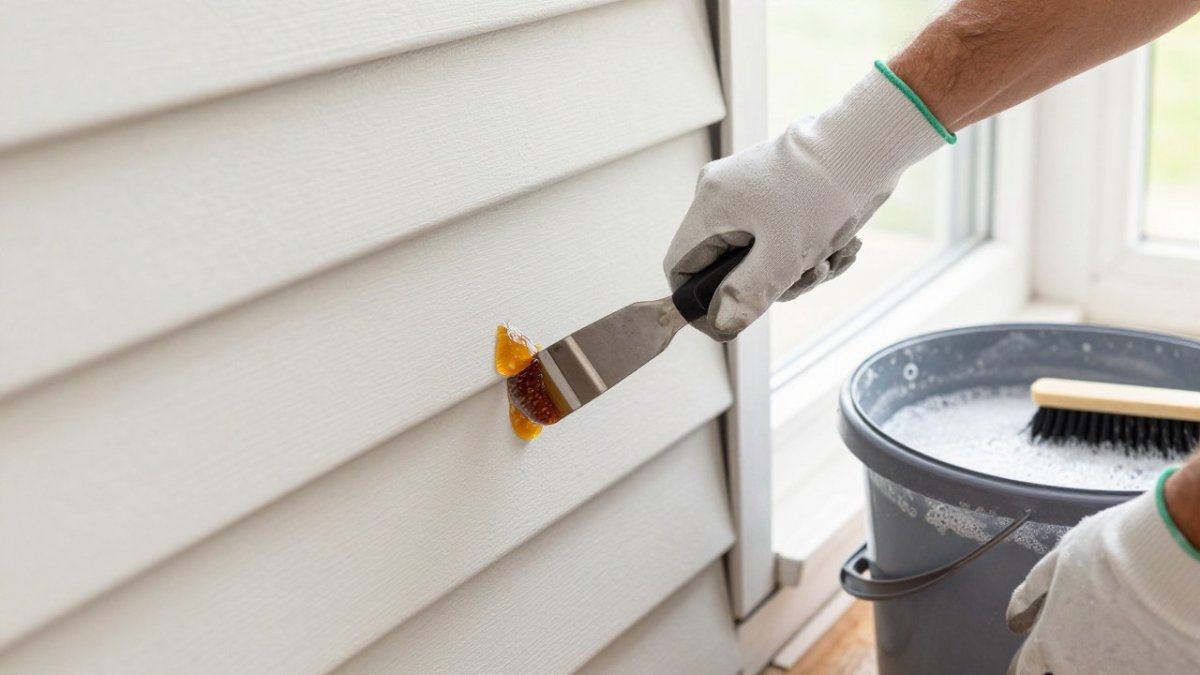
Follow this order:
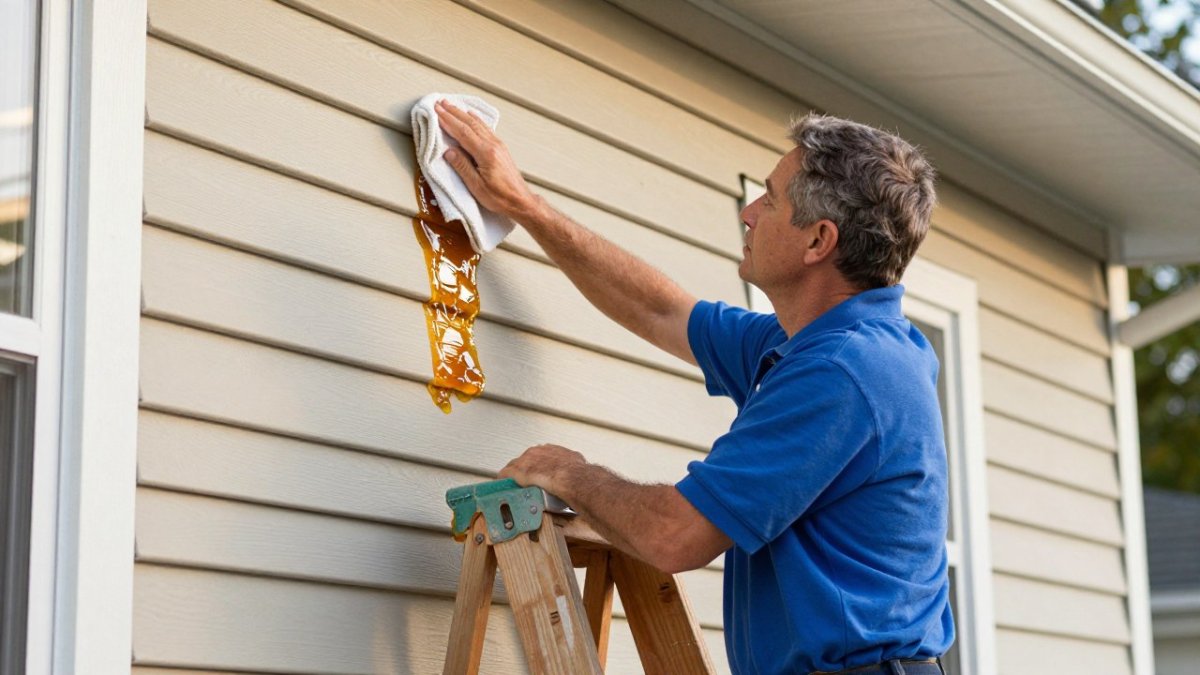
- Soften the surface. Hold a warm, damp rag against the sap for a minute or two.
- Slide, don't dig. Angle a plastic putty knife flat against the siding and push the sap upward in short strokes.
- Work from the edge inward. Lift the outer rim of the spot first, then work toward the center.
- Wipe the blade often. Sap builds up fast and starts smearing.
- Stop when you hit resistance. If the sap will not budge, move to a solvent instead of forcing it.
A chisel works on thick, dried pitch on wood, but keep it nearly flat and use light pressure to lift, not carve.
What Dissolves Tree Sap: Warm Water, Soap, and Solvents
Warm soapy water handles fresh sap; solvents handle dried, stubborn spots. Sap is a resin, so it responds to oils and alcohols far better than water alone.
Work from the gentlest option to the strongest. This protects your siding and saves you from harsh chemicals you may not need.
Warm Water and Soapy Water
Start here for fresh sap and light residue. Mix a few drops of mild dish soap into a bucket of warm water.
Saturate a rag and press it against the spot for a minute. The warmth softens the resin and the soap lifts the sticky film.
This method is safe on every siding type. It just will not crack fully dried sap on its own.
Alcohol, Citrus Cleaners, and Oils
For dried sap, reach for a solvent. Each one works a little differently:
- Rubbing alcohol or denatured alcohol: dissolve the resin quickly. Apply with a rag, let it sit briefly, then wipe.
- White vinegar: a mild option for light spots and residue cleanup.
- Citrus-based cleaners: break down sticky residue and smell far better than solvents.
- Mineral oil: softens sap on wood without drying the grain.
- Turpentine: strong and effective on wood, but test it first and ventilate the area.
Apply, give it a short dwell time, then wipe. Reapply rather than scrubbing hard.
How to Clean Tree Sap Off Vinyl Siding
Vinyl is forgiving but still scratches, dulls, and can discolor if you scrub too hard or leave the wrong solvent on it. Use warm soapy water first, then alcohol for stubborn spots. The same logic applies to painted wood, fiber cement, and aluminum, but each material has its own limits.
Here is the sequence that works on vinyl:
- Scrape off the excess sap with a plastic putty knife held nearly flat.
- Wash the area with warm soapy water and a soft brush.
- For remaining spots, dab rubbing alcohol on a rag and hold it against the sap for 30 to 60 seconds.
- Wipe gently, then rinse the whole area with clean water.
- Dry with a soft cloth to prevent streaks.
Skip steel wool and stiff wire brushes, which scratch and trap dirt.
Painted Wood Siding
Painted wood is the most finish-sensitive siding. Sap sits in the grain, and harsh solvents can strip paint or raise the grain. Start with warm soapy water and a plastic scraper. For dried sap, use mineral oil on a rag, let it dwell a minute, and lift with the scraper. Turpentine works on heavy pitch, but test on a hidden board and ventilate.
Fiber Cement Siding
Fiber cement holds paint well but is porous enough that oily residues leave a shadow. Warm soapy water and a soft brush handle fresh sap; rubbing alcohol handles dried spots. Avoid mineral oil and turpentine on painted fiber cement unless you rinse thoroughly, since oil can interfere with future paint adhesion. A citrus cleaner is a reasonable middle step, but rinse it fully.
Aluminum Siding
Aluminum is durable but its factory finish can chalk or dull under strong solvents. Warm soapy water and a non-scratch pad are safe, and rubbing alcohol works for dried sap. Avoid abrasive pads and ammonia on bare or thinly finished aluminum, which accelerates oxidation.
Patch Test Before You Commit
Test every cleaner on a hidden spot such as a corner behind a downspout, wait a few minutes, and check for fading, dulling, or bubbling. A two-minute test saves a costly repaint.
If you would rather not climb a ladder, professional house washing keeps vinyl clean without the risk. Our guide on how often to schedule house washing explains timing and seasonal tips for local homes.
Does WD-40 Remove Tree Sap? What to Know Before You Spray
Watch out: never use WD-40 near a surface you plan to paint or caulk soon. The oil can prevent paint and sealant from bonding.
Choosing a Wood Sap Remover for Decks and Panels
Wood needs a gentler hand than vinyl. Sap sits in the grain, and harsh solvents can strip stain or raise the grain.
For most wood decks and panels, mineral oil is the safest first choice.
For deep-set sap on decking, a commercial tar remover designed for wood is worth the investment. Apply it, let it dwell, and wipe with the grain.
If the sap has soaked in and stained the boards, a professional cleaning can restore the color without sanding. Our deck and patio cleaning service uses gentle methods that protect wood, composite, and concrete surfaces.
A Safe Escalation Sequence for Stubborn Spots
Stubborn sap calls for a plan, not brute force. Escalate one step at a time, give each step a real dwell time, and stop as soon as the spot lifts. The sequence below assumes vertical siding work on a ladder or from the ground.
| Step | Method | Dwell Time | Best For | Watch For |
|---|---|---|---|---|
| 1 | Warm soapy water | 1-2 minutes | Fresh sap, light residue | Needs repeat soaks |
| 2 | Plastic scraper | Work in short strokes | Excess, hardened sap | Keep blade flat |
| 3 | Rubbing alcohol | 30-60 seconds | Dried spots on vinyl, aluminum | Test first, ventilate |
| 4 | Citrus cleaner | 1-3 minutes | Sticky residue | Rinse fully after |
| 5 | Mineral oil or turpentine | 1-2 minutes | Sap on wood | Test on hidden board |
| 6 | Commercial tar remover | Follow label | Deep, set-in stains | Follow dwell time exactly |
Stop Conditions: When Not to Escalate
Escalation is not a contest. Stop and reassess if any of these happen:
- The finish dulls, chalks, or bubbles under the patch test.
- The sap smears wider instead of lifting.
- The cleaner starts to soften paint or caulk at the edges.
- You are working above a safe ladder height or in wind that makes solvents splash.
If none of the six steps work, stop. Repeated scrubbing does more damage than the sap itself. For tough exterior stains, the right equipment makes the difference, and our guide to the best pressure washing equipment for stubborn stains shows what handles them safely.
How Temperature and Weather Change the Job
Sap softens faster in warm weather, so a sunny afternoon beats a cold morning. Above roughly 60°F, soap and alcohol steps work noticeably faster. In cold weather, extend dwell times and expect more scraping. Avoid direct sun with fast-evaporating solvents, which flash off before dissolving the resin, and work on the leeward side in wind.
Application Technique That Protects the Finish
Apply cleaners to a rag or soft brush, not directly to the siding, so you control where the product lands. Use light pressure and let the chemistry work. Work from the bottom of a spot upward so drips do not carry dissolved sap down a clean panel. Rinse each step fully, since residue from one cleaner can react with the next.
Pressure Washing: Risks and Alternatives
Pressure washing can strip paint, force water behind panels, and gouge soft wood. It can also drive sap deeper into texture before it lifts. If you use one, keep the nozzle moving, use the widest fan tip, and stay several feet back.
Sometimes the smartest move is to call a pro. Soul Cleanse is a family-run pressure washing company that uses gentle yet highly efficient cleaning methods. Contact us for a quote.
Frequently Asked Questions
Will Dawn dish soap remove tree sap?
Dawn and similar grease-cutting dish soaps loosen fresh, soft sap when mixed with warm water, but they struggle against dried sap that has bonded to the surface. Mix a few drops into a bucket of warm water, saturate a rag, and hold it against the spot for a minute or two before scrubbing. For hardened deposits, step up to rubbing alcohol or a citrus cleaner after the soapy water pass fails.
Should you pressure wash tree sap off siding?
Pressure washing can remove tree sap, but it carries real risk. Too much pressure forces water behind panels, strips paint, and etches vinyl or wood grain. Keep the nozzle at a wide fan tip, stay at least 12 inches back, and work top to bottom. If the sap has dried hard, soften it with a solvent first so the washer only rinses residue rather than blasting it loose.
Can rubbing alcohol remove tree sap from siding?
Yes. Rubbing alcohol dissolves the resin in tree sap quickly. Apply it to a cloth rather than spraying directly, dab the spot, and give it 30 to 60 seconds of dwell time before wiping. Test on a hidden corner first, because alcohol can dull some painted or stained finishes. Rinse the area with water afterward so no residue stays on the siding.
How do you remove dried tree sap without damaging siding?
Work from gentlest to strongest: scrape off the bulk with a plastic putty knife, soften what remains with warm soapy water, then try rubbing alcohol, mineral oil, or a citrus cleaner. Keep dwell times short, test every product on a hidden spot, and rinse thoroughly between attempts. Never use metal scrapers or harsh solvents on vinyl, and avoid pressure washing at full force on painted wood.