 How-to
Is Pressure Washing Vinyl Siding Safe for Old Homes
Last Updated: November 14, 2026
Quick Summary
Pressure washing vinyl siding is often unsafe on older homes, because aged panels become brittle and high pressure can crack them or force water behind the siding. Use low pressure or a soft wash instead, and inspect the siding and caulk before cleaning.
- Aged vinyl becomes brittle and can crack under force that newer panels handle easily.
- Hold the nozzle 12 to 18 inches from the siding and angle the spray downward at 30 to 45 degrees.
- Avoid 0-degree and turbo tips on vinyl; use a 25-degree tip at minimum.
- Test a small hidden area first, then inspect it after it dries.
- Pause the job and repair cracks, loose panels, or failed caulk before any washing.
Table of Contents
- Why Old Vinyl Siding Needs a Different Approach
- How Much PSI to Pressure Wash Vinyl Siding Safely
- How to Assess Old Siding Before Any Washing
- Pressure Washing vs. Soft Washing: Pros and Cons
- Power Wash Vinyl Siding Cleaning Solution and Technique
- Pressure Washing Vinyl Siding Problems on Older Homes
- Power Wash Vinyl Siding Cost and Booking a Professional Cleaning
- Frequently Asked Questions
Why Old Vinyl Siding Needs a Different Approach
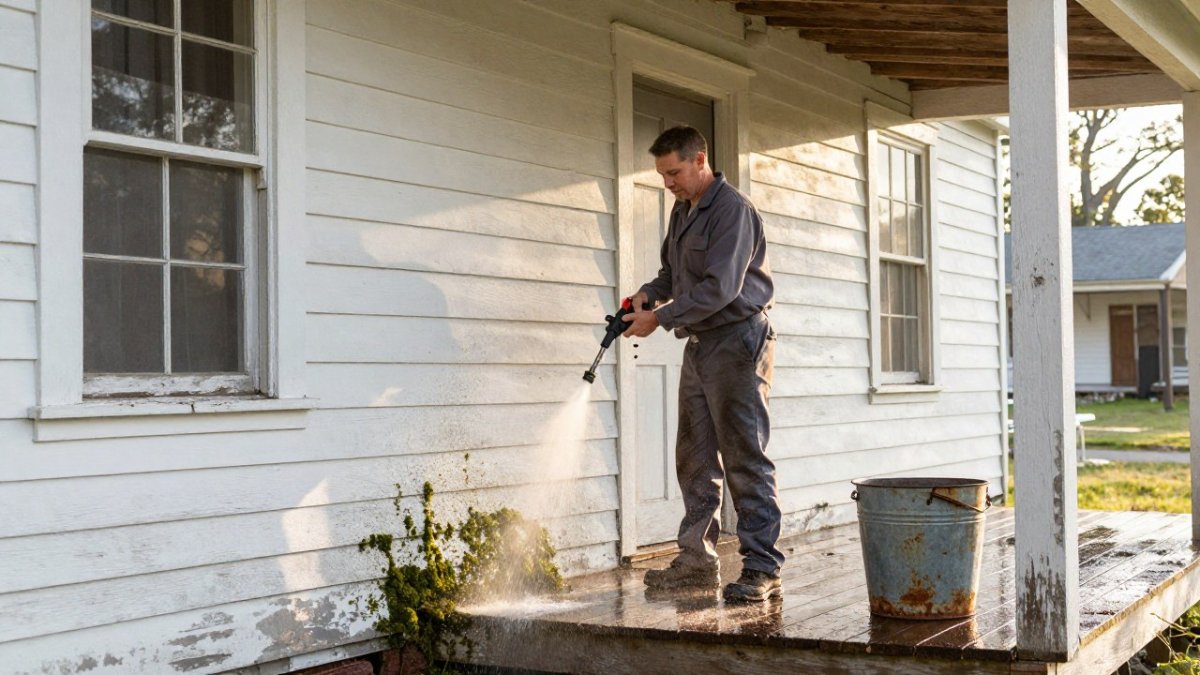
Is pressure washing vinyl siding safe for old homes? Often, no, not at the settings most people use. Older siding has been exposed to decades of sun, freeze-thaw cycles and brittleness, so it can crack or lift under force that newer panels shrug off. Aging siding is a different job from a newer install, and it helps to start by asking how the material has held up over time.
Many homeowners assume that a stronger spray cleans faster and better. On aged vinyl, that assumption often backfires. A high-pressure stream can force water behind overlapping panels, drive it into the wall assembly and leave grime and mildew trapped in places you cannot easily see.
Here is what changes with an older home:
- Panels become brittle and crack more easily under pressure.
- Oxidation and fading make the surface look dirty even when cleaning would not fully restore it.
- Nail holes, loose seams and failing caulk let water reach the sheathing.
- Older wall assemblies may have less moisture protection than modern builds.
For these reasons, we approach an older house with a gentler method and a clear inspection first.
How Much PSI to Pressure Wash Vinyl Siding Safely
There is no single safe PSI that fits every home, and any article that hands you one number is oversimplifying. What you can do is work from a defensible starting range, understand why the number on the washer's gauge is not the number hitting the siding, and check the siding manufacturer's own written guidance before you pull the trigger.
Start from a low-pressure range. Vinyl siding manufacturers commonly publish cleaning instructions that call for ordinary garden-hose pressure or a low-pressure washer, not a full-blast setting (How to Clean Vinyl Siding | Vinyl Siding Cleaning Tips). Use the lowest pressure that does the job, and go lower on anything brittle, oxidized, or older.
Understand that gauge PSI is not nozzle PSI. The pressure your machine is rated for is measured at the pump. What reaches the siding depends on the nozzle orifice, the distance to the surface, and the angle. A 0-degree red tip concentrates the stream into a cutting jet; a 25-degree or 40-degree tip spreads it out.
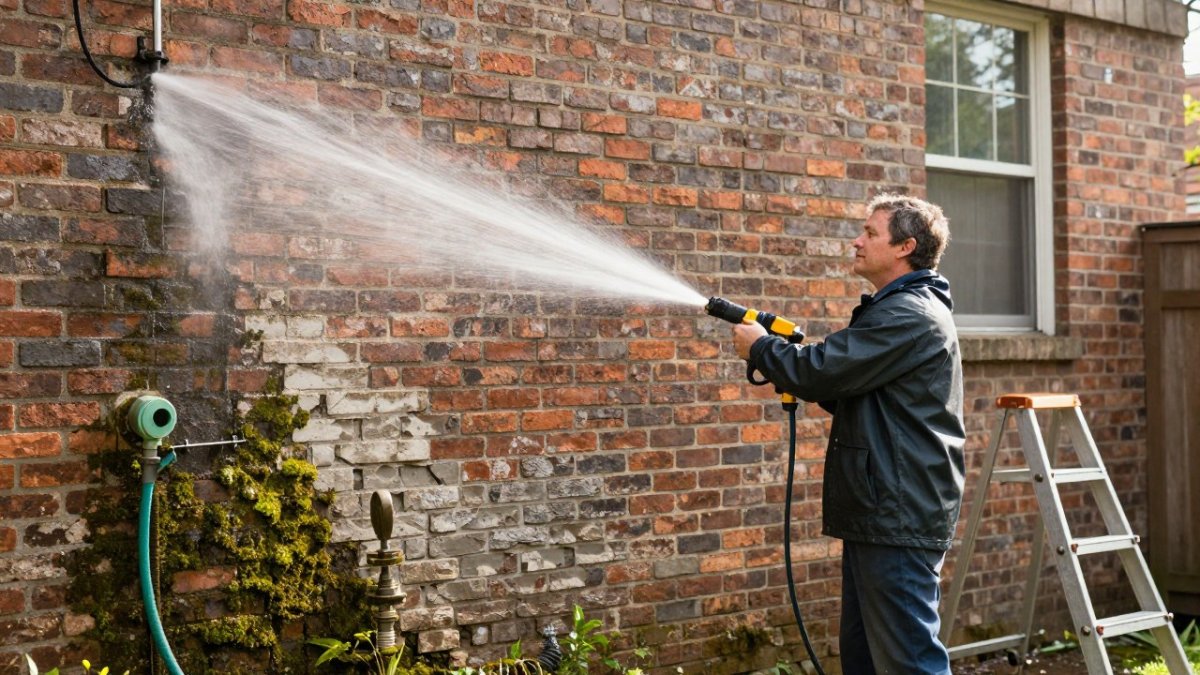
Distance and angle matter as much as PSI. Stand at least 12 to 18 inches from the siding and angle the spray downward at roughly 30 to 45 degrees so water runs with the panel overlap rather than being driven up under it. Vinyl panels are designed to shed water downward; spraying upward defeats that design and is the most common way water gets behind the siding.
Find the manufacturer's guidance for your specific product. Siding makers publish cleaning and care instructions for their products, and those instructions vary by brand, product line, and era of manufacture. Look for the installation or care manual that came with the siding, or check the manufacturer's website for the product line. If you cannot identify the product, assume the more conservative limits apply.
Run a test patch before committing. Pick a low, out-of-the-way area, start at the lowest effective pressure, and inspect the panel after it dries. Look for a change in sheen, a rough or etched patch, water that has wicked up behind a seam, or a panel that has popped loose.
Watch out: a high-pressure washer with a narrow 0-degree tip can etch or crack vinyl even when the operator thinks they are being careful, and the damage may not show until the panel dries.
How to Assess Old Siding Before Any Washing
Before you wash anything, spend time inspecting the siding and the wall assembly behind it. This step prevents most of the damage we see on older homes, and it is the step most homeowners skip.
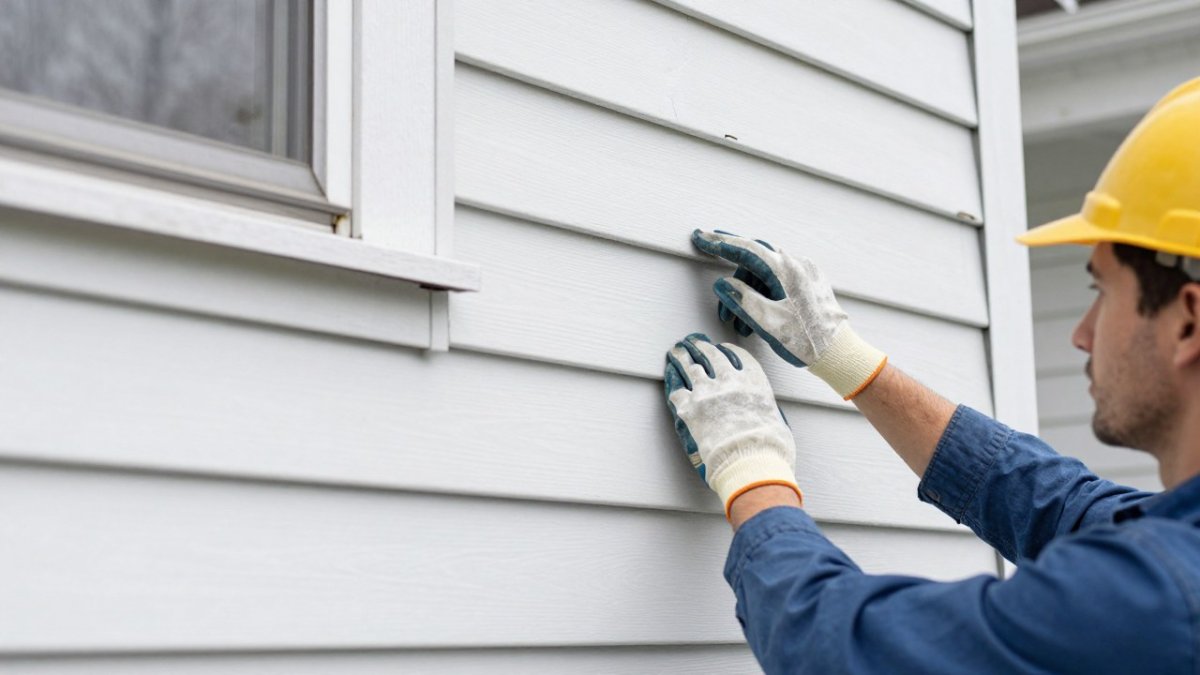
Step 1: Walk the full perimeter and map the condition. Look for cracks, warping, loose panels, missing or bent nails, and panels that have pulled out of their locking channels.
Step 2: Press gently on panels. Panels that flex, rattle, or pull away from the wall may be loose and at risk of taking on water. Pay attention to the bottom edge and the seams around windows and doors, where water collects and caulk fails first.
Step 3: Check the caulk and trim. Failed caulk at corners, window and door trim, and utility penetrations is the most common entry point for water behind siding. Look for cracked, peeling, or missing caulk and for trim that has pulled away from the wall.
Step 4: Look for existing water damage. Stains that run down from a seam, soft spots, peeling paint, or a musty smell near the wall can signal water already getting in.
Step 5: Understand what is behind the siding. Vinyl siding is a rainscreen, not a waterproof barrier. Behind it is usually a weather-resistive barrier, then sheathing, then framing and insulation.
Step 6: Check for lead-painted surfaces nearby. Trim, doors, windows, and other surfaces near the vinyl may have been painted with lead-based paint. Washing that disturbs those coatings can create hazardous runoff and dust, so if you suspect lead paint, test the surface before washing.
Step 7: Test a small hidden area. Wash a small patch on the back side or a low corner first, let it dry, and inspect it before going further.
Decide which path you are on. If the siding is sound, well-attached, and the caulk is intact, a low-pressure wash or soft wash is reasonable.
Watch out: Water damage often hides for months. A siding wash that looks fine on day one can lead to a soft spot or musty smell later, so check the interior walls near the washed areas in the weeks after the job.
Pressure Washing vs. Soft Washing: Pros and Cons
Pressure washing and soft washing both clean siding, but they work in very different ways. Knowing the tradeoffs helps you choose the safer method for an older home.
Pressure washing
- Pros: Fast on flat, sturdy surfaces. Good for heavy dirt on hard surfaces like concrete.
- Cons: Can force water behind siding. Can crack brittle vinyl. Easy to damage with a single misplaced spray.
Soft washing
- Pros: Uses low pressure and a cleaning solution to lift mold, mildew and grime. Gentler on aging panels. Less risk of water being driven into the wall.
- Cons: Takes longer because the solution needs time to work. Needs proper rinsing so no residue is left behind.
Our take: For most older vinyl siding, soft washing is generally the safer choice. Pressure washing still has a place on sturdy hard surfaces, but on aging siding it is usually the riskier option. If you want to know how long a professional wash lasts before you decide on the risk, see how long a professional house wash lasts in North Alabama.
The two methods differ in how they clean, and in where the risk falls for an older home. For a deeper, local look at when soft washing is safer for siding, read when soft washing protects siding better than pressure washing.
| Method | Best for | Key difference |
|---|---|---|
| Pressure washing | Sturdy hard surfaces like concrete | Force can drive water behind siding |
| Soft washing | Aging vinyl siding | Low pressure plus cleaning solution lifts grime |
Power Wash Vinyl Siding Cleaning Solution and Technique
The right cleaning solution and technique make a big difference on older siding. Harsh chemicals can dull, discolor or weaken vinyl, so choose a product labeled safe for vinyl.
A simple technique for aging siding:
- Wet the surface first with plain water at low pressure.
- Apply a vinyl-safe cleaning solution from the bottom up, so runoff does not streak clean panels.
- Let the solution dwell for the time listed on the product label. Do not let it dry on the siding.
- Rinse from the top down with low pressure, working with the panel overlap.
- Inspect the results and spot-treat stubborn areas rather than blasting them.
Mold and mildew often respond well to a soft wash solution applied with patience. For a roundup of the best cleaning solutions for residential siding, compare options before you buy. If a stain remains, a second gentle application usually works better than more pressure. For a safe, step-by-step method for removing mold from house siding, follow the detailed guide.
Pressure Washing Vinyl Siding Problems on Older Homes
Problems show up in predictable ways on older homes. Knowing what to watch for helps you spot trouble early.
- Water behind the siding. Water forced into seams can soak sheathing and insulation, sometimes leading to rot or mold inside the wall.
- Cracked or warped panels. Brittle vinyl can split under direct force, especially near the bottom edge.
- Loose or lifted panels. Pressure can pop panels out of their locking channels.
- Etching and dull patches. Too much force can leave a rough, faded look that is hard to reverse.
- Residue and streaking. Leftover cleaning solution can leave marks if the rinse is skipped.
Watch out: Water damage often hides for months. A siding wash that looks fine on day one can lead to a soft spot or musty smell later. Check the interior walls near the washed areas in the weeks after the job.
For lead paint concerns on older homes, pause and test before disturbing any painted surface. Washing that disturbs old paint can release hazardous dust, and you should follow current EPA lead-safe guidance.
Power Wash Vinyl Siding Cost and Booking a Professional Cleaning
Pricing for siding cleaning depends on the size of the home, the height of the walls, the condition of the siding and the cleaning method needed. For current prices or a quote tailored to your home, contact Soul Cleanse directly through the website.
If you want help deciding whether a professional wash is the right move for your older home, we are happy to inspect the siding and recommend a safe method. Our family-run team uses gentle, efficient cleaning methods on residential and commercial properties across Marshall County, and we stand behind our work with guaranteed satisfaction.
Start with a quote from Soul Cleanse, and let us assess your siding before anything touches it. Learn more about our family-run team and the services we offer before you book.
Frequently Asked Questions
Will pressure washing damage vinyl siding?
It can. Vinyl is durable, but high pressure, a narrow spray tip, or holding the wand too close can crack older panels, lift overlapping seams, and force water behind the siding. Older vinyl is more brittle, so the risk is higher. Keep the wand at a wide angle, use low pressure, and move in the direction the panels overlap. If you see cracks, warping, or loose panels before you start, switch to a soft wash or hire a professional who can inspect the siding first.
How much PSI should you use to pressure wash vinyl siding?
Most guidance for vinyl siding points to a low pressure setting, with a wide spray tip. Many homeowners get better results and lower risk with the lowest setting that removes dirt. On an older home, start at the bottom of the range, test a small hidden area, and increase only if needed. Check your siding manufacturer's written pressure limits when you can find them, since they vary by product.
Is it better to soft wash or pressure wash vinyl siding?
For most older homes, soft washing is the safer choice. It uses a low-pressure application of cleaning solution, then rinses gently. Pressure washing removes heavy grime faster but carries more risk of pushing water behind panels or cracking brittle vinyl. Soft washing generally takes longer and needs more prep, and it is gentler on the siding.
Can pressure washing force water behind vinyl siding?
Yes. Vinyl siding is installed as overlapping panels, not a sealed surface. A concentrated spray aimed at seams, the bottom edge of panels, or around windows and doors can push water up and behind the siding, where it can reach sheathing, insulation, and framing. Water trapped there can lead to rot, mold, and hidden damage. Aim the spray downward and keep the wand angle shallow to reduce this risk.