 How-to
Cleaning Algae Off Vinyl Siding: A No-Bleach Method
Last Updated: November 7, 2026
Quick Summary
To clean algae off vinyl siding without bleach, mix one part white vinegar with one part water in a pump sprayer, apply it, and let it dwell 10 to 15 minutes while keeping the panel damp. Scrub lightly with a soft brush following the grain, then rinse top down with a garden hose.
- Vinyl siding gives algae no food, so green growth is a moisture problem, not a dirt problem.
- Work from the bottom up and spray in sections you can finish in one pass to avoid streaks.
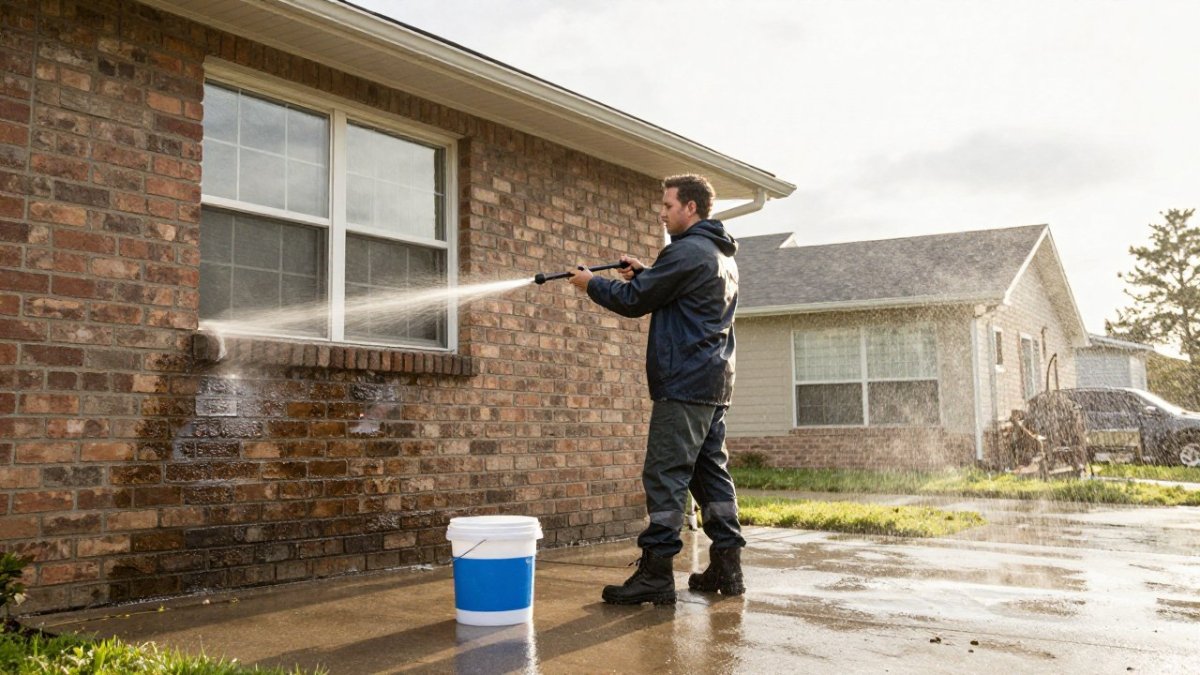
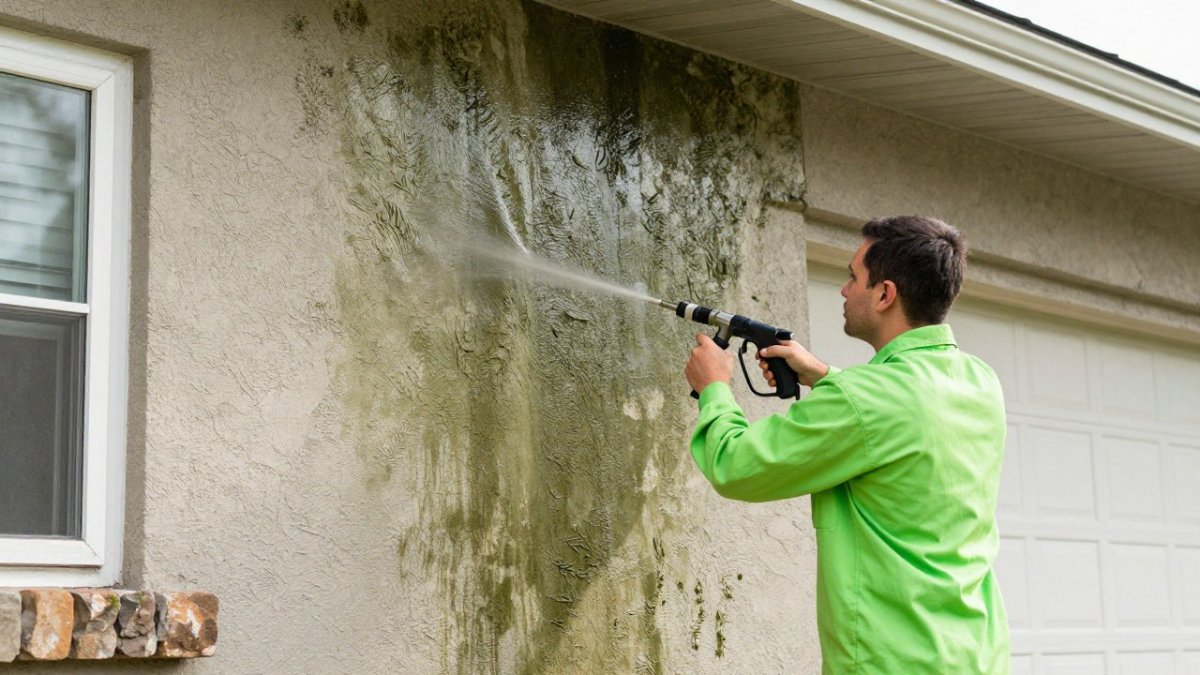
- Skip pressure washing on siding; forced water can get behind panels and crack them.
- For no-scrub cleaning, spray, rinse, let dry, spray again for 10 minutes, then rinse.
- Trim shrubs and clear gutters so shaded walls dry faster and algae returns more slowly.
Table of Contents
- Why Green Algae Grows on Vinyl Siding (and Why Bleach Is a Bad Fix)
- The Non-Bleach Recipe: Vinegar, Water, and Dwell Time That Actually Works
- How to Clean Algae Off Vinyl Siding, Step by Step
- How to Clean Vinyl Siding Without Pressure Washing
- How to Clean Vinyl Siding Without Scrubbing
- House Siding Cleaner Spray: What to Look For in a Store-Bought Option
- How to Prevent Algae on Vinyl Siding From Coming Back
- When DIY Stops Working: Getting a Professional Siding Cleaning Quote
- Frequently Asked Questions
Why Green Algae Grows on Vinyl Siding (and Why Bleach Is a Bad Fix)
Green algae on vinyl siding is a moisture problem, not a dirt problem. Vinyl siding is a plastic panel, so it gives algae nothing to eat.
That is why the green film keeps returning: you are removing growth, not food, and it will come back as long as the surface stays wet and shaded.
Bleach looks like the obvious fix, but it is harsh on the siding itself and rough on everything around it.
If you are also seeing black or dark patches, that is usually mold rather than algae. How to safely remove mold from house siding covers the difference and the gentler approach.
The Non-Bleach Recipe: Vinegar, Water, and Dwell Time That Actually Works
A simple recipe is one part white vinegar to one part water in a pump sprayer.
Dwell time is the part most people skip.
- Mix: 1 part white vinegar, 1 part water
- Apply: pump sprayer, low pressure
- Dwell: 10 to 15 minutes, kept damp
Vinegar's acid can weaken the algae's grip on the panel, and contact time does much of the work.
If you want to compare other gentle options before you commit, our roundup of residential siding cleaning solutions breaks down what each one is best at.
How to Clean Algae Off Vinyl Siding, Step by Step
Here is the full process, start to finish. The steps assume light to moderate green algae; for heavy or seasonal growth, start with the severity guide below.
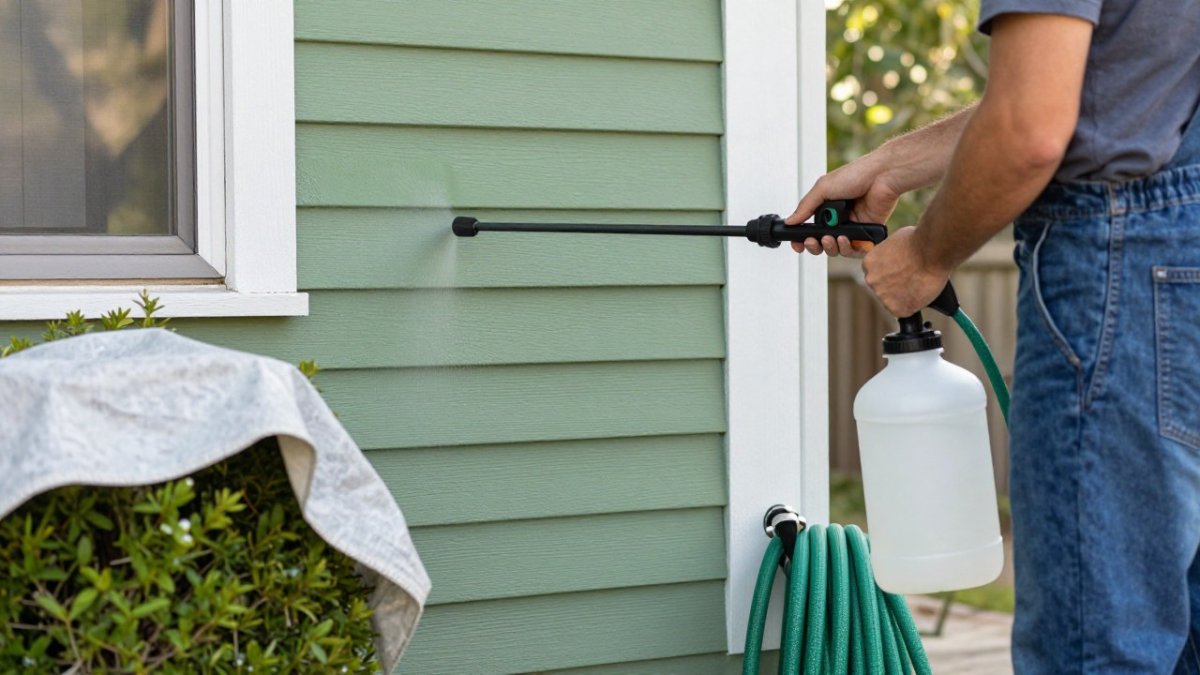
Step 1: Prep the Area and Protect Plants, Soil, and Runoff
Move furniture, grills, and anything else away from the wall. Cover plants and shrubs with drop cloths or plastic sheeting, and pre-wet the soil and lawn around the base to dilute runoff. Point rinse water toward the lawn or a drainage area, never into a storm drain or gutter.
Watch out: vinegar is acidic, so take care to limit runoff onto planting beds, and pre-wet and rinse as you work.
Step 2: Apply the Cleaner and Let It Dwell
Fill a pump sprayer with the vinegar and water mix. Work from the bottom up so you do not leave streaks down clean panels, spraying in sections you can finish in one pass. Keep the panel damp during the 10 to 15 minute dwell time.
Step 3: Scrub Lightly, Then Rinse With a Garden Hose
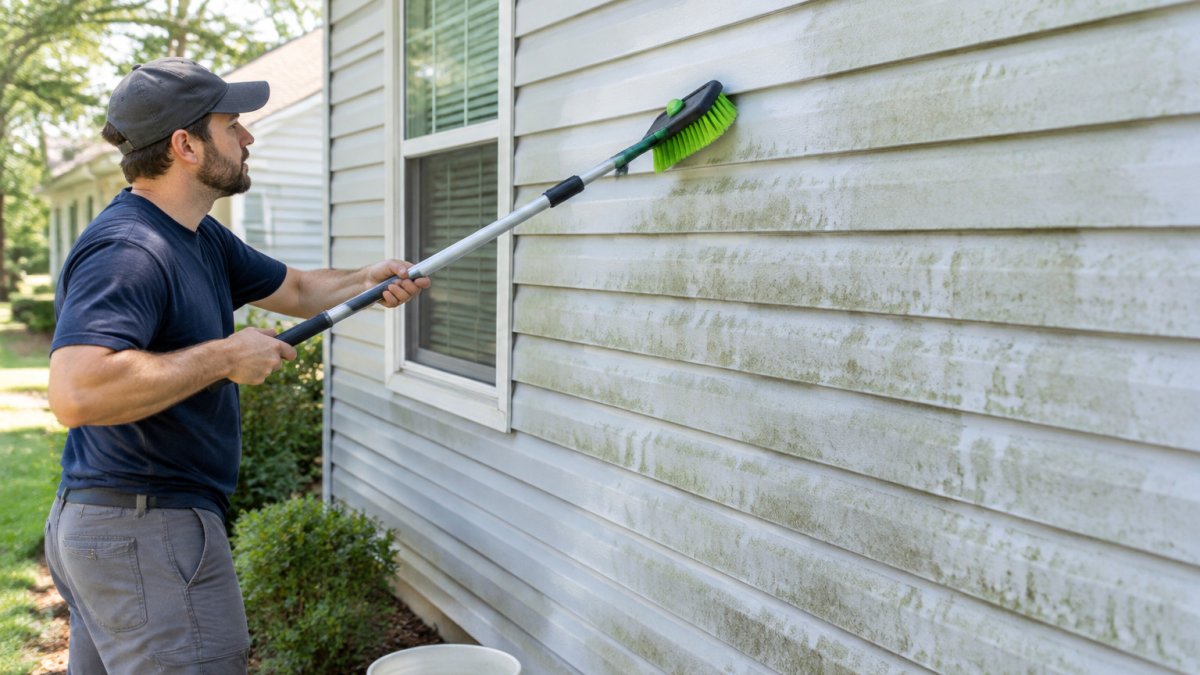
Use a soft brush on a long handle, scrubbing with light pressure following the grain of the panels. Rinse top down with a garden hose and check the wall as it dries. If green still shows, repeat the dwell and scrub once more before reaching for anything stronger.
Match the Method to the Severity
Not every algae problem needs the same approach. Use this guide to pick your starting method without bleach.
- Light green film, wipes away with a finger: a garden hose rinse plus one vinegar pass and a soft brush is usually enough.
- Moderate growth, visible streaks but panels still smooth: two vinegar passes with 10 to 15 minutes of dwell each, then a soft brush on the worst spots. This is the most common case.
- Heavy or recurring growth, green in seams and under trim: longer dwell (15 minutes, re-misted), a second application after the wall dries, and a soft brush. If it returns within weeks, the moisture source is the problem, not the cleaner.
A low-pressure pump sprayer is the right tool for all four levels; a garden hose with a nozzle works for rinsing and the lightest cases.
Material Compatibility and Safety
Vinyl siding is durable, but the trim, seals, and nearby surfaces are not always as forgiving. Before you spray a full wall, test a small hidden section, such as behind a shrub or near the foundation, and let it dry.
- Gloves and eye protection: wear them. Vinegar splashed in the eyes stings, and a pump sprayer can mist back at you.
- Ventilation: work outdoors, but avoid spraying into open windows or doors.
- Test patches: check painted trim, window seals, door frames, and light fixtures. Vinegar can dull some finishes and etch unsealed metal.
Watch out: if your siding is older and the finish is already chalky or oxidized, a vinegar wash can make the dullness more visible. Test first, and expect some panels may need a light rinse rather than a full wash.
If Stains Remain After the Algae Is Gone
Green growth that lifts but leaves a shadow is common. Distinguish what you are looking at before you clean again.
- Living algae: green and slightly raised; it lifts with a soft brush after dwell.
- Dirt or pollution film: gray-brown and even; it usually rinses away with the same mix but may need a second pass.
- Oxidation or chalking: a white or chalky haze on older vinyl; cleaning will not restore the finish, and repeated scrubbing can make it worse.
If the green is gone but a stain remains, stop cleaning and let the wall dry fully before you judge the result.
Match your starting method to how bad the green growth is, then work up only if it stays put.
| Severity | Signs | Starting method |
|---|---|---|
| Light green film | Wipes away with a finger | Hose rinse, one vinegar pass, soft brush |
| Moderate growth | Visible streaks, panels still smooth | Two vinegar passes with 10 to 15 minutes dwell each |
| Heavy or recurring growth | Green in seams and under trim | Longer dwell of 15 minutes, re-misted, second application after drying |
| Shaded or north-facing walls only | Growth limited to shaded sides | Same method, different schedule |
How to Clean Vinyl Siding Without Pressure Washing
You can clean vinyl siding without a pressure washer, and on most homes you should. A garden hose and a soft brush handle algae fine.
The risk is water forced behind the panels, since vinyl siding is designed to shed water rather than have it forced from underneath.
If you are weighing a pressure washer anyway, why professional pressure washing prevents damage explains where the line sits between a safe wash and a costly one.
Save the pressure washer for concrete, driveways, and hard flat surfaces. Keep it off the siding.
How to Clean Vinyl Siding Without Scrubbing
Cleaning vinyl siding without scrubbing is possible if you let the cleaner do the work. The trick is longer dwell time and a second application, not more elbow grease.
- Spray the vinegar mix and leave it 15 minutes
- Rinse and let the wall dry
- Spray again and leave 10 minutes more
A soft brush on the worst spots is still fine, but you may not need it.
Watch out: scrubbing hard on vinyl can scuff the finish, and scuffed panels trap dirt faster than smooth ones.
House Siding Cleaner Spray: What to Look For in a Store-Bought Option
A store-bought house siding cleaner spray is a fair choice when you want a ready-made mix. Read the label before you buy, and look for four things.
- Non-bleach formula: the label says so plainly
- Safe for vinyl: not wood-only or masonry-only
- Biodegradable or plant-safe claim: matters if runoff reaches beds
Skip anything labeled for mold remediation only. Those tend to be stronger than algae needs.
Oxygen bleach is a gentler alternative to chlorine bleach for some organic growth. Follow the label dilution exactly, and still protect plants and runoff.
How to Prevent Algae on Vinyl Siding From Coming Back
Prevention comes down to moisture and shade. Algae needs a damp surface to return, so dry the wall out and the growth slows.
Diagnose Why the Wall Stays Wet
Before you change your cleaning routine, find the moisture source. A common pattern is one or more of the following:
- Shade: north-facing walls and sides blocked by trees dry slowest, so they grow algae first and dry last after rain.
- Vegetation contact: shrubs and branches touching or overhanging the siding trap moisture and reduce airflow.
- Gutter and downspout problems: overflowing gutters, disconnected downspouts, or splash blocks that dump water at the foundation keep the lower wall damp.
Fix the source first. Cleaning without addressing the cause is why the green returns within weeks on some homes and stays away for a year on others.
A Realistic Maintenance Schedule
A light maintenance rinse beats a big cleaning job later. The right interval depends on your shade and moisture pattern, not a fixed calendar.
- Shaded or north-facing walls: rinse every two to three months during the growing season, and check after humid weather.
- Sun-exposed walls: rinse two to three times a year, or when you first see a green tint.
- After heavy rain or a humid week: do a quick visual check on the shaded sides; catching the film early means one light pass instead of two.
Maintenance Habits That Break the Cycle
- Trim shrubs and branches back from the siding so airflow reaches the panel.
- Clear gutters so water is not spilling down the wall, and check that downspouts discharge away from the foundation.
- Keep mulch and soil below the bottom edge of the siding, not piled against it.
Watch out: if you rinse with a hose and the wall stays wet for hours afterward, the problem is airflow or drainage, not the cleaning. Address that before you schedule the next wash.
If you want a realistic schedule, how long a professional house wash lasts walks through regrowth timelines and when to plan the next wash.
When DIY Stops Working: Getting a Professional Siding Cleaning Quote
DIY stops working when the algae keeps coming back, when the wall is too tall to reach safely, or when the growth has spread into seams and trim.
At Soul Cleanse, we are a family-run pressure washing company serving homeowners and property managers around Marshall County.
If you have tried the vinegar route and the green is still there, or you would rather not spend a weekend on a ladder, see our residential pressure washing services and get a quote.
Green algae on vinyl siding is a moisture problem that returns whenever the wall stays damp and shaded.
Get started with Soul Cleanse and protect your siding with a gentle, thorough clean that lasts.
Frequently Asked Questions
What kills algae on vinyl siding without bleach?
A diluted white vinegar solution is the most common bleach-free option: roughly one part white vinegar to one part water in a spray bottle, applied and left to sit for 10 to 15 minutes before rinsing. Oxygen-based cleaners also work on mold and mildew staining. Both need a light scrub with a soft brush on stubborn areas, and neither will damage the siding finish the way an overly strong bleach mix can.
Can you clean vinyl siding without pressure washing?
Yes. A garden hose with a spray nozzle, a soft-bristle brush on an extension pole, and a non-bleach cleaning solution handle most green algae on first-story and second-story siding. Pressure washing works faster on large areas, but a wand held too close or angled upward can force water behind the panels. If you do use a pressure washer, keep the nozzle pointed down and use a wide fan tip.
What causes green algae on vinyl siding?
Algae and mildew need moisture and shade, so they show up most on north-facing walls, under eaves, near downspouts, and on siding close to dense shrubs or trees. Clogged gutters that overflow and sprinklers that hit the wall make it worse. Fixing the moisture source, trimming back plants, and cleaning the siding once a year does more to stop regrowth than any single cleaning product.
How do you prevent algae from growing back on vinyl siding?
Clean the siding at least once a year, clear gutters so water runs away from the wall, trim shrubs back a few feet for airflow, and redirect sprinklers away from the house. After cleaning, a rinse with a garden hose every few months keeps spores from settling. If algae returns within weeks, the moisture problem has not been solved, and it is worth having a professional look at drainage and shade around the house.