 How-to
7 Steps to Remove Rust Stains From Concrete Pavers
Quick Summary
The best way to remove rust stains from concrete pavers is to identify the stain's age and the paver material first, then match the cleaner to it. Fresh, light stains usually lift with a diluted household acid like white vinegar, while older brown or black stains need a dedicated concrete-safe rust remover. Test any product on a hidden spot before treating the whole surface.
- Fresh, light orange stains usually lift with a mild cleaner like white vinegar or lemon juice.
- Older brown or black stains typically need a dedicated concrete-safe rust remover.
- Clear loose dirt before applying any cleaner, or it can mix with grime and spread the mess.
- Test any cleaner on an inconspicuous paver and let it dry before treating the whole area.
- Move metal furniture and planters off the pavers to stop the rust from coming back.
Table of Contents
- What Causes Rust Spots on Pavers and Why They Stick
- Identify the Stain Type and Age Before You Choose a Cleaner
- Best Rust Remover for Pavers: Choosing a Cleaner by Stain Severity
- How to Remove Rust From Pavers With Vinegar and Household Acids
- How to Remove Old Rust Stains From Concrete Step by Step
- Protecting Your Pavers: Test Spots, Dwell Time, Runoff, and Preventing Recurrence
- Book a Professional Paver Cleaning With Soul Cleanse
- Frequently Asked Questions
What Causes Rust Spots on Pavers and Why They Stick
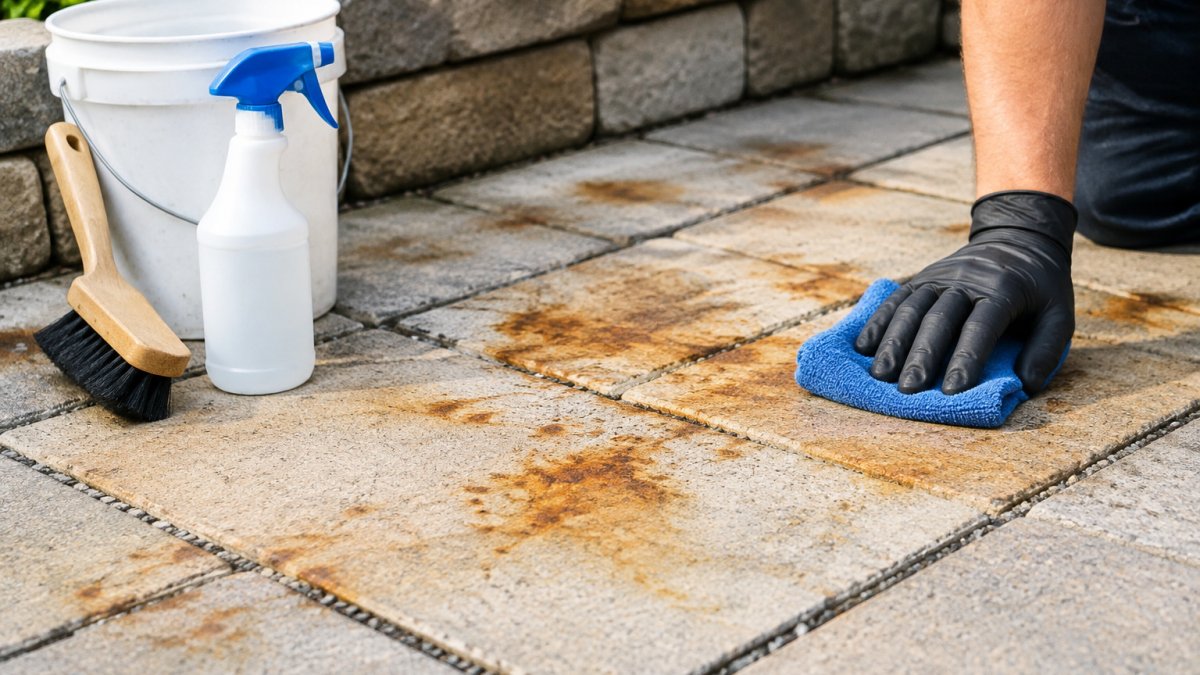
Rust spots on pavers usually come from iron that has nothing to do with the paver itself. Patio furniture left out in the rain, a rusty garden hose, or a metal planter can leave orange streaks as the metal corrodes and the water carries iron particles onto the stone. Iron can also come from iron-rich water, which leaves behind a stain as it dries.
Rust stains stick because the iron bonds into the tiny pores of concrete. A quick rinse rarely lifts it. The longer it sits, the deeper it sinks. That is why a stain that appeared last week often comes off with less effort than one that has been there for a year.
- Metal objects: Furniture legs, tools, and planters leave streaks when wet.
- Iron-rich water: Sprinklers and well water can leave brown or orange marks.
- Rainwater runoff: Water flowing over rusty metal carries the stain onto nearby pavers.
Watch out: Many people try a strong acid on a fresh stain before rinsing off loose debris. Clear the dirt first, or the cleaner will mix with grime and spread the mess.
Identify the Stain Type and Age Before You Choose a Cleaner
Before you buy anything, look closely at the stain. Fresh orange stains are usually the easiest to remove. Dark brown or black stains that have been there for months often need a stronger approach.
Check the surface too. Concrete pavers can have a sealed or unsealed finish, and some decorative pavers have a coating that a harsh cleaner can dull or strip away.
- Fresh (days old): Light orange, easy to lift with a mild cleaner.
- Older (weeks to months): Darker, harder to remove in one pass.
- Deep or set-in: Brown or black, often needs a dedicated remover and repeat treatments.
Best Rust Remover for Pavers: Choosing a Cleaner by Stain Severity
Match the cleaner to both the stain and the paver. Two stains that look identical can need different products if one paver is sealed concrete and the other is acid-sensitive natural stone. Use this decision path before you buy anything.
Step 1: Identify the paver material and finish. Concrete pavers, clay brick pavers, and natural stone (such as sandstone, limestone, or travertine) respond differently to acids. Sealed pavers have a protective coating that a harsh cleaner can strip, dull, or cloud. Colored or stamped concrete can lighten unevenly if a strong product sits too long.
Step 2: Judge stain age and depth. Fresh orange surface stains (days old) usually lift with a mild acid or a pH-neutral concrete cleaner. Stains that have darkened to brown or black over weeks to months have oxidized deeper into the pores and need a dedicated concrete-safe rust remover.
Step 3: Choose the product tier.
- Mild tier, household acid or pH-neutral cleaner: Best for fresh, small, light stains on unsealed or sealed concrete. White vinegar or lemon juice works here. These are the gentlest options and the least likely to damage a finish.
- Targeted tier, dedicated concrete-safe rust remover: Formulated to dissolve iron staining without etching concrete. Look for a label that explicitly says safe for concrete or pavers. These products typically contain chelating agents or mild acids and are the right call for older or stubborn stains.
- Professional tier: Large stains, stains that return after two or three treatment rounds, or acid-sensitive stone that you do not want to risk. Stop and get a pro involved rather than escalating to a stronger acid.
Material compatibility warnings. Acid-based rust removers can etch or discolor natural stone, especially limestone and travertine, and can strip sealers on any paver. Never use muriatic acid or a strong phosphoric acid blend on sealed or colored pavers without confirming the label allows it. If the label says "not for use on acid-sensitive stone," believe it.
Dilution and dwell time. Follow the product label for mix ratio and dwell time; do not improvise. Most dedicated removers are applied at a dilution stated on the container and left for the dwell time the label gives before scrubbing and rinsing. If the label gives a range, start at the weaker end and the shorter dwell time.
Watch out: Buying a generic "rust remover" without checking the paver material is the most common way homeowners etch a sealed or natural-stone surface. The label's surface-compatibility line matters more than the stain-severity claim on the front of the bottle.
The right cleaner depends on how fresh the stain is and what the paver is made of.
| Stain severity | Best cleaner tier | Key caution |
|---|---|---|
| Fresh, light orange (days old) | Mild: household acid or pH-neutral cleaner | Dilute and test on a hidden spot |
| Older, brown or black (weeks to months) | Targeted: dedicated concrete-safe rust remover | Follow the label for dilution and dwell time |
| Large, widespread, or returning stains | Professional tier | Stop escalating stronger acids yourself |
| Sealed or colored pavers | Check the label's surface-compatibility line | Harsh cleaners can strip sealers or dull color |
| Acid-sensitive natural stone | Confirm label allows it, or get a pro | Never use strong acids that etch stone |
How to Remove Rust From Pavers With Vinegar and Household Acids
Vinegar and lemon juice are the most common household options. They contain mild acids that can dissolve light rust. They work best on fresh stains and small areas.
- Sweep the area with a soft-bristle broom to remove loose dirt and debris.
- Wet the stained area with plain water.
- Apply white vinegar or lemon juice directly to the stain.
- Let it sit for about 10 to 15 minutes.
- Scrub gently with a stiff brush.
- Rinse thoroughly with water.
If the stain remains, repeat once. Stop if the paver starts to look dull or rough. Test a small hidden spot first.
Common mistake: Using undiluted acid. Dilute household acids with water unless the label says otherwise, and never leave them on longer than needed.
How to Remove Old Rust Stains From Concrete Step by Step
Older stains need a more deliberate process. This is where a dedicated concrete-safe rust remover shines.
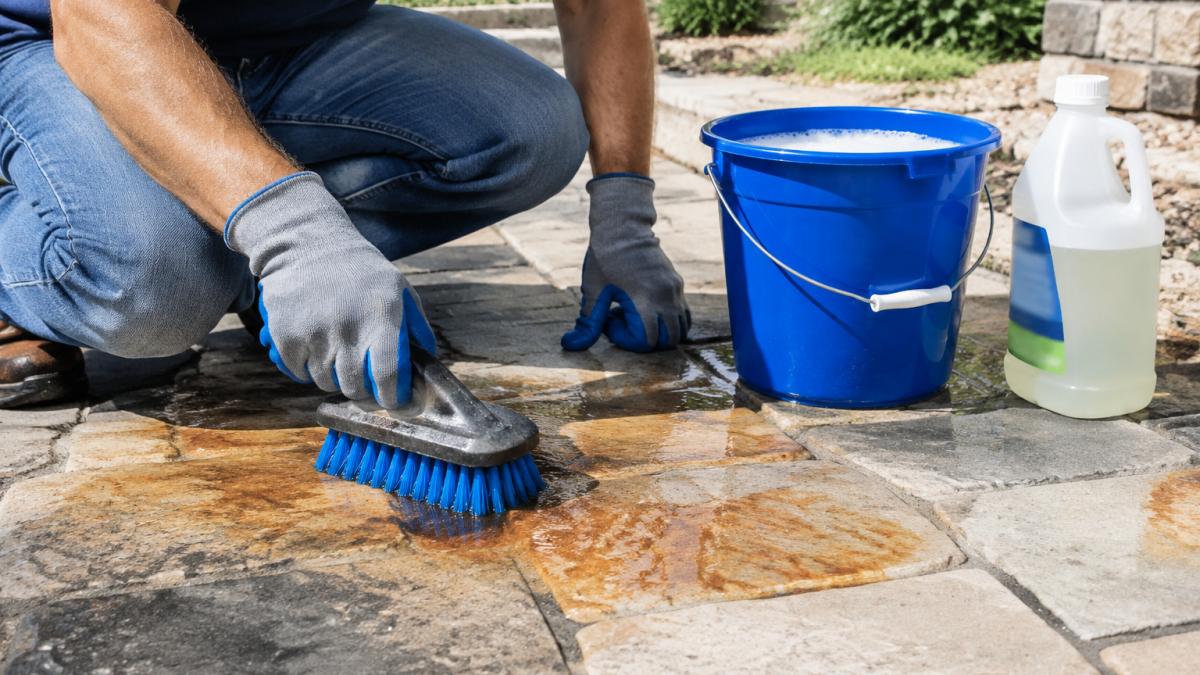
- Clear the area. Remove furniture and sweep away all loose debris.
- Pre-wet the surface. Dampen the paver so the cleaner spreads evenly and does not soak in unevenly.
- Dilute the product. Follow the label for the right mix ratio.
- Apply to the stain. Work it into the stain only, not the whole surface.
- Allow dwell time. Let the product sit for the time listed on the label, usually a few minutes.
- Scrub with a brush. Use a stiff scrub brush with steady, firm strokes. Elbow grease matters here.
- Rinse completely. Flush the area with clean water until no residue remains.
Repeat the process on stubborn spots. Many older stains take two or three rounds.
- Do not let the cleaner dry on the paver.
- Keep the product away from plants and grass.
- Wear gloves and eye protection.
Protecting Your Pavers: Test Spots, Dwell Time, Runoff, and Preventing Recurrence
This is the section most guides skip, and it is where a good outcome is won or lost. Treat it as three jobs: protect the surface during treatment, protect everything around it, and stop the rust from coming back.
Test before you treat. Pick an inconspicuous paver, under a planter, at the edge of the patio, or in a corner, and apply the cleaner exactly as you plan to use it. Let it dwell for the full label time, rinse, and let it dry completely. Check for lightening, dulling, clouding, or a rough texture. Sealed pavers may show a dull ring where the sealer was stripped; natural stone may etch.
Control dwell time. Leaving a strong cleaner on too long is the fastest way to etch concrete or strip a sealer. Set a timer for the label time and do not exceed it. Keep the surface damp during dwell; if the product starts to dry, mist it lightly with water rather than adding more cleaner. If one application does not work, repeat at the same dilution instead of mixing a stronger batch.
Protect plants, soil, drains, and pets. Rust-colored runoff and cleaner residue can harm grass, bedding plants, and soil, and can carry into storm drains. Before you start, pre-wet nearby plants and soil with plain water so they absorb less runoff, and cover or move pots.
Prevent recurrence. Rust comes back when the iron source stays put. Move metal furniture, planters, and tools off the pavers or set them on rust-proof feet, plastic pads, or a rack. Fix leaking hoses, dripping planters, and any metal that sits in standing water. If your irrigation or well water is iron-rich, consider a filter or route sprinklers away from the pavers.
Troubleshoot and recover. If a stain remains after two or three gentle rounds, stop escalating. A faint shadow may be permanent pitting rather than surface stain, and no consumer product will remove it; replacement of the affected paver or professional treatment is the realistic next step. If a paver lightens or dulls, rinse immediately and do not reapply; a sealer may restore an even look on sealed pavers, but etched natural stone usually needs a professional. If a cleaner leaves a white residue, rinse again with clean water and a soft brush, residue is often dried product, not damage.
Watch out: Rinsing cleaner or rust runoff into a storm drain or onto a lawn can harm plants, so capture or divert the runoff before you flush the area. Capture or divert the runoff before you flush the area.
Book a Professional Paver Cleaning With Soul Cleanse
Some stains are too deep or too widespread for a weekend project. If you have a large patio, stubborn rust that keeps returning, or pavers that need careful handling, a professional can help. Soul Cleanse is a family-run pressure washing company serving Marshall County.
For current pricing, visit our website to book a professional paver cleaning or request a quote.
Frequently Asked Questions
Can rust stains be removed from pavers?
Yes, most rust stains on concrete pavers can be removed, especially fresh ones. Start with a test spot in an inconspicuous area to check for discoloration or surface damage. Use a cleaner suited to concrete, apply it directly to the stain, let it dwell briefly, then scrub with a stiff brush and rinse thoroughly with water. Older or deep stains often need repeated treatments rather than one strong application. If the stain returns after several attempts, the source of the rust, such as a metal furniture leg or rusting chair, may still be in contact with the paver.
Does vinegar remove rust from pavers?
Vinegar can lift light, fresh rust stains from concrete pavers because its mild acid breaks down iron oxide. It works best on small areas and newer stains. For stubborn or older stains, vinegar usually needs longer dwell time and several applications, and it may not fully remove the discoloration. Dilute it if the paver finish is sensitive, always test a small spot first, and rinse well with water so acid does not stay on the surface.
What can I use to remove rust from concrete pavers?
Common options include household acids such as vinegar or lemon juice for light stains, and a dedicated concrete-safe rust remover for deeper or older stains. Avoid harsh chemicals that can etch the paver surface. Follow the product's dilution and dwell time directions, protect nearby plants, and keep rust-colored runoff away from lawns and storm drains.
How do you remove old rust stains from concrete pavers?
Remove loose dirt and debris with a soft-bristle broom first. Apply a concrete-safe cleaner directly to the stain, allow the recommended dwell time, then scrub with a stiff brush. Rinse with water and repeat if needed. Older stains typically require two or three treatments. Test every product on an inconspicuous area first, since some cleaners can change the color or finish of certain paver types.