 How-to
How Often to Seal Concrete Walkways: A Practical Schedule
Quick Summary
Most concrete walkways need sealing every few years, but the exact timing depends on the sealer type, foot traffic, and sun exposure. Check the surface every spring and fall with a simple water-drop test, and reseal when water soaks in instead of beading up. This way you can seal concrete walkways when wear actually shows, not after the damage is done.
- Penetrating sealers often need reapplication every few years.
- Check the walkway every spring and fall using the water-drop test.
- If water soaks in quickly and darkens the concrete, reseal the walkway.
- Clean the surface and let it dry fully before applying sealer.
- Apply sealer to damp concrete can trap moisture and cause cloudy patches.
Table of Contents
- How Often Concrete Walkways Need Sealing
- Factors That Change Your Resealing Schedule
- How to Seal Concrete Outside: Step-by-Step
- Inspecting Your Walkway: The Water-Drop Test and Visible Signs
- How Often to Seal Concrete Driveways Compared to Walkways
- Downsides of Concrete Sealer and When to Skip Resealing
- Booking Your Walkway Sealing With Soul Cleanse
- Frequently Asked Questions
How Often Concrete Walkways Need Sealing
Last Updated: November 12, 2026
Concrete walkway sealers vary in how long they last, so the right resealing interval depends on the product used. Some sealers last longer, and some wear out faster.
The right interval depends on what you put down, how much traffic it gets, and how much sun and rain it takes. A lightly used front walk under a shade tree can go longer.
Many homeowners wait until the surface looks chalky or stained before sealing, by which point the sealer may already be worn away.
Factors That Change Your Resealing Schedule
Several conditions decide how fast sealer breaks down. No single number fits every walkway. Start with the factors below and adjust your timing from there.
- Foot traffic and wheeled traffic
- Sun exposure and heat
- Rain, humidity, and standing water
- Winter freezing and thawing
- The type of sealer already on the surface
- The age and condition of the concrete
Foot Traffic, Weather, and Sun Exposure
Walkways take a lot of abuse. Feet, strollers, bikes, and pet traffic scuff the sealer every day. Over time, that wear thins the protective layer.
Sun is hard on sealer too.
Rain and moisture matter just as much. Water that sits on the surface or soaks in can carry dirt and oil deeper into the concrete.
In areas with winter freezing, freeze-thaw cycles can crack a worn sealer. Water gets into small gaps, freezes, and expands.
How Sealer Type Affects Maintenance Intervals
Not all sealers last the same amount of time. The type you choose sets the baseline for your schedule.
- Penetrating sealers soak into the concrete and protect from within. They do not form a thick film, so they wear less visibly. Many need reapplication every few years.
- Acrylic film-forming sealers sit on top of the surface. They add shine and color, but the film can wear, peel, or cloud over time. They often need resealing more often than penetrating types.
- Water-based sealers are easier to apply and clean up, but they can wear faster under heavy traffic.
- Solvent-based sealers tend to penetrate deeper and hold up well, though they require more care during application.
Check the product label or ask the installer what sealer is on your walkway. Knowing the type gives you a more accurate schedule.
How to Seal Concrete Outside: Step-by-Step
Good prep makes sealer last, and on a walkway the sequence matters as much as the product. Most failed jobs trace back to skipped cleaning, damp concrete, or application outside the label's temperature window. Use this walkway-specific checklist from inspection through curing.
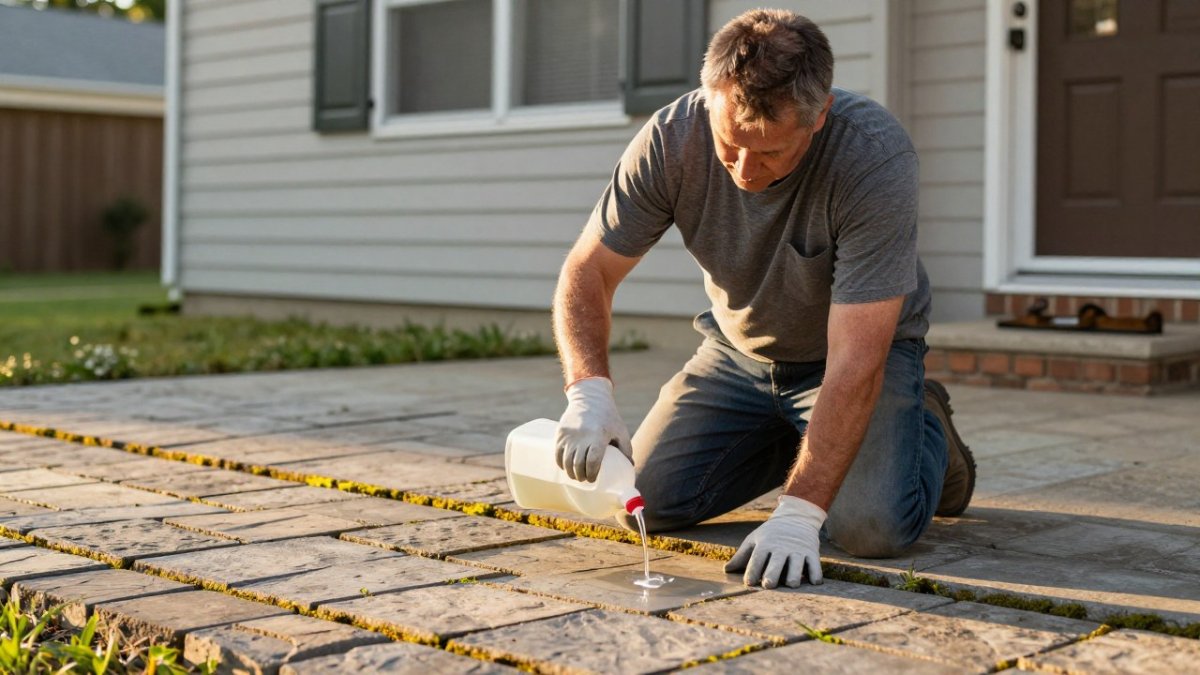
- Inspect and test first. Clean a small area, let it dry, and place a few drops of water on the surface. If the water soaks in quickly and darkens the concrete, the old sealer has worn through and the walkway is a candidate for resealing. If water still beads, you can usually wait.
- Wait for new concrete to cure. New walkways generally need to cure before sealing so residual moisture can escape; follow the sealer label for timing.
- Pick the right window. Choose a dry day with temperatures inside the sealer label's recommended range, with no rain forecast for the period the label specifies. Avoid applying in direct afternoon sun on hot days, which can cause the sealer to flash-dry unevenly.
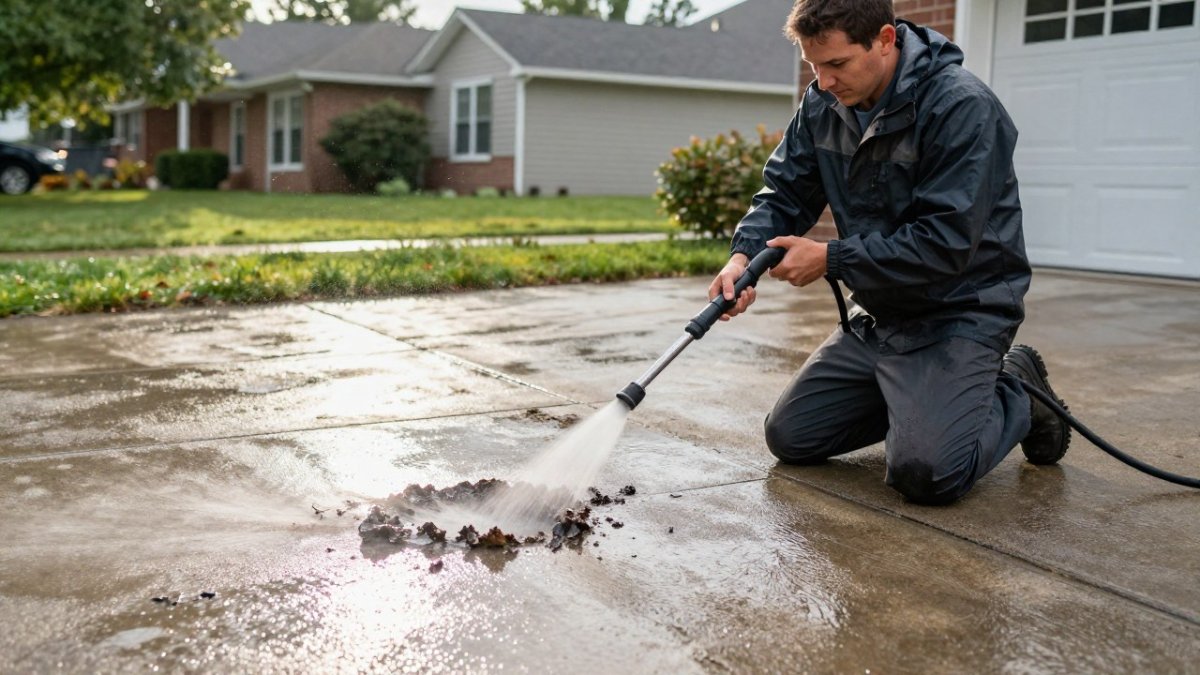
- Clean the surface. Remove dirt, leaves, and loose debris with a broom or leaf blower, then pressure wash on a gentle setting to lift grime, algae, and old sealer residue. Too much pressure can etch the concrete.
- Treat stains and organic growth. Address oil, rust, and mildew before sealing, because sealer can trap discoloration underneath. Let any cleaning solution rinse thoroughly.
- Let it dry fully. The concrete should be completely dry, which can take a day or more after washing depending on shade and humidity.
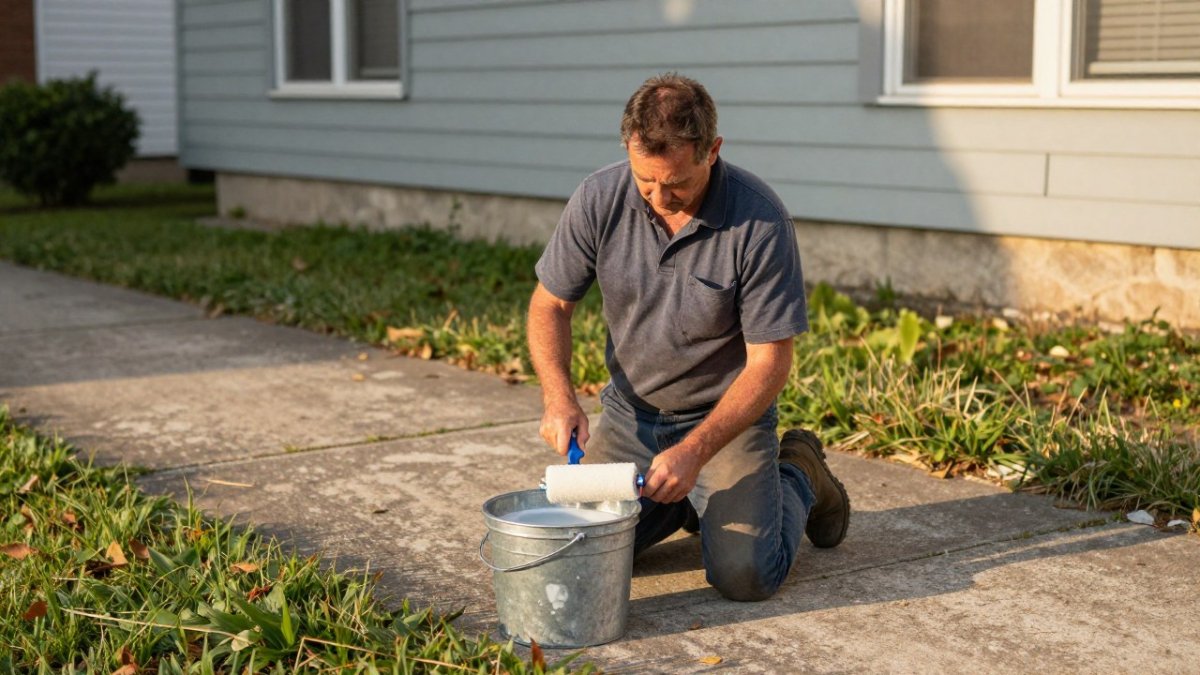
- Apply thin coats. Use a roller, sprayer, or pad, and work in manageable sections so you can keep a wet edge. Thin coats are generally easier to apply evenly than one heavy coat.
- Manage the cure. Keep people and pets off the walkway until the sealer cures, following the label directions, and watch for cool or shaded conditions that extend cure time.
Watch out: Applying sealer to damp concrete is one of the most common mistakes. It can trap moisture and cause cloudy patches or peeling.
Troubleshooting Failed or Over-Applied Sealer
If the walkway already has a problem, adding another coat usually makes it worse. Match the fix to the symptom.
- Peeling or flaking film: The old coating has lost adhesion, often from moisture or incompatible products. Strip the loose material, clean, dry, and reseal only after the surface is sound.
- Cloudy or white patches: This usually points to trapped moisture or application in cool, humid conditions. Allow the surface to dry and, if the haze persists, strip and reapply in a proper weather window.
- Slipperiness: Glossy film-forming sealers can become slick when wet. Consider a slip-resistant additive or switch to a penetrating sealer on pedestrian surfaces.
- Uneven appearance or lap marks: Heavy coats or application in direct sun can dry unevenly. Lightly scuff or strip the affected area and reapply in thin, even coats.
- Buildup from repeated recoating: Layers that never fully bond can peel. Strip back to bare concrete rather than adding another coat.
A simple maintenance checklist keeps the walkway ahead of these problems: inspect and water-test every spring and fall, clean when dirt or algae appear, reseal only when the test shows wear, and record the product and date used so the next application is compatible.
The steps below show the walkway sealing sequence and the timing each one depends on.
| Step | What to do | Time or frequency |
|---|---|---|
| Inspect and test | Clean a small area and place water drops on it | Every spring and fall |
| Wait for new concrete | Let residual moisture escape before sealing | Follow sealer label timing |
| Pick the window | Dry day, temperature in label range, no rain | Within label's recommended period |
| Clean the surface | Sweep debris, then pressure wash on gentle setting | Before sealing |
| Let it dry fully | Concrete must be completely dry | A day or more after washing |
| Apply thin coats | Work in sections and keep a wet edge | Per label directions |
| Manage the cure | Keep people and pets off until cured | Per label directions |
Inspecting Your Walkway: The Water-Drop Test and Visible Signs
You do not need special tools to check your walkway. A simple water test shows whether the sealer still works. Do this every spring and fall.
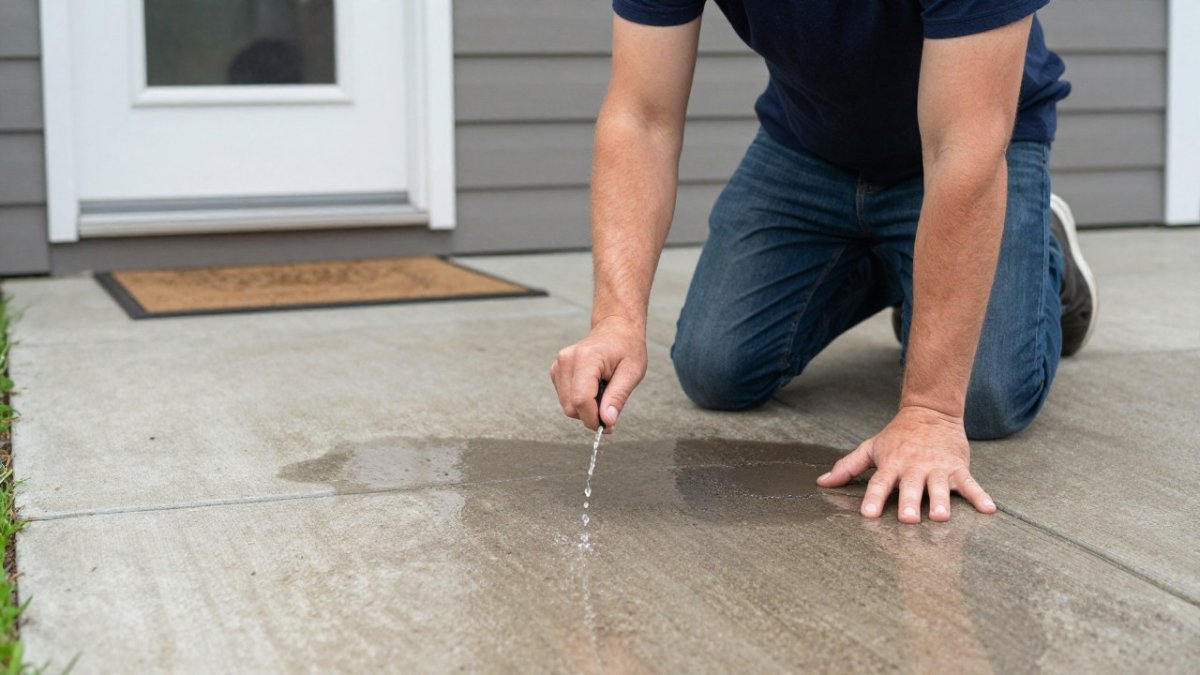
The water-drop test:
- Clean a small area and let it dry.
- Place a few drops of water on the surface.
- Watch what happens over about 10 minutes.
If the water beads up, the sealer is still doing its job. If the water soaks in quickly and darkens the concrete, the sealer has worn through and the walkway needs resealing.
Also look for these visible signs:
- Dull, chalky, or faded color
- Gray or worn patches, especially in high-traffic lanes
- Dark spots from oil or water that soak in
- Surface flaking or peeling
- Rough or sandy texture under your hand
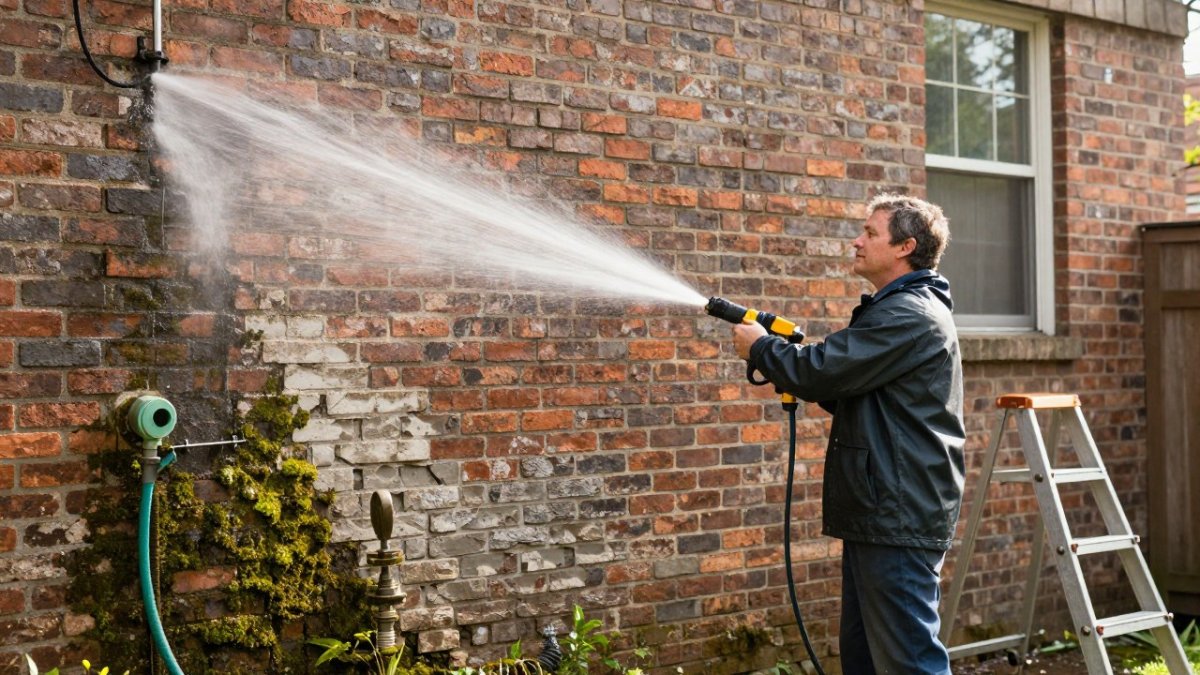
Mold, mildew, or discoloration on a walkway usually calls for cleaning before any resealing. Learn how to safely remove mold from siding and surfaces before you decide on resealing.
How Often to Seal Concrete Driveways Compared to Walkways
Driveways and walkways wear differently, so they rarely share the same schedule. A driveway carries the weight of cars, which puts heavy stress on the surface and often accelerates oil staining.
As a general guide, many driveways need sealing sooner than walkways because of vehicle traffic, tire friction, and oil drips. Keep driveway concrete looking clean and bright between sealing intervals.
Keep the same inspection habit for both. The water-drop test works on driveways too.
Downsides of Concrete Sealer and When to Skip Resealing
Sealer is useful, but it is not right for every surface. Knowing the drawbacks helps you decide when to skip it.
Possible downsides:
- Sealer can make some surfaces slippery when wet, especially glossy film-forming types.
- Some sealers can yellow or change the look of the concrete over time.
- Removing old film-forming sealer can be a difficult job.
- Recoating too often can build up layers that peel.
- Sealing over trapped moisture can cause cloudy or blistered patches.
When to skip resealing:
- The concrete is cracked, crumbling, or heaving. Repair the damage first.
- Water still seeps in after cleaning and drying, which may point to a moisture problem below the surface.
- The walkway is in shade and still beads water well.
- The existing sealer is peeling badly. Strip it before you apply anything new.
If you are not sure, a professional can check the surface and recommend the right next step.
Booking Your Walkway Sealing With Soul Cleanse
Soul Cleanse is a family-run pressure washing company in Marshall County. We clean and prepare concrete surfaces, and our team uses gentle but highly efficient equipment to remove dirt and grime.
If your walkway shows the signs covered above, a professional clean and inspection is a good place to start. You can schedule a driveway wash before sealing to remove ground-in stains and dirt. For walkway work, sidewalk cleaning keeps paths looking fresh and prepares them for sealer. If oil stains are the main problem, oil stain removal on concrete may work better than sealing alone.
Ready to protect your walkway? Get a quote from Soul Cleanse today.
BUTTON: Get Your Walkway Quote CARD_TITLE: Is your walkway due for sealing? CARD_TEXT: Soul Cleanse cleans and prepares concrete walkways across Marshall County.
Frequently Asked Questions
Is it ever too late to seal concrete?
It is rarely too late, but the timing depends on the surface. A walkway that has faded, picked up stains, or started to absorb water in the water-drop test is a good candidate for resealing even if its last coat was several years ago. Clean the surface thoroughly first, let it dry completely, and then apply a fresh coat. If the old sealer is flaking or peeling, it should be stripped before a new one goes on, because a new coat will not bond to loose material. Waiting too long mainly means more cleaning and surface prep before the new sealer can do its job.
Can you apply concrete sealer over old sealer?
In many cases, yes, but only if the existing sealer is intact and in good condition. A penetrating sealer can usually be applied over an older penetrating coat that is still absorbing water. Film-forming sealers, such as acrylics, need more care: if the old coat is peeling, cloudy, or wearing unevenly, it should be removed first. Applying a new film over a failing one traps the damage underneath. Test a small area and confirm the new sealer beads water and bonds properly before doing the whole walkway.
What are the downsides of sealing concrete?
Sealing concrete has trade-offs. Film-forming sealers can look glossy, become slippery when wet, and may peel if applied too thickly or over a damp surface. Some sealers can yellow or change the appearance of the concrete over time. Sealing also creates a recurring maintenance task, so the cost of repeated coats adds up. Applying sealer in the wrong conditions, such as high humidity, low temperatures, or on new concrete that has not cured, can cause cloudiness or poor adhesion. Choosing a sealer that matches the walkway's use and expected exposure helps reduce these problems.
How do I know when my concrete walkway needs resealing?
The simplest check is the water-drop test. Sprinkle a few drops of water on several spots along the walkway and watch for 10 to 15 minutes. If the water beads up, the sealer is still working. If it soaks in and darkens the concrete, the protection has worn off in that area. Other signs include fading color, a dull or chalky surface, oil stains that set in quickly, and small surface flakes. If only parts of the walkway fail, focus on those high-traffic or sun-exposed sections first, then decide whether a full recoat is needed.