 How-to
How Often to Pressure Wash Siding: A Maintenance Guide
Table of Contents
- Recommended Frequency for Washing Siding
- Factors That Influence How Often You Should Clean
- Soft Washing vs Pressure Washing Siding: Which Method When
- Pressure Washing Vinyl Siding PSI Settings and Technique
- Signs Your Siding Needs Cleaning Now
- Cost to Pressure Wash House: What to Expect
- Safety Precautions for DIY Siding Washing
- Long-Term Damage Risks of Over-Washing
- Frequently Asked Questions
Last Updated: October 4, 2026
Recommended Frequency for Washing Siding
How often you should pressure wash siding depends on what your siding is made of and where you live. Most homes need cleaning every 1-3 years. But the right schedule for your property is more specific than that.
Vinyl siding maintenance schedules
Vinyl siding is durable, but it collects dirt and grime over time. Clean vinyl siding every 1-2 years to keep it looking fresh. In areas with heavy rain, you might go longer between cleanings since rain naturally washes some dirt away.
If you live somewhere with lots of trees, algae and mold grow faster on shaded vinyl. You may need to clean annually in those spots. The good news: vinyl handles soft washing well, which means you can clean it without risk of damage.
Watch for these signs that vinyl needs cleaning now:
- Dark streaks or stains appearing
- Visible mold or mildew patches
- Dull, faded appearance
- Dirt buildup near the ground
Wood, brick, and fiber cement guidelines
Wood siding needs more frequent attention than vinyl. Clean wood every 1-2 years to prevent water intrusion and rot. Wood is porous, so it absorbs moisture and dirt more easily.
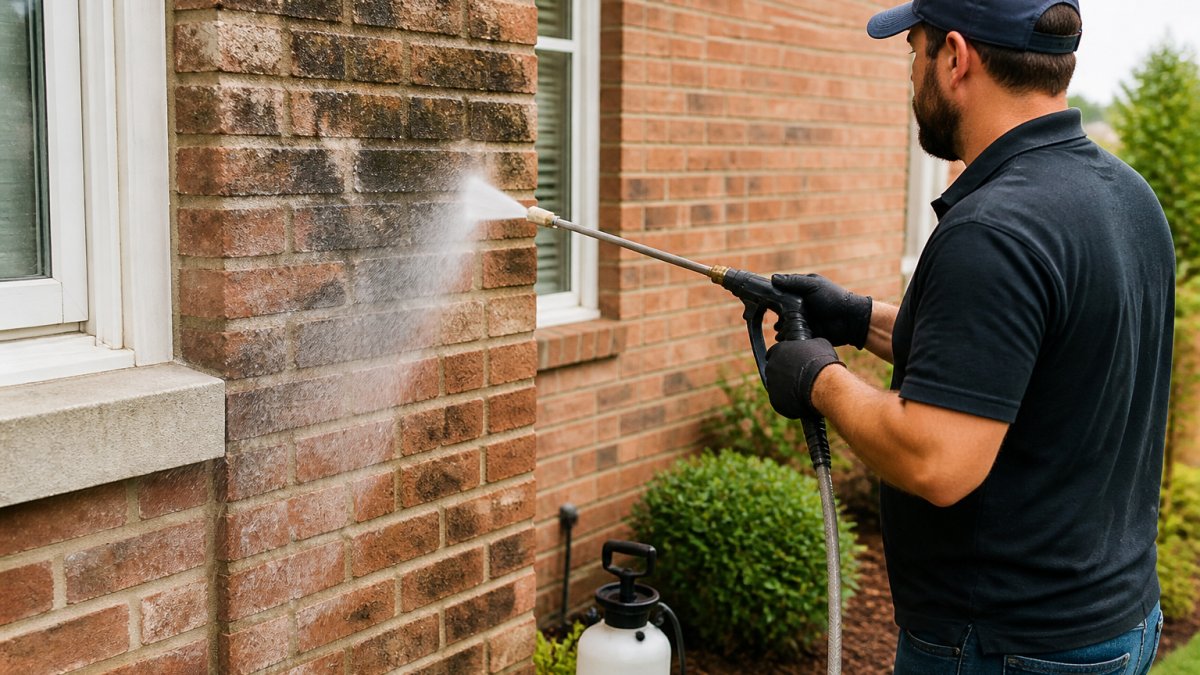
Brick is extremely durable and can go 2-3 years between cleanings. However, brick's porous nature means mold and algae can grow inside the surface.
Fiber cement siding sits between vinyl and wood in terms of maintenance needs. Clean it every 2-3 years with low-pressure methods. Fiber cement can crack if you use too much pressure, so technique matters.
Factors That Influence How Often You Should Clean
The frequency you need to clean siding depends on a combination of environmental factors, siding material, and your property's specific conditions. Understanding how these factors interact helps you create a realistic maintenance schedule rather than guessing.
Climate and weather exposure
Your regional climate is the single largest driver of cleaning frequency. Humid climates require annual or bi-annual cleaning, while arid climates allow 2-3 year intervals.
Coastal properties need annual cleaning due to salt spray corrosion; inland areas with moderate humidity typically need cleaning every 1-2 years.
Frequent light rain extends cleaning intervals through natural rinsing, while heavy seasonal downpours followed by dry periods trap moisture and accelerate mold growth.
Material-specific frequency based on climate
Different siding materials respond differently to the same climate conditions:
Vinyl: 12-18 months (humid), 2-3 years (dry). Wood: 12 months (humid), 18-24 months (dry). Brick: 18-24 months (humid), 2-3 years (dry). Fiber cement: 12-18 months (humid), 2-3 years (dry).
Shade, tree coverage, and sun exposure
Shaded areas and north-facing walls may need annual cleaning, while south-facing walls can extend to 2-3 year intervals.
Properties with heavy tree coverage need cleaning 6-12 months earlier than open properties; those in open sun can extend intervals by 6-12 months.
Mold, mildew, and algae accumulation patterns
Mold and mildew grow fastest in spring and fall; properties in temperate climates with long seasons see faster growth than those with extreme seasons.
Algae appears as green or brown streaks and spreads rapidly in sunny conditions. Early intervention prevents deep penetration into the siding substrate.
Surface-level mold responds to soft washing, while deep-penetrating mold may cause permanent discoloration. Climate-appropriate cleaning intervals prevent costly damage.
Soft Washing vs Pressure Washing Siding: Which Method When
The method you use matters as much as how often you clean. Two main approaches exist, and each has the right time and place.
Why soft washing protects your siding substrate
Soft washing uses low-pressure water with specialized cleaning solutions, making it gentler on all siding types and safer for structural integrity.
Biodegradable soap breaks down dirt and mold, while low-pressure rinsing removes debris without forcing water into gaps or under siding, preventing water intrusion.
Soft washing is ideal for:
- All vinyl siding
- Wood siding
- Brick and mortar joints
- Fiber cement siding
- Areas with delicate landscaping nearby
The detergent application process takes longer, but the results last longer too. Soft washing removes the root cause of growth, not just the surface stain.
When traditional pressure washing is appropriate
High-pressure washing works well on concrete but should rarely be used on siding, especially vinyl.
High-pressure water can force water behind siding, damage paint, crack fiber cement, splinter wood, and dent vinyl.
Pressure Washing Vinyl Siding PSI Settings and Technique
If you do choose pressure washing for vinyl, the settings matter enormously. Wrong settings cause permanent damage.
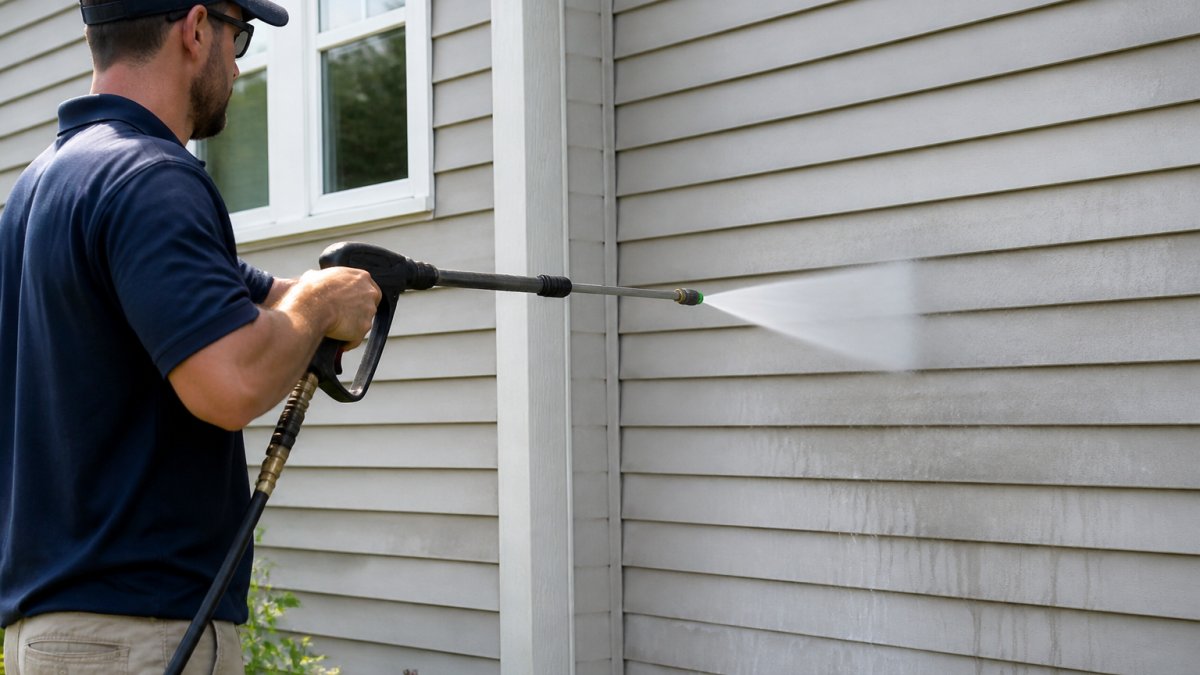
Safe PSI ranges and nozzle selection
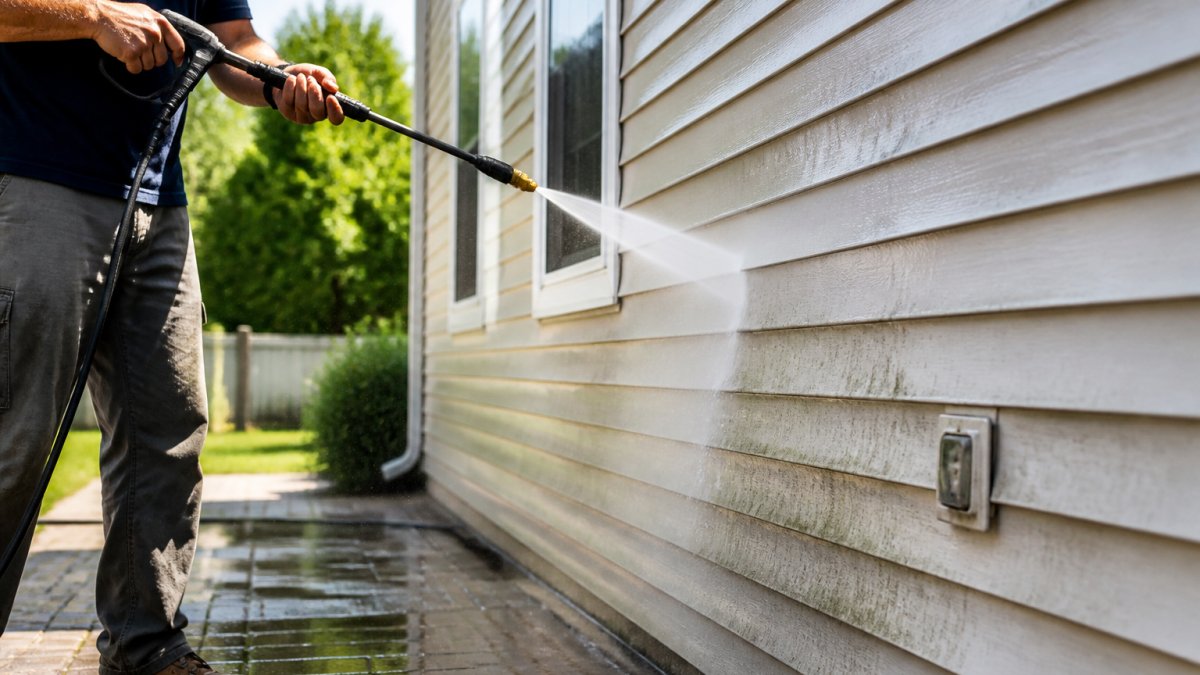
Vinyl siding should never exceed 1,500 PSI; professionals typically use 1,000-1,200 PSI to remove dirt without forcing water behind the siding.
Use a 40-degree fan spray nozzle to spread water across a wider area and reduce force on any single spot.
Keep the nozzle at least 12 inches away and angle spray downward at 45 degrees; never spray upward.
Detergent application and cleaning solutions
Biodegradable soap breaks down dirt and mold without harming landscaping or contaminating runoff.
Apply detergent at low pressure and let it sit 10-15 minutes before rinsing; the solution needs contact time to be effective.
Choose detergents formulated for your specific siding type to avoid residue or damage.
Signs Your Siding Needs Cleaning Now
You don't have to wait for your scheduled cleaning date if your siding shows these warning signs. Understanding the progression of damage helps you act before minor issues become expensive repairs.
Visual indicators of biological growth
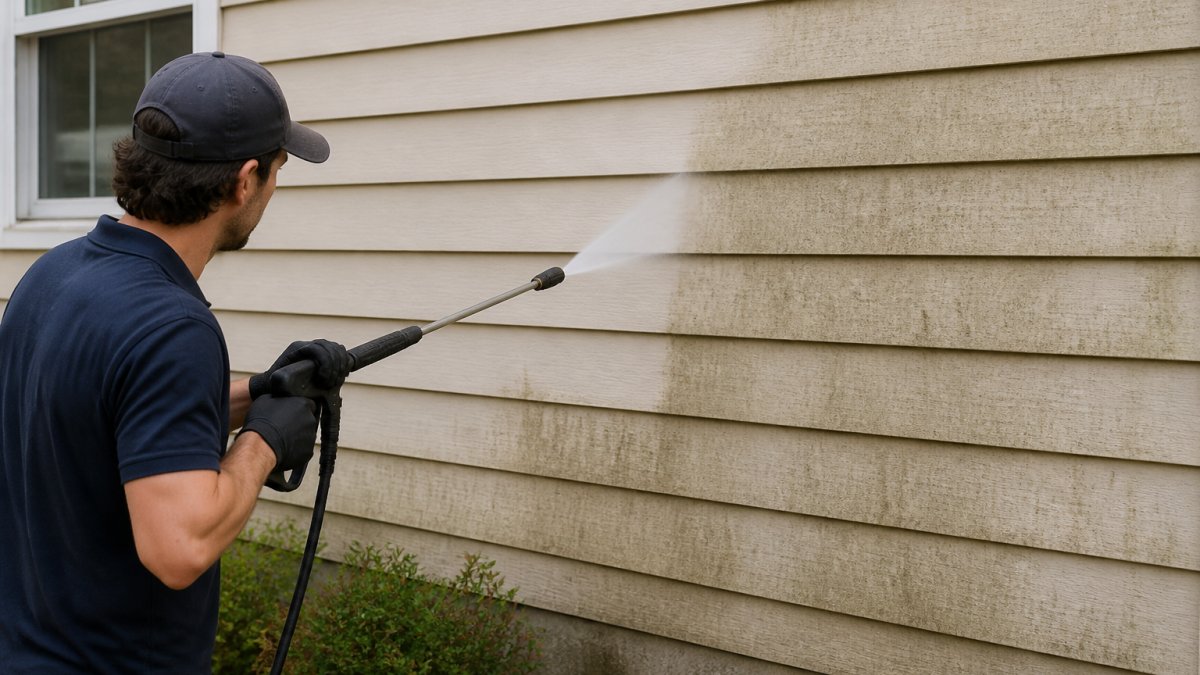
Black streaks and spots indicate mold colonization running vertically along water runoff paths. Address within 2-4 weeks to prevent deeper penetration.
Green or brown discoloration signals algae growth. Address within 4-8 weeks to prevent aesthetic degradation.
White or gray powdery coating indicates mildew or mineral deposits. Address within 4-6 weeks to prevent permanent staining.
Material-specific warning signs
Vinyl siding: Watch for dark discoloration, stress cracks, and chalking (white powdery residue). Use soft washing only if cracks appear.
Wood siding: Soft spots indicate rot; peeling paint means water intrusion will accelerate. Visible mold is a critical warning sign requiring immediate attention.
Brick and mortar: Efflorescence (white deposits) and soft mortar joints indicate moisture intrusion. Visible growth suggests deeper internal colonization.
Fiber cement: Cracks or splintering indicate the material is degrading. Fiber cement can absorb moisture and swell, then shrink and crack as it dries. Once cracking begins, water intrusion accelerates. Discoloration or soft areas suggest moisture damage.
Damage progression and urgency levels
Immediate action (clean within 1-2 weeks):
- Visible water stains or mineral deposits that are spreading
- Soft spots on wood siding
- Cracks in fiber cement
- Mold growth on wood siding
- Paint or stain peeling on wood
High priority (clean within 2-4 weeks):
- Black mold streaks on any siding type
- Visible mold patches covering more than 10% of a wall
- Efflorescence on brick
- Discoloration that's spreading visibly
Moderate priority (clean within 4-8 weeks):
- Green or brown algae streaks
- Early-stage mildew
- Dull or faded appearance
- Dirt buildup near the ground
- Mineral deposits from water runoff
Why timing matters
Biological growth progresses in stages. In the first 2-4 weeks, mold and algae colonize the surface. At this stage, soft washing removes the growth completely. After 4-8 weeks, growth penetrates deeper into the siding material. After 8-12 weeks, the growth may have caused permanent discoloration or structural damage.
The longer you wait, the more aggressive the cleaning method must be, and the higher the risk of damage. This is why addressing warning signs promptly is more cost-effective than waiting for scheduled maintenance.
Cost to Pressure Wash House: What to Expect
Professional cleaning costs vary based on house size, siding material, and how dirty the surfaces are. For an accurate estimate, contact a local professional for a quote.
DIY equipment rental costs less upfront but requires time and skill to avoid damage. Professional services cost more but eliminate the risk of damaging your siding. The investment in professional cleaning often pays for itself by extending the life of your siding and preventing costly repairs.
Safety Precautions for DIY Siding Washing
If you choose to pressure wash yourself, safety is essential. Pressure washing equipment is powerful and can cause injury.
Pressure regulation and water runoff control
Wear safety glasses to protect your eyes from water spray and debris. Pressure washers kick back force, so maintain firm footing and grip the wand with both hands.
Start with lower pressure and test on a hidden area first. Increase pressure only if the lower setting isn't effective. Always work from top to bottom so dirty water runs down, not up into seams.
Control water runoff to prevent erosion or flooding. Direct spray away from windows, doors, and foundation vents. Be mindful of neighbors' properties. Water runoff can damage landscaping or soak into foundations.
Protecting windows, landscaping, and entry points
Cover air conditioning units, outdoor outlets, and light fixtures before you start. Water forced into these areas can cause electrical damage. Use tarps or plastic sheeting to protect delicate plants and landscaping.
Close all windows and doors. Even with care, some water spray can find its way inside. Turn off exterior water sources and protect them from high-pressure spray.
Never spray directly at window seals or door frames. Water forced into these areas leads to water intrusion and interior damage. If you're not confident in your ability to avoid these areas, professional cleaning is the safer choice.
Long-Term Damage Risks of Over-Washing
Cleaning your siding too frequently or with too much pressure causes problems that cost far more to fix than regular maintenance.
Excessive pressure washing forces water behind siding, where it sits and causes rot in wood framing, mold growth inside walls, and structural damage over time. This damage often goes unnoticed until it's severe.
Over-washing also breaks down protective coatings and sealants. Paint and stain protect wood from UV damage and moisture. Once these coatings fail, water intrusion accelerates.
Frequent cleaning with harsh detergents can damage the siding substrate itself. Some materials become brittle or discolored over time.
Soul Cleanse, a dedicated family-run pressure washing company, revitalizes residential and commercial properties throughout Marshall County with high-quality, gentle yet highly efficient cleaning solutions. Our skilled professionals utilize state-of-the-art equipment to meticulously remove dirt, mold, mildew, and graffiti, enhancing curb appeal and preserving the integrity and lifespan of your exterior surfaces.
Frequently Asked Questions
Are you supposed to pressure wash siding?
Yes, but with caution. Siding should be cleaned periodically to remove dirt, mold, and mildew that accumulate over time. However, the method matters significantly. High-pressure washing can damage vinyl siding, force water into seams, and cause structural issues. Soft washing, which uses lower pressure and biodegradable cleaning solutions, is safer for most siding types and achieves better long-term results without risking water intrusion.
What is the difference between soft washing and pressure washing vinyl siding?
Soft washing uses low-pressure water (under 500 PSI) combined with specialized cleaning solutions to remove dirt and biological growth without damaging the siding substrate. Pressure washing applies higher force (1500+ PSI) to blast away buildup. For vinyl siding, soft washing is preferred because it prevents surface damage, protects the protective coating, and eliminates the risk of water entering behind the siding, which can cause rot and mold inside walls.
How much does it cost to pressure wash a house?
Pricing depends on your home's square footage, siding material, condition, and local labor rates. Factors include whether you need soft washing versus pressure washing, the extent of mold or mildew growth, and accessibility. For an accurate quote tailored to your property's specific needs and condition, contact Soul Cleanse directly to discuss your situation and receive a personalized estimate.
What PSI should I use to clean vinyl siding safely?
Vinyl siding should be cleaned at 1200-1400 PSI maximum, and many professionals recommend staying under 1000 PSI to avoid damage. Use a fan spray nozzle rather than a pointed jet to distribute pressure evenly. Pair lower pressure with a biodegradable detergent solution to effectively remove algae accumulation and surface oxidation without compromising the siding's integrity or creating gaps where water can seep behind panels.
Protecting your home's exterior requires the right approach. Over-aggressive cleaning causes expensive damage that undermines the very goal of maintenance. Soul Cleanse uses state-of-the-art equipment and proven soft washing methods to clean your siding safely and effectively. Our family-run team delivers guaranteed satisfaction while preserving the integrity of your exterior materials. Get Quote!