 How-to
How to Clean Brick Exterior Safely
Table of Contents
- Assess Your Brick, Mortar, and Age Before Cleaning
- Prepare the Work Area and Protect Surrounding Surfaces
- Remove Loose Dirt and Debris
- Choose the Best Cleaner for Exterior Brick
- How to Clean Brick Without a Pressure Washer
- How to Remove Mold From Brick Safely
- Pressure Washing Brick House Safely
- Rinse Thoroughly and Inspect for Damage
- Frequently Asked Questions
Last Updated: October 11, 2026
Assess Your Brick, Mortar, and Age Before Cleaning
Before you start to clean brick exterior safely, take time to evaluate what you're working with. Different brick types, mortar conditions, and ages require different approaches. This assessment prevents damage and ensures you choose the right cleaning method.
Inspect the brick condition first. Look for cracks, spalling (where the surface flakes off), or soft spots. Old brick is more fragile than newer brick. If mortar is crumbling or missing between bricks, aggressive cleaning can cause further damage.
Check the mortar joints closely. Mortar deteriorates over time. Soft, sandy mortar cannot handle high-pressure water. Hard, modern mortar can tolerate more aggressive cleaning. Run your fingernail along the mortar line. If it crumbles easily, use only gentle methods.
Note the brick age and type. Historic brick requires extra caution. Handmade brick from the 1800s or early 1900s is softer than machine-made modern brick.
Identify stain types before cleaning. Different stains need different solutions. Dirt and grime respond to water and mild detergent. Mold and moss require specific treatments. Efflorescence (white, chalky deposits) needs acidic cleaners. Paint requires different removal methods than biological growth.
Test any cleaning method on a small, hidden area first. This tells you how the brick will respond before you commit to cleaning the entire wall.
Prepare the Work Area and Protect Surrounding Surfaces
Preparation prevents damage to landscaping, windows, and nearby structures. Spend time on this step before you begin cleaning brick exterior surfaces.
Clear the work area completely. Remove potted plants, outdoor furniture, and decorations. Move grills and air conditioning units away from the wall. These items can be damaged by cleaning solutions or water spray.
Protect windows and doors. Cover window panes with plastic sheeting or cardboard. Tape the edges securely. Cleaning solutions can etch glass, and high-pressure water can force moisture into window frames.
Shield landscaping and gardens. Drape plastic over shrubs and flower beds. Use tarps to protect soil and plants from cleaning chemicals. Even mild detergent can harm delicate plants.
Cover electrical outlets and fixtures. Tape over outdoor outlets, light fixtures, and any electrical equipment. Water and electricity don't mix. Protecting these prevents hazards and equipment damage.
Wet down surrounding surfaces first. Before applying any cleaner, spray nearby grass and plants with plain water. This dilutes any chemical runoff and reduces damage risk.
Wear proper protective gear. Use safety glasses to protect your eyes from spray and splashing. Wear gloves to protect your hands from cleaning chemicals. Consider a respirator if using acidic cleaners or working in enclosed areas.
Remove Loose Dirt and Debris
Start with the gentlest approach. Remove surface dirt before applying any cleaning solutions. This makes the actual cleaning faster and more effective.
Dry brush the brick surface. Use a soft-bristled masonry brush or broom. Brush horizontally across the brick to remove dust, cobwebs, and loose debris. This step takes 10-15 minutes for a typical wall but saves time later.
Use a leaf blower for light debris. A standard leaf blower removes loose dirt without water. This works well for brick patios and walkways with minimal buildup.
Rinse with low-pressure water first. Use a garden hose with a standard nozzle. Start from the top and work downward. This removes more loose material before you apply any cleaner.
Pay attention to mortar joints. Dirt accumulates in the spaces between bricks. Brush joints carefully to remove buildup without damaging soft mortar.
Never use a stiff wire brush on brick. Wire brushes damage the fired clay surface and can gouge mortar joints permanently.
Choose the Best Cleaner for Exterior Brick
Selecting the right cleaner prevents damage and gets better results. Different cleaners work for different problems.
Mild detergent and water work for general dirt. Mix a few drops of dish soap with warm water. This is the safest option for all brick types. It removes dirt and grime without harming the brick surface or mortar.
Brick-safe cleaners target stubborn stains. Commercial brick cleaners are formulated to work on fired clay without etching or discoloring. Follow product instructions carefully. Test on a hidden area first.
Acidic cleaners remove efflorescence and mineral deposits. White, chalky deposits on brick are efflorescence. Acidic cleaners dissolve these deposits. However, acidic cleaners can damage soft mortar. Use only on hard, well-maintained mortar joints. Always dilute according to directions.
Never use muriatic acid without professional guidance. Muriatic acid is extremely strong and dangerous. It can damage brick, mortar, and surrounding surfaces. Professional cleaners use it, but homeowners should avoid it.
Avoid bleach on brick exteriors. Bleach can discolor brick and leave residue. It's also harsh on mortar. Stick with gentler options.
When choosing a cleaner, consider what you're removing. General dirt needs mild soap. Mold needs a different approach. Paint requires specialized removal methods.
How to Clean Brick Without a Pressure Washer
You can clean brick exterior surfaces effectively without high-pressure equipment. This method is safer for older brick and delicate mortar.
Mix your cleaning solution. Combine one part mild detergent with ten parts warm water. For tougher stains, you can use a brick-safe cleaner diluted according to package directions.
Apply the solution with a sponge or brush. Soak a soft-bristled masonry brush in the cleaning solution. Apply it to the brick in small sections, working from top to bottom. Let the solution soak for 10-15 minutes.
Scrub gently with circular motions. Use moderate pressure. You're not trying to blast away stains, just loosen them. Aggressive scrubbing damages brick and mortar.
Rinse thoroughly with clean water. Use a garden hose with a standard nozzle. Rinse from top to bottom to prevent dirty water from running down already-cleaned areas. Continue rinsing until the water runs clear.
Work in small sections. Cleaning 4-by-4-foot sections at a time keeps the solution from drying before you rinse. Dried cleaner can leave residue.
Allow proper drying time. Don't apply another coat of cleaner immediately. Let the brick dry completely between applications. This typically takes 24 hours in dry weather.
This method works well for how to clean brick without a pressure washer on patios, walkways, and walls with moderate soiling.
How to Remove Mold From Brick Safely
Mold and mildew grow on brick in damp conditions. Removing them requires a different approach than general cleaning.
Identify mold versus dirt first. Mold appears as dark green, black, or brown patches. It often grows in shaded areas or where moisture collects. Dirt is usually gray or tan and doesn't have a fuzzy appearance.
Use a mold-specific cleaner. Mix one part white vinegar with three parts water. Alternatively, use a commercial mold-killing cleaner designed for masonry. Apply the solution and let it sit for 15-20 minutes.
Scrub the affected area gently. Use a soft-bristled brush. Don't scrub aggressively, as this can spread spores and damage brick.
Rinse thoroughly. Mold spores need moisture to survive. Incomplete rinsing leaves moisture that encourages regrowth. Rinse multiple times until no cleaner residue remains.
Improve drainage to prevent regrowth. Mold returns when brick stays damp. Trim trees or shrubs blocking sunlight. Ensure gutters drain away from the wall. Consider improving air circulation around the affected area.
Wear a mask when removing mold. Mold spores can irritate lungs (the CDC). A simple dust mask provides basic protection. For extensive mold, consider professional removal.
To clean brick exterior safely when removing mold means addressing the moisture problem, not just cleaning the surface. Without fixing the underlying dampness, mold returns within weeks.
Pressure Washing Brick House Safely
Pressure washing can clean brick quickly, but improper technique causes damage. Understanding safe pressure-washing limits protects your home.
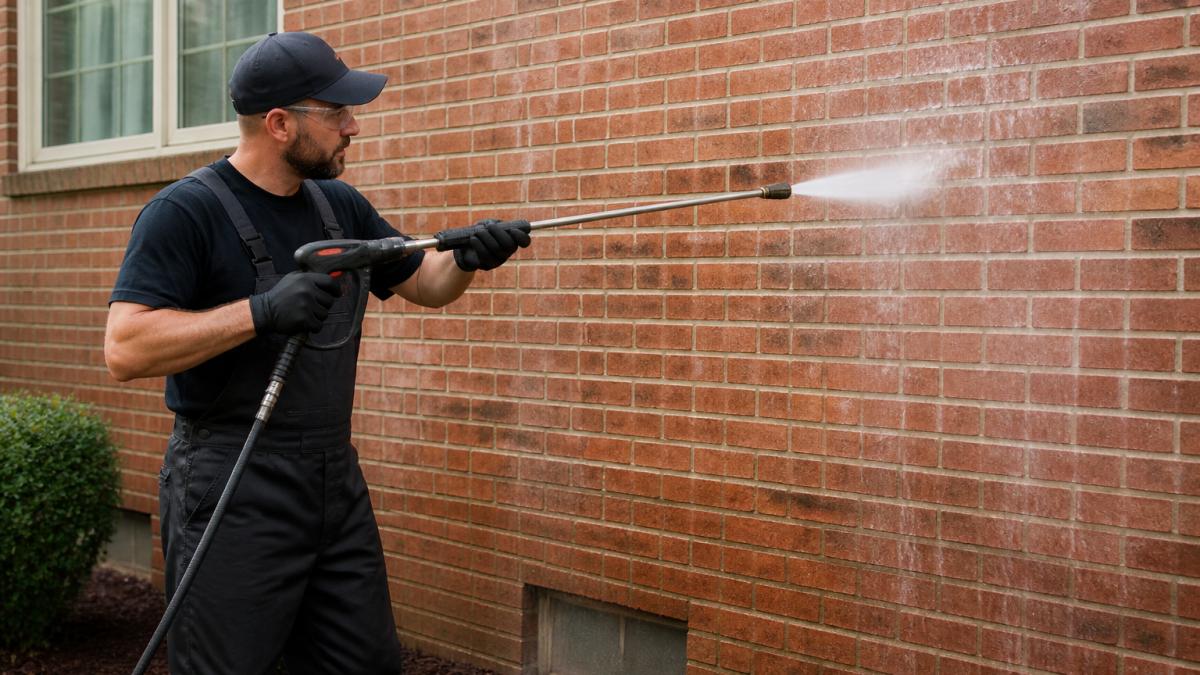
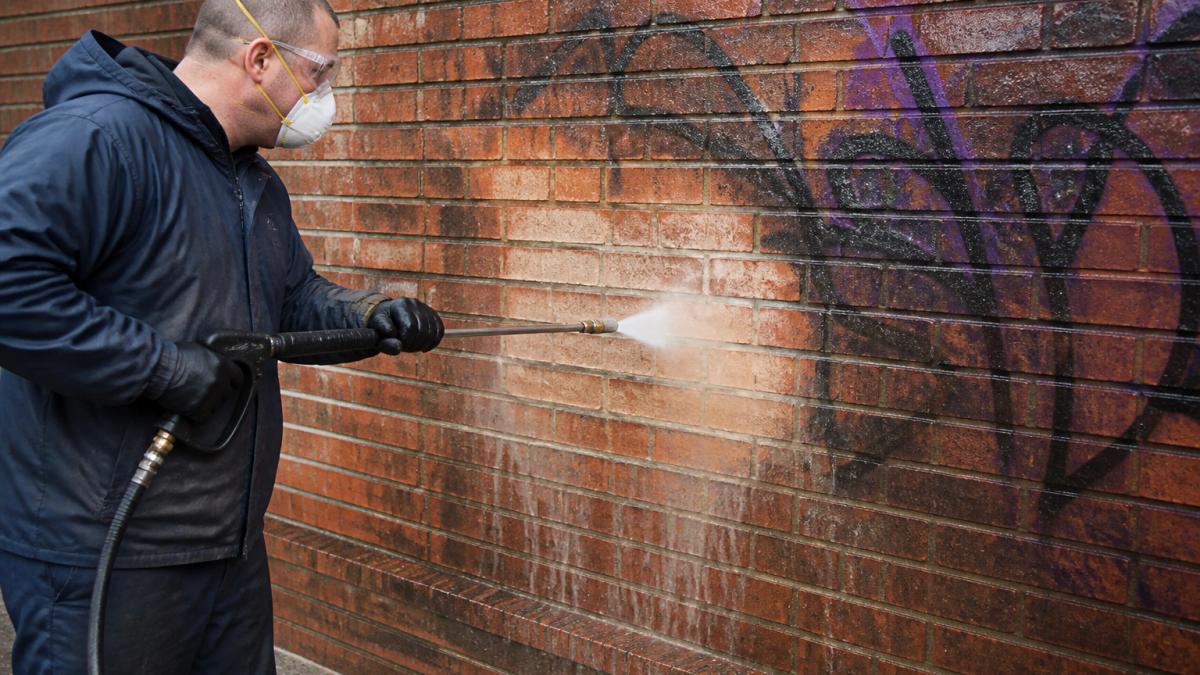
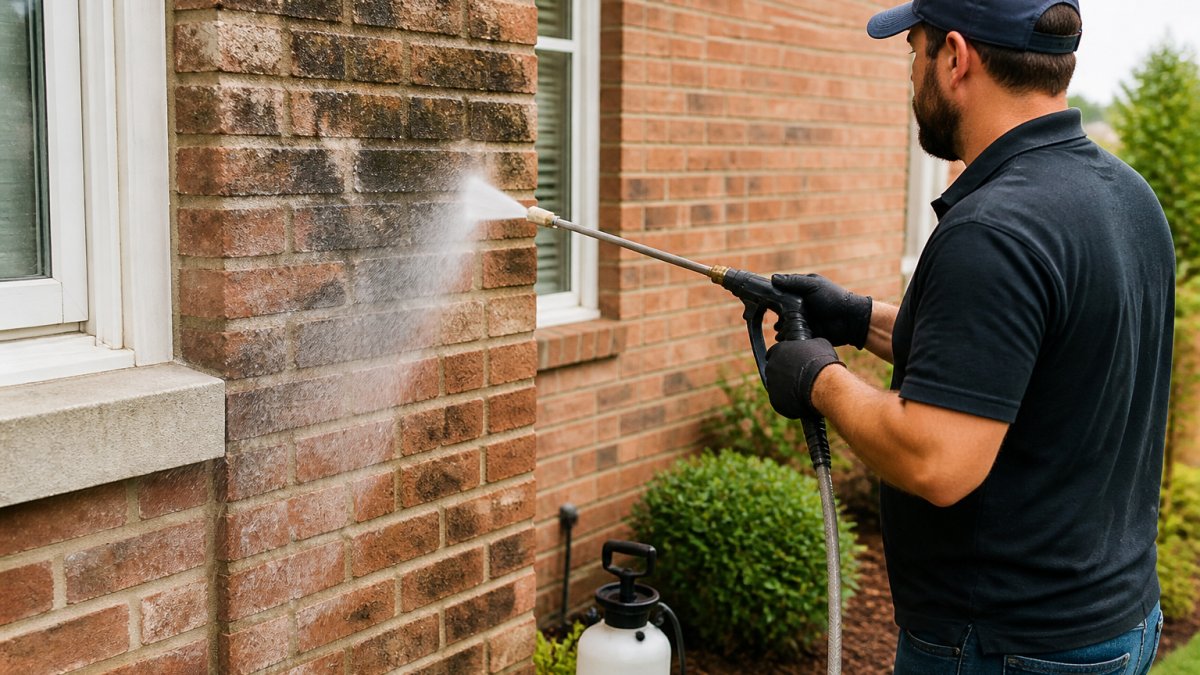
Use low pressure only. Safe pressure for brick is 1,500 PSI or less. Many homeowners use 3,000-4,000 PSI, which damages brick and mortar.
Choose the right nozzle. A 40-degree or 45-degree fan nozzle spreads water over a wider area, reducing pressure at impact.
Maintain proper distance. Hold the nozzle at least 12-18 inches from the brick surface. Keep the spray at a slight downward angle.
Work from top to bottom. Start at the roof line and work downward. This prevents dirty water from running down already-cleaned areas.
Never pressure wash old or deteriorating brick. If the brick is soft, crumbling, or has failing mortar, pressure washing causes more damage than it prevents.
Protect mortar joints. Angle the spray away from mortar lines. High pressure can erode mortar and weaken the wall structure.
Allow the brick to dry between passes. Don't repeatedly pressure wash the same area. One pass at low pressure is usually sufficient. Multiple passes increase damage risk.
Pressure washing brick house surfaces requires discipline. Just because you can apply higher pressure doesn't mean you should.
Rinse Thoroughly and Inspect for Damage
Final rinsing removes all cleaning solution residue. Thorough inspection catches damage early.
Rinse multiple times with clean water. One rinse isn't enough. Leftover cleaner residue attracts dirt and can leave white streaks or deposits. Continue rinsing until the water runs completely clear.
Use a garden hose for final rinse. Low-pressure water removes residue without damage. Spray from top to bottom systematically.
Allow 48 hours for complete drying. Don't assume the brick is dry after a few hours. Deep moisture takes time to evaporate. Wait at least two days before assessing the final result.
Inspect the brick and mortar carefully. Look for any new cracks, missing mortar, or areas where the brick surface is damaged. Small issues now can become major problems if left untreated.
Check for water intrusion. Look inside near cleaned areas for water stains or moisture. If water entered the wall, you may need to address ventilation or drainage issues.
Document the results. Take photos of the cleaned areas. This creates a baseline for comparing future cleaning results and tracking the condition of your brick exterior.
| Inspection Point | What to Look For | Action if Found |
|---|---|---|
| Mortar joints | Cracks, missing mortar, erosion | Contact a mason for repair |
| Brick surface | Spalling, gouges, discoloration | Monitor for expansion; consider sealing |
| Water marks | Staining inside walls, damp spots | Improve drainage or ventilation |
| Efflorescence | White deposits returning | Ensure complete drying; consider sealer |
| Mold regrowth | Dark patches in shaded areas | Address moisture source |
Cleaning brick exterior surfaces safely protects your investment and maintains your home's appearance. The difference between a successful cleaning and costly damage comes down to preparation, method selection, and patience. At Soul Cleanse, we understand that brick requires a thoughtful approach.
Frequently Asked Questions
What is the safest way to clean exterior brick?
Start by assessing the brick condition and age. Remove loose dirt with a soft brush, then apply a mild detergent or brick-safe cleaner diluted with water. Scrub gently with a soft-bristled masonry brush, allow the solution to dwell for 10-15 minutes, and rinse thoroughly with low-pressure water. For stubborn stains, use a low-pressure washer (below 1500 PSI) at a 45-degree angle, keeping the nozzle at least 12 inches from the surface. Always test on an inconspicuous area first.
Can you pressure wash a brick house safely?
Yes, but only with caution and proper technique. Use a low-pressure setting (below 1500 PSI) with a 45-degree spray nozzle to avoid damaging the brick and mortar. Keep the nozzle at least 12 inches away from the surface and never aim directly at mortar joints. Pressure washing brick house safely requires testing on a small area first, wearing protective equipment, and stopping immediately if you see surface damage. For older or delicate brick, hand cleaning with a soft brush and detergent is often the safer choice.
How do you remove mold from brick without causing damage?
Use a commercial brick-safe cleaner designed for mold removal. Apply the solution and let it dwell for 15-20 minutes to kill the mold. Scrub gently with a soft-bristled brush, then rinse thoroughly with water. For extensive mold, a low-pressure washer (under 1500 PSI) can help, but hand scrubbing is safer for protecting mortar.
What cleaner is safe to use on brick and mortar?
Mild detergent mixed with water, dish soap solutions, or commercial brick-safe cleaners are all safe options. Avoid acidic cleaners on old brick or historic mortar, as they can erode the mortar joints. Always dilute cleaning solutions according to product instructions, and rinse thoroughly after application. If you're unsure about a specific cleaner, consult a masonry professional before treating large areas.