 blog
blog
5 Best Exterior Cleaning Methods for Curb Appeal
Table of Contents
- Why Exterior Cleaning Matters for Property Value
- Pressure Washing: High-Impact Cleaning for Driveways and Hardscapes
- Soft Washing vs Pressure Washing for Siding
- Removing Oil Stains from Concrete Driveway
- Roof and Gutter Cleaning for Long-Term Protection
- Window and Skylight Cleaning
- Exterior Cleaning Maintenance Schedule
- DIY vs. Professional Exterior Cleaning: Cost and Results
- Frequently Asked Questions
Last Updated: September 30, 2026
Why Exterior Cleaning Matters for Property Value
Your home's exterior shapes first impressions and signals whether you maintain your property. Dirt, mold, mildew, and grime don't just look bad, they deteriorate surfaces over time, which is why understanding exterior cleaning methods is essential. Wood rots, concrete cracks, and siding weakens. What starts as cosmetic becomes structural.
Exterior cleaning methods stop this progression before it starts. Different surfaces need different approaches: pressure washing works on concrete but damages wood, while soft washing protects delicate siding. The method you choose determines your results and protects your investment for years to come.
Pressure Washing: High-Impact Cleaning for Driveways and Hardscapes
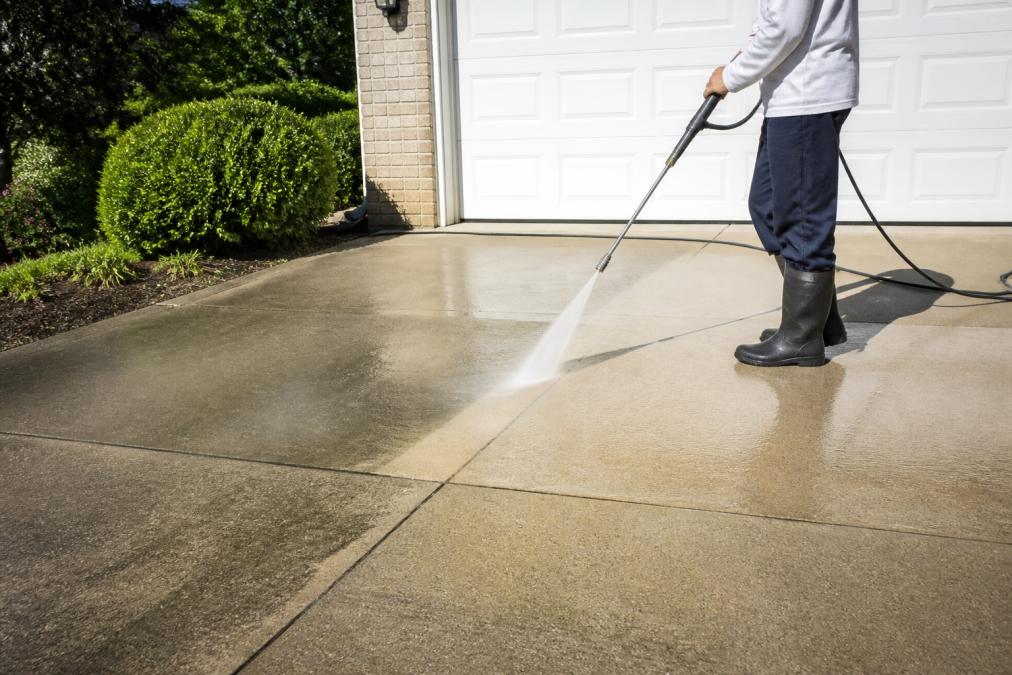
Pressure washing uses high-velocity water to blast away dirt, algae, and stubborn stains. For hardscapes like driveways and concrete patios, it's often the fastest and most effective solution.
How Pressure Washing Works
A pump pressurizes water through a narrow nozzle at extreme velocity. Most residential systems operate between 2,000 and 4,000 PSI (pounds per square inch). A trigger gun lets you control the spray and adjust nozzles to change intensity. Some systems heat water, which improves cleaning power on oily stains.
Proper technique matters as much as equipment. Holding the nozzle too close or at the wrong angle can gouge concrete or strip paint. Maintain proper distance and angle to clean effectively without surface damage.
Best Surfaces for Pressure Washing
Pressure washing excels on hard, non-porous surfaces: concrete driveways, patios, brick, and stone. Avoid pressure washing on wood siding, vinyl, aluminum siding, roof shingles, soft stucco, and painted surfaces, these materials can be gouged, stripped, or warped. That's where soft washing becomes the better choice.
Soft Washing vs Pressure Washing for Siding
Soft washing uses low-pressure water combined with specialized cleaning solutions to remove dirt, mold, and mildew. For exterior siding, soft washing delivers superior results with zero risk of damage.
When to Choose Soft Washing
Soft washing is ideal when protecting the surface matters more than raw cleaning power. Vinyl siding, wood, stucco, and painted surfaces all benefit from soft washing. The method kills algae and mold at the root rather than blasting them away. It also works better for surfaces with existing damage, cracks and gaps collect dirt, and high-pressure water can force water into these spaces, causing interior damage.
When to Choose Pressure Washing
Choose pressure washing when you need fast results on hard surfaces. Concrete driveways that haven't been cleaned in years respond best to pressure washing. Soul Cleanse matches the method to the surface, not to what's fastest.
Removing Oil Stains from Concrete Driveway
Oil stains penetrate concrete and resist water-based cleaning. Removing oil stains from concrete driveway surfaces requires the right combination of chemistry and technique.
Chemical Treatments for Stubborn Stains
Degreasers contain surfactants that break oil into smaller molecules that water can carry away. Pour degreaser directly onto the stain and let it sit for 15-30 minutes. Scrub with a stiff brush to agitate the surface, then rinse thoroughly. Old, set-in stains may need multiple applications. At a certain point, the stain becomes part of the concrete itself, requiring professional-grade treatments.
Equipment and Technique Matters
Never use high pressure on fresh degreaser, it can push the chemical deeper into concrete rather than helping it work. Wait until the degreaser has done its job, then use medium pressure to rinse. Warm water works better than cold water for breaking down oils. A 25-degree nozzle is safer than a 15-degree nozzle on concrete. Hold it 12-18 inches from the surface to remove stains without gouging.
Roof and Gutter Cleaning for Long-Term Protection
Roofs and gutters are easy to forget until problems appear. Regular cleaning prevents water damage, extends roof life, and protects your home's foundation.
Safe Roof Cleaning Without Water Damage
Roof cleaning is high-risk work. Falls cause serious injury, and improper cleaning causes expensive interior water damage. Soft washing is the standard for roof cleaning. Low-pressure water combined with biodegradable cleaning solutions removes algae, moss, and debris without damaging shingles. Never use high-pressure washing on roof shingles, the force lifts granules and can force water under shingles into the attic.
Gutter Debris Removal and Maintenance
Gutters clogged with leaves and debris can't drain water. Water backs up and damages fascia boards, soffits, and roof structure. Gutter cleaning should happen twice yearly in most climates: spring cleaning removes winter debris, and fall cleaning happens after leaves drop.
Hand removal is safest. Scoop debris into a bucket and flush gutters with a garden hose to clear remaining sediment. Check that water flows freely from downspouts. Gutter guards reduce debris accumulation but don't eliminate the need for cleaning.
Window and Skylight Cleaning
Clean windows transform how your home looks and feels. Natural light improves mood and energy. Window cleaning is straightforward for ground-level windows using a squeegee and mild soap solution.
For second-story windows, a water-fed pole system keeps you safe on the ground. Skylights collect more dirt and algae because water sits on them. Soft washing with appropriate solutions removes algae without damaging the seal. Hard water deposits require acidic solutions to dissolve, standard window cleaner won't remove them.
Exterior Cleaning Maintenance Schedule
Consistency beats intensity. A structured year-round maintenance calendar prevents the need for aggressive cleaning later and protects surfaces from weather-driven deterioration.
Month-by-Month Maintenance Calendar
January-February (Winter) Clear gutters and downspouts after heavy snow. Inspect roofs for missing shingles or moss growth. Avoid pressure washing in freezing temperatures. Inspect siding for water damage.
March-April (Spring) Full gutter cleaning after winter debris. Soft wash roofs and siding to remove algae, moss, and pollen. Pressure wash driveways at medium pressure (2,500-3,000 PSI). Clean all windows and skylights.
May-June (Late Spring) Clean windows again as pollen season peaks. Soft wash siding if algae appears on shaded surfaces. Inspect gutters after storms. Soft wash skylights if algae is visible.
July-August (Summer) Light soft wash in mid-July prevents heavy algae buildup by fall.
Surface-Specific Cleaning Frequencies
Concrete driveways and patios: Light-use areas once yearly in spring; heavy-use areas twice yearly (spring and fall) or as-needed for stains. Treat oil stains immediately.
Climate-Specific Adjustments
High-humidity regions: Increase soft washing frequency by 50% because algae and mildew grow faster. Gutter cleaning may be needed monthly during warm months. Roof soft washing twice yearly.
Preventing Long-Term Damage Through Proactive Maintenance
Regular cleaning prevents expensive repairs. Clogged gutters lead to foundation damage ($5,000-$15,000 to repair) but cost only $100-$300 twice yearly to clean. Algae and mildew on siding cause wood rot ($2,000-$5,000+ to replace) but cost $400-$800 yearly to soft wash.
DIY vs. Professional Exterior Cleaning: Cost and Results
The decision between DIY and professional cleaning requires honest cost-benefit analysis, not just upfront savings.
Equipment Rental and Labor Cost Breakdown
When you factor in time, mistakes, and equipment learning curve, the calculation changes.
When DIY Makes Financial Sense
DIY is economical for small, low-risk projects on hard surfaces: small concrete areas (under 500 square feet), annual maintenance cleaning on established driveways, gutter debris removal, and ground-level window cleaning. These projects have low damage risk because surfaces are forgiving and technique is straightforward.
When Professional Service Delivers Better ROI
Professionals save money when mistakes are expensive or when results impact property value. Roof and skylight cleaning mistakes cost $2,000-$5,000 in repairs. Siding mistakes strip paint or warp surfaces ($1,500-$3,000+ to repair). Pre-sale cleaning can influence buyer perception enough to affect offer price by thousands.
Safety and Liability Considerations
Common injuries include pressure injection injuries, falls from ladders, and eye and hand injuries from ejected debris. Professional crews carry workers' compensation and liability insurance. If a professional damages your home, their insurance covers it. If you damage your own home or injure yourself, your homeowner's insurance may not cover DIY equipment-related damage.
The Hidden Time Cost
A 1,500-square-foot driveway takes professionals 2-3 hours. For homeowners, add 50% for learning curve and setup, 3-4.5 hours total. At an effective hourly value of $30-$50, you've added $90-$225 in opportunity cost to your "savings."
Decision Framework
Choose DIY if the project is on concrete, involves no damage risk, and you have time for learning. Hire a professional if the project involves roofs, siding, or painted surfaces; stains require chemical treatment; or the surface is older than 15 years.
Frequently Asked Questions
What is the difference between soft washing and pressure washing for exterior cleaning?
Soft washing uses low-pressure water combined with eco-friendly detergents to safely clean delicate surfaces like vinyl siding, stucco, and roofs without causing damage. Pressure washing applies high-pressure jets to remove stubborn stains, algae, and grime from concrete, driveways, and hardscapes. Choose soft washing for surfaces that could be damaged by force; use pressure washing for durable surfaces that need deep stain removal.
How often should you clean your home's exterior to maintain curb appeal?
Most homeowners benefit from annual exterior cleaning, with additional spot cleaning as needed. High-traffic areas like driveways and walkways may need cleaning every 6-12 months. Roofs and gutters should be inspected and cleaned twice yearly, especially before winter. In humid climates prone to mold and mildew, more frequent soft washing helps prevent buildup and extends surface life.
Can removing oil stains from a concrete driveway actually increase property value?
Yes. A clean driveway significantly improves curb appeal and signals proper home maintenance to potential buyers. Oil stains suggest neglect or mechanical issues, which can lower perceived property value. Professional removal using appropriate detergents and equipment restores the driveway's appearance without damaging the concrete, making a measurable difference in first impressions during property viewings.
Is professional exterior cleaning worth the cost compared to DIY methods?
Professional cleaning saves time, uses manufacturer-approved equipment and solutions, and delivers superior results on stubborn stains and delicate surfaces. DIY pressure washers can damage siding, strip paint, or etch concrete if used incorrectly. For properties being sold, the curb appeal boost from professional cleaning typically justifies the investment. For regular maintenance, professional annual cleaning combined with DIY spot-cleaning offers good balance.
Your home's exterior represents one of your biggest investments. The right cleaning methods protect that investment while enhancing curb appeal. Soul Cleanse combines state-of-the-art equipment with expertise in surface-specific exterior cleaning methods. We remove dirt, mold, mildew, and years of buildup while preserving the integrity of your surfaces. Ready to transform your property? Get Quote!