 blog
Is Professional Deck Cleaning Worth It?
Last Updated: November 1, 2026
Quick Summary
Professional deck cleaning is worth it for most homeowners because it protects the wood, not just the look. Cleaning removes dirt and mildew that trap moisture and cause rot, improves traction, and prepares boards for sealer. Homeowners who clean on a schedule generally spend less over time than those who wait for gray wood and repairs.
- Dirt and mildew trap moisture against wood, and moisture leads to rot.
- Most decks need cleaning once or twice a year, with a spring deep clean and fall debris clearing.
- Renting a pressure washer with no adjustable pressure is the most common way homeowners damage a deck.
- Most decks need at least 24 to 48 hours of dry weather before staining or sealing.
- Get two or three written estimates and compare the scope line by line, not just the bottom line.
Table of Contents
- The Real Value of Professional Deck Cleaning
- Professional Deck Cleaning Cost: What Drives the Price
- DIY Deck Cleaning vs Professional: A Side-by-Side Comparison
- Deck Pressure Washing Damage: What Can Go Wrong
- How Often to Clean a Deck for Maximum Lifespan
- Matching the Method to Your Deck Material
- Get a Quote from Soul Cleanse
- Frequently Asked Questions
The Real Value of Professional Deck Cleaning
Is professional deck cleaning worth it? For most homeowners, yes, but the value comes from what proper cleaning protects, not just how the boards look. A deck is a big investment, and the wrong cleaning method can cost more than the service itself. See whether pressure washing increases home resale value for the evidence.
Homeowners who clean on a schedule generally spend less over time than those who wait until the wood turns gray and then pay for repairs.
What You Get Beyond a Clean Surface
A clean deck looks better. That part is obvious. The real payoff sits under the surface.
- Longer deck lifespan. Dirt and mildew trap moisture against the wood. Moisture leads to rot.
- Better traction. Algae and mold make wet boards slick. Cleaning removes the slip risk.
- Stain-ready wood. Sealer won't bond to a dirty surface. Clean wood holds a finish far longer.
- Early problem detection. Cleaning exposes soft spots, loose boards, and rot before they spread.
Professional Deck Cleaning Cost: What Drives the Price
Professional deck cleaning cost depends on several factors, and pricing depends on the size, material, and condition of the deck. Soul Cleanse does not publish a flat price for deck work, so visit the Soul Cleanse website for current pricing or request a quote.
Deck size is a major factor. A small porch takes far less time than a full wraparound, and a two-story deck with stairs and railings on every side requires more labor than a simple ground-level rectangle of the same square footage. Ask whether the quote is based on square footage, linear feet of railing, or a flat rate, the basis matters as much as the number.
Material matters too. Pressure-treated wood, composite decking, and painted decks each need different methods. Composite and painted surfaces demand gentler treatment, which takes more care and sometimes more time. Soft woods like cedar may need lower pressure and hand detailing. A provider who quotes the same method for every material is a red flag.
Condition changes the job. A deck with light dust is quick work. A deck covered in mold, mildew, and ground-in stains takes longer and needs stronger deck-safe cleaners. Heavy mildew, tannin bleed, rust stains, and failed finish all add steps, pre-treatment, dwell time, agitation, and sometimes a second pass. Those steps are where a low bid often turns into a change order.
Access and extras round it out. Railings, stairs, and tight spaces behind landscaping add labor. So does water access, distance from the street, and whether the provider must haul water or use a customer spigot. Furniture moving, plant protection, and post-cleaning rinse-down of siding and windows are sometimes included and sometimes billed separately.
What a written estimate should list. Ask any contractor for a written estimate that itemizes:
- Square footage and railing/stairs linear feet being priced
- Cleaning method and pressure range for your specific material
- Cleaners used and whether they are deck-safe and plant-safe
- Rinsing, drying time, and any post-cleaning inspection
- What is excluded (furniture moving, stain removal, repairs, sealing)
- Whether the price is fixed or subject to change after onsite inspection
A useful way to judge value is to compare estimates on the same scope of work, adjusting for condition and access. If one bid is dramatically lower than the others, ask what steps it leaves out.
DIY Deck Cleaning vs Professional: A Side-by-Side Comparison
DIY deck cleaning vs professional comes down to a trade between money and risk. DIY saves on labor. Professional work saves on mistakes, time, and equipment costs.
| Factor | DIY Cleaning | Professional Cleaning |
|---|---|---|
| Out-of-pocket cost | Low (cleaner, brush, rental) | Higher, quoted per deck |
| Time required | A full weekend or more | A few hours |
| Equipment | Basic washer or garden hose | Commercial-grade, adjustable pressure |
| Risk of wood damage | High with rented units | Low with trained operators |
| Mold and mildew removal | Often incomplete | Thorough, with deck-safe cleaners |
| Surface prep for staining | Inconsistent | Even and finish-ready |
| Time savings | None | Significant |
The hidden DIY cost is damage. A rented pressure washer with no pressure control can etch wood in seconds. Fixing that means sanding, which eats the savings fast.
Deck Pressure Washing Damage: What Can Go Wrong
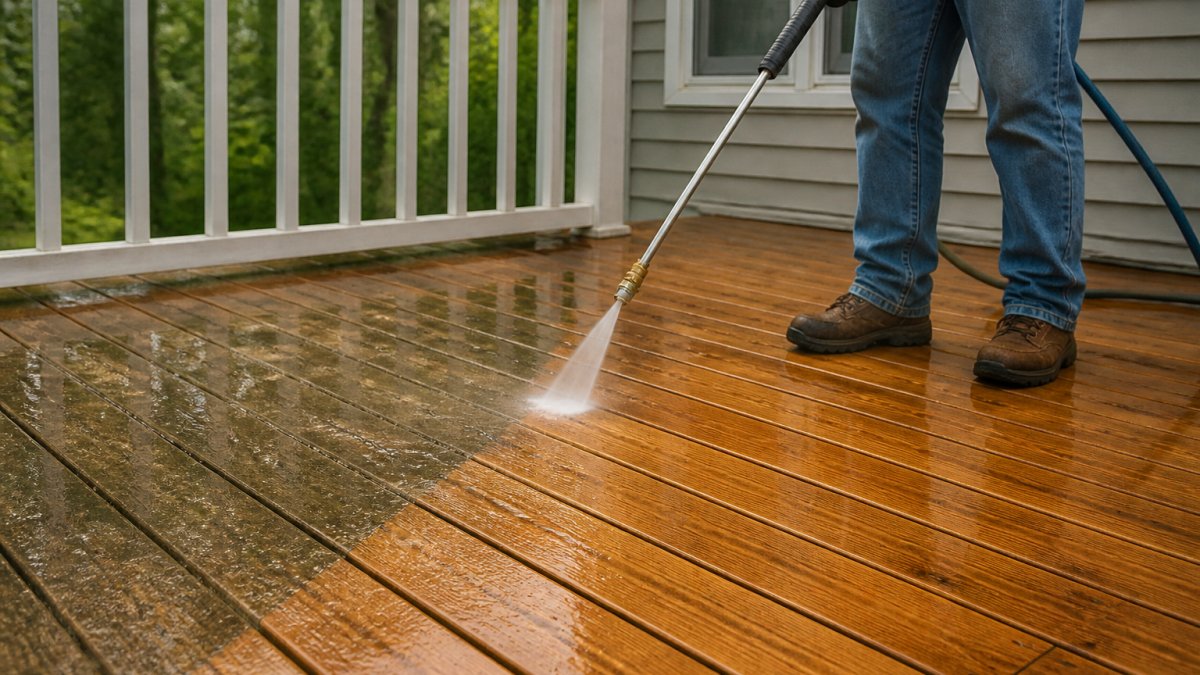
Deck pressure washing damage happens when pressure is too high, the nozzle sits too close, or the wrong tip hits the surface. Wood decks suffer most.
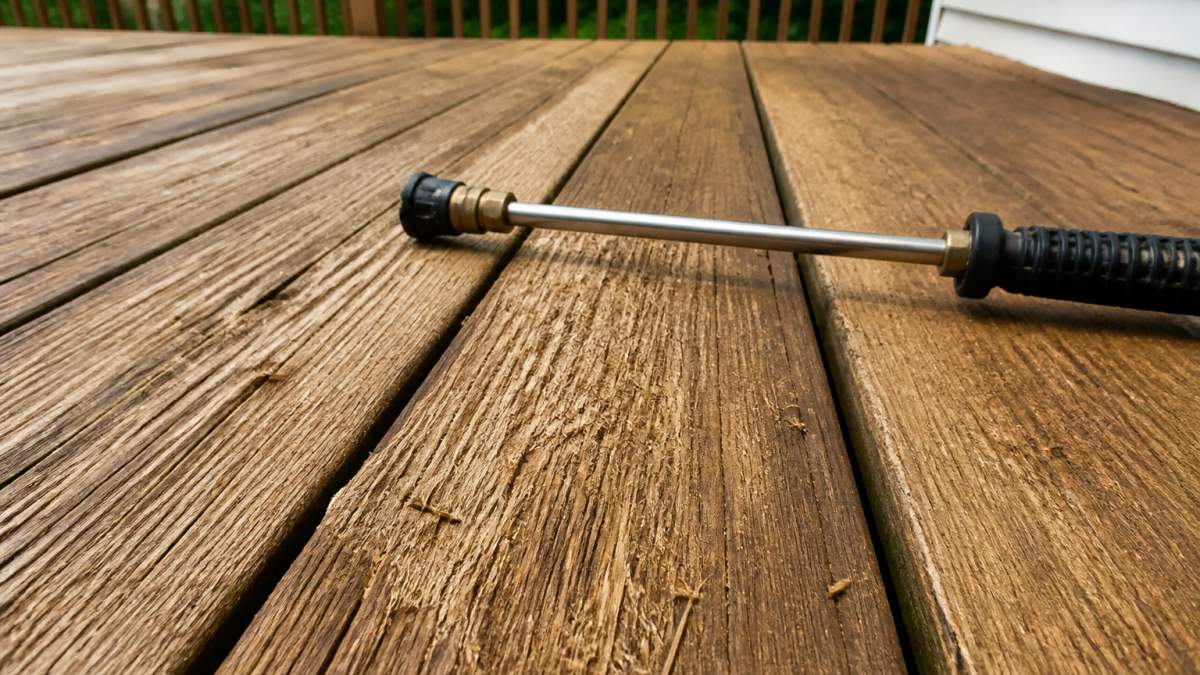
Here's what goes wrong in practice:
- Fuzzing. High pressure tears wood fibers and leaves a fuzzy surface that traps dirt.
- Gouging. A nozzle held too close carves lines into soft boards.
- Stripped finish. Pressure blasts away paint and sealer unevenly.
- Water intrusion. Forced water pushes into seams and speeds up rot.
The EPA's guidance on mold cleanup stresses controlling moisture, not blasting it into materials. Professional methods use lower pressure with wider tips and proper cleaners, so the dirt lifts without the wood taking a beating. To understand how professional pressure washing prevents damage, read the full breakdown.
Watch out: renting a pressure washer with no adjustable pressure is the single most common way homeowners damage a deck.
How Often to Clean a Deck for Maximum Lifespan
How often to clean a deck depends on exposure, but most decks need cleaning once or twice a year. A simple maintenance schedule keeps wood and composite in good shape.
- Spring: deep clean to remove winter grime and mildew.
- Fall: clear leaves and debris before moisture sets in.
- As needed: clean up spills, sap, and stains right away.
Decks under heavy shade or lots of tree cover need more frequent cleaning. Shaded boards stay damp longer, which invites mold. A quick annual inspection paired with cleaning catches small problems early.
Matching the Method to Your Deck Material
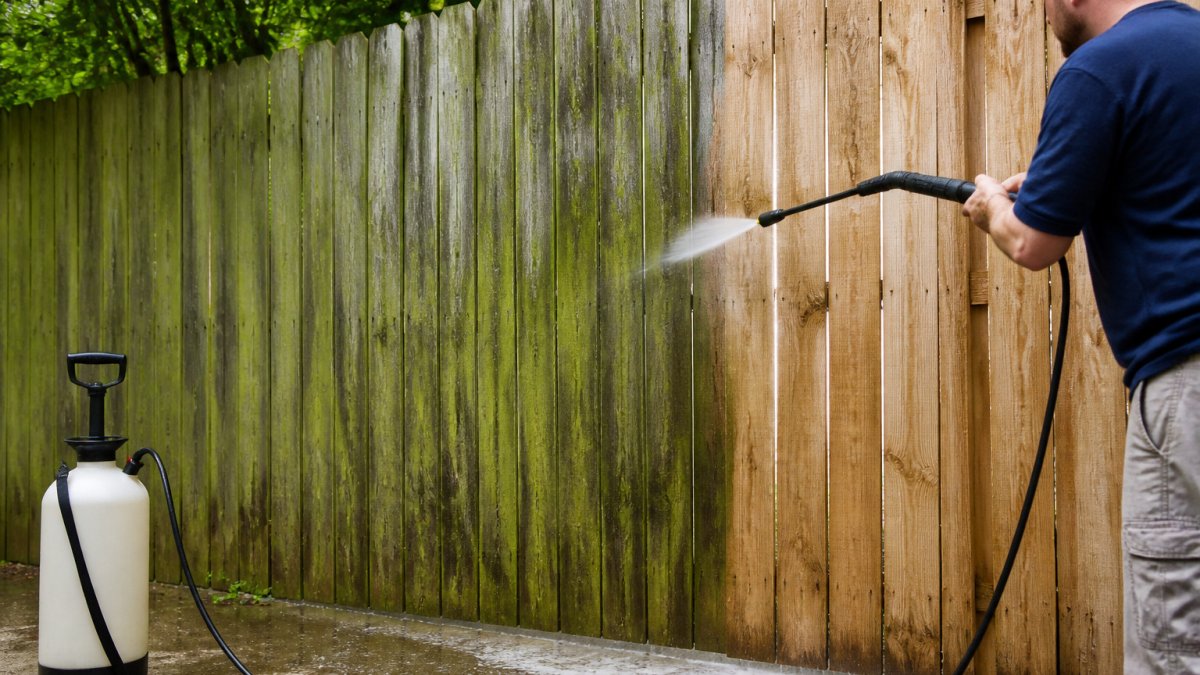
Wood deck, composite decking, and painted deck surfaces each need a different approach. Matching the method to the material is what separates a good clean from a costly mistake. For wood care beyond the deck, see professional fence cleaning that protects your fence line.
| Material | Pressure guidance | Cleaner approach | Main risk |
|---|---|---|---|
| Pressure-treated wood | Low to moderate, fan tip, keep the nozzle moving | Deck-safe detergent, oxygen bleach for mildew | Fuzzing and gouging at high pressure |
| Cedar and soft woods | Lowest pressure, wide fan, hand detailing | Gentle surfactant, avoid harsh bleach | Raised grain and tannin bleed |
| Composite decking | Low pressure only, soft brush | Manufacturer-approved cleaner | Scarring, streaking, and surface etching |
| Painted decks | Gentle wash, low pressure | Mild detergent, no aggressive strippers | Peeling paint and exposed bare wood |
| Sealed decks | Low pressure, pH-neutral cleaner | Finish-safe cleaner | Stripping the sealer prematurely |
Pressure-treated wood. This is the most forgiving common deck material, but forgiving is not the same as indestructible. The risk is fuzzing, high pressure tears the wood fibers and leaves a fuzzy surface that traps dirt and makes staining uneven.
Cedar and other soft woods. Cedar is softer and more porous than pressure-treated pine, so it needs the lightest touch. Cedar is also prone to tannin bleed, where water pulls natural color out of the wood and stains it unevenly. Gentle surfactants and controlled rinsing reduce that risk; harsh bleach can make it worse.
Composite decking. Composite is not wood, but it is not immune to damage. High pressure can scar the surface, leave permanent streaks, and drive water into end cuts and seams. Gentle, low-pressure cleaning is the safe approach, and the manufacturer's approved cleaner list should govern product choice.
Painted decks. The paint is the protective layer, and pressure is its enemy. Gentle washing removes dirt without lifting edges when done carefully. If paint is already peeling or blistering, cleaning will not fix it, the deck needs prep and repainting, and aggressive washing can make the failure worse. Test a small inconspicuous area first.
Sealed decks. A sealer or stain is a finish, not a permanent shield. Gentle cleaning generally helps preserve the finish longer. Strong cleaners and high pressure strip sealer prematurely, which means you pay for cleaning and then pay again to reseal ahead of schedule.
After the wash: drying and sealing timeline. Cleaning is step one; the follow-up determines how long the result lasts.
- Drying time: Most decks need at least 24 to 48 hours of dry weather before staining or sealing, and some dense or humid conditions push that to several days. The surface should be dry to the touch and the wood should read dry with a moisture meter before finish goes down.
- When to seal: Seal or stain only after the deck is fully dry and any repairs are complete. Sealing over damp wood traps moisture and shortens finish life.
- When to wait: New pressure-treated wood often needs a curing period before it accepts a finish well; follow the manufacturer's guidance rather than a fixed calendar.
- Maintenance cadence: Re-clean once or twice a year and inspect the finish each spring. Reapply sealer when water stops beading on the surface.
Get a Quote from Soul Cleanse
Deciding whether professional deck cleaning is worth it gets easier once you know your deck's condition. A quick assessment tells you if it needs gentle washing, stain prep, or just routine care.
We're a family-run company. Our team uses state-of-the-art equipment with highly efficient but gentle cleaning methods. We back our work with guaranteed satisfaction.
Want to learn more before you book? Read reviews and testimonials for Soul Cleanse from past customers. Visit the Soul Cleanse website to get a quote.
Frequently Asked Questions
Is it worth hiring a professional to clean a deck?
For most homeowners, yes, especially if the deck has mold, mildew, or years of built-up dirt. A professional deck cleaning service can remove growth while limiting the risk of permanent damage that can cost far more to repair.
How much does professional deck cleaning cost?
Professional deck cleaning cost depends on deck size, material, condition, and accessibility. Soul Cleanse provides quotes on request, so visit the Soul Cleanse website for current pricing or a quote. Rather than guess, request a written quote from a local provider so you can compare it directly against your DIY time and equipment costs.
Can pressure washing damage a wood deck?
Yes. Too much pressure or a nozzle held too close strips the soft grain between the boards, leaving a fuzzy surface that holds moisture and stains unevenly. It can also force water into seams and behind siding. Deck pressure washing damage is avoidable when the operator uses the right tip, keeps the wand moving, and adjusts pressure for the wood species and condition.
How often should a deck be professionally cleaned?
Most wood decks need a thorough cleaning once a year, ideally in spring before the staining season. Decks under heavy tree cover or in humid, shaded spots may need more frequent cleaning to limit mold and mildew. A consistent schedule protects the finish and extends the deck's lifespan.
Your deck is one of the most visible parts of your home, and it deserves more than a quick blast from a rented washer. Soul Cleanse brings trained staff, adjustable equipment, and a gentle approach that protects wood, composite, and paint alike. Get started with Soul Cleanse and give your deck the care that adds years to its life.