 blog
7 Ways to Remove Algae From Wood Fences
Last Updated: October 30, 2026
Quick Summary
To remove algae from wood fences, start with a gentle vinegar-and-water spray for light stains, or use a diluted bleach mix for thicker growth. Scrub with a soft brush and rinse with a garden hose. Pressure washing works too, but keep the pressure low to avoid damaging the wood.
- Mix equal parts white vinegar and water for light green stains, letting it sit about 15 minutes.
- Use one part bleach to three parts water for stubborn growth, and wear gloves and eye protection.
- Keep pressure washing under 1,500 PSI with a 25- or 40-degree tip, never a 0-degree tip.
- Never mix bleach with vinegar or other cleaners, because the combination can release harmful fumes.
- Trim plants and fix drainage so the boards dry faster and algae returns less often.
Table of Contents
- Why Algae Grows on Wood Fences and Why It Matters
- Method 1: Vinegar-and-Water Solution for Light Algae Stains
- Method 2: Bleach-and-Water Mixture for Stubborn Green Algae
- Method 3: Commercial Fungicidal Wash and Fence Cleaners
- Method 4: Pressure Washing a Wood Fence Safely
- Method 5: Remove Algae From Fence Without Pressure Washing
- Methods 6 and 7: Scrubbing Techniques and Dish Soap Mixes
- How to Prevent Algae on a Wood Fence After Cleaning
- Frequently Asked Questions
Why Algae Grows on Wood Fences and Why It Matters
Green algae on a wood fence is more than a cosmetic problem. Algae from wood fences holds moisture against the boards, and that damp surface can slowly break down the wood over time. Fences that sit in shade or stay damp after rain are especially prone to it.
Algae thrives where wood stays wet for long periods. Shaded backyards, fences near sprinkler heads, and boards that dry slowly are the usual culprits. Once the green film takes hold, it can spread across panels quickly, and it makes the fence look older and dirtier than it really is.
Knowing the cause helps you pick the right fix for algae from wood fences. Light surface stains need a gentle approach, while thick, stubborn growth may need stronger methods. The seven options below cover both situations, from household solutions to professional-grade cleaners.
Method 1: Vinegar-and-Water Solution for Light Algae Stains
White vinegar is a kitchen staple, and it works well on light green stains. Mix equal parts white vinegar and water in a spray bottle. Spray the solution onto the damp fence, let it sit for about 15 minutes, then scrub gently with a soft brush and rinse with a garden hose.
This method is cheap and easy to try first. It is also gentle on plants nearby, which makes it a good pick for fences lined with garden beds. It may take two or three rounds to clear heavier spots.
Watch out: Vinegar can lighten some wood finishes over time. Test a small hidden section before you spray the whole fence.
Here is a quick comparison of the cleaning methods covered in this guide.
| Method | Best for | Key difference |
|---|---|---|
| Vinegar-and-water | Light green stains | Gentle; may take two or three rounds |
| Bleach-and-water (1:3) | Stubborn green algae | Strong; wear gloves and eye protection |
| Commercial fungicidal wash | Fences that resist household mixes | Check the label and wood compatibility |
| Pressure washing | Heavy growth on sturdy wood | Stay under 1,500 PSI with a 25- or 40-degree tip |
| Hand scrubbing | Old or weathered wood | Gentle; slower but controllable |
| Dish soap mix | Light surface algae | Cleans but does not kill algae |
Method 2: Bleach-and-Water Mixture for Stubborn Green Algae
When vinegar falls short, a diluted bleach solution often clears thicker growth. A common mix is one part bleach to three parts water. Wet the fence first, apply the solution, let it sit for 10 to 15 minutes, then scrub and rinse thoroughly.
Bleach is strong, so protect yourself and your landscaping. Wear gloves and eye protection, and cover or soak nearby plants with plain water before you start. Never mix bleach with vinegar or other cleaners, because the combination can release harmful fumes (the CDC).
Watch out: Bleach can strip color and weaken some wood surfaces if left on too long. Rinse well and do not let the solution dry on the boards.
Method 3: Commercial Fungicidal Wash and Fence Cleaners
Commercial fence cleaners are formulated to kill algae, mold, and mildew at the root of the problem. Many are labeled for use on wood, so they can be a good match for fences that have not responded to household mixes. Read the label, follow the dilution instructions, and check that the product is safe for your type of wood.
The main advantage is convenience. A ready-to-use product saves mixing time and often includes clear application steps. Check current prices with the retailer before you buy.
Other providers also offer professional fence cleaning services that use these washes. Ask any provider what product they use and how they protect nearby plants.
Method 4: Pressure Washing a Wood Fence Safely
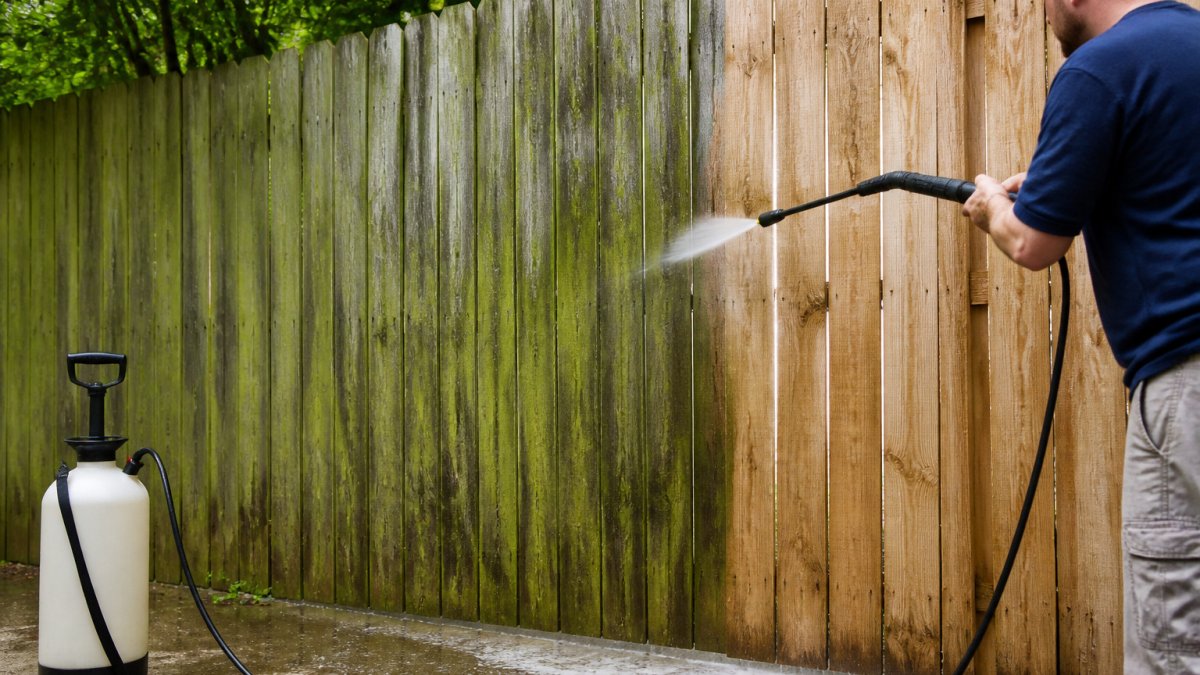
Pressure washing can strip green algae from a wood fence quickly, but it can also cause permanent damage if used incorrectly. The difference between a clean fence and a chewed-up one comes down to three variables: pressure, distance, and dwell time.
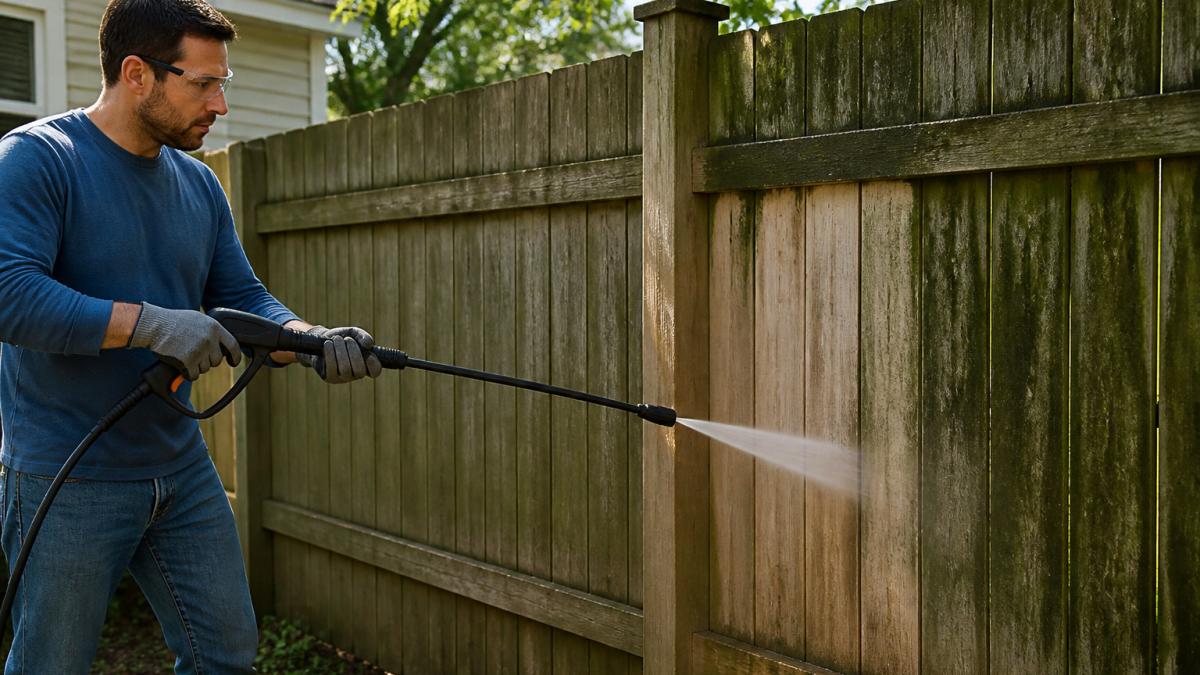
Pressure and nozzle choice. Most consumer electric pressure washers run 1,300 to 2,000 PSI, and gas units can exceed 3,000 PSI. For wood, stay at the low end, generally no more than 1,500 PSI, and use a 25-degree or 40-degree fan tip. Never use a 0-degree pinpoint tip on wood; it concentrates force into a tiny area and will gouge the grain. If your machine has an adjustable unloader, dial it down before you start.
Distance and motion. Hold the wand at least 12 inches from the boards and keep it moving in a steady sweep. Stopping in one spot, even for a second or two, can raise splinters or leave a visible stripe. Work from the bottom of each panel upward so dirty water runs down over already-cleaned wood rather than streaking the clean sections.
Wet the wood first. Pre-soaking the fence with a garden hose reduces the chance of the spray driving water into dry grain. Pair the rinse with a wood-safe fence cleaner applied by pump sprayer, let it dwell per the label, then rinse at low pressure. The cleaner does the chemical work; the pressure washer only rinses.
Match the method to the finish. Painted and solid-stained fences tolerate pressure washing better than clear-sealed or untreated wood, because the coating shields the grain. On bare or weathered cedar and pine, pressure washing can erode the soft earlywood between growth rings and leave a washboard texture. On those fences, hand scrubbing (Method 5) is the safer choice. Test a hidden section, behind a post or near the ground, before committing to the whole fence.
Let it dry before sealing. Wood needs to dry fully after washing, typically several days in warm weather, before you apply stain or sealant. Trapped moisture under a fresh coat leads to peeling and regrowth.
If the fence is old, soft, or already showing splintering, a professional with wood-specific equipment may be the lower-risk option. Ask any provider what PSI they use on wood and whether they pre-treat with a cleaner rather than relying on pressure alone.
Method 5: Remove Algae From Fence Without Pressure Washing
You do not need a pressure washer to clean a fence well. Mix a cleaning solution, apply it with a sponge or pump sprayer, and let it dwell for 10 to 15 minutes. Then scrub each board with a soft-bristled brush and rinse with a garden hose.
This approach is slower, but it is gentle on old or weathered wood. It also lets you control the work panel by panel, which helps when the fence has delicate finishes. Keep the solution wet during the dwell time so it does not dry on the surface.
If you prefer to hand this job off, professional fence cleaning services can handle it without a pressure washer. Ask whether the provider uses hand-scrubbing for older fences.
Methods 6 and 7: Scrubbing Techniques and Dish Soap Mixes
These two methods are the low-cost, low-risk end of the list, and they work best on light surface algae or as a follow-up after a chemical treatment. Used together, they cover the cases where vinegar is too weak and bleach is too aggressive.
Method 6: Scrubbing technique. The brush matters as much as the solution. Use a soft or medium natural-bristle brush on a long handle for the field of each panel, and a smaller hand brush for posts, rails, and tight corners. Always scrub in the direction of the wood grain, cross-grain scrubbing raises fibers and leaves a fuzzy surface that holds moisture. Keep the surface wet while you scrub; dry scrubbing grinds algae into the grain instead of lifting it. Work top to bottom on each panel so dirty water runs over uncleaned wood, then rinse with a garden hose. Stiff metal brushes and wire wheels scratch wood and should stay off the fence.
Method 7: Dish soap mix. Combine a squirt of mild dish soap, about one tablespoon per gallon, with warm water in a bucket. Apply with a sponge or soft brush, let it sit for five to ten minutes, scrub gently, and rinse. Dish soap is a surfactant, not a biocide: it lifts dirt and algae film but does not kill the organism, so regrowth can return faster than after vinegar or bleach. Its advantage is safety, it is gentle on most nearby plants and on painted or sealed finishes when used at low concentration.
How the two compare. Scrubbing is the labor; dish soap is the lubricant. On a lightly soiled fence, dish soap plus a soft brush may be all you need. On heavier growth, use dish soap as the carrier for a stronger active ingredient (vinegar or diluted bleach) rather than as a standalone treatment. Neither method removes deep-set green staining; for that, see the troubleshooting guidance below.
For homeowners who want the hand-scrub result without the work, ask a professional service whether they hand-scrub older or delicate fences rather than pressure washing them.
How to Prevent Algae on a Wood Fence After Cleaning
Cleaning removes the growth, but moisture brings it back. Trim plants and shrubs so air can move around the fence, and keep sprinklers from hitting the boards directly. Improve drainage around the base so water does not pool against the wood.
Sealing or staining the fence after it dries can also slow regrowth. Choose a product made for exterior wood and follow the manufacturer's directions. Most fences benefit from a fresh coat every few years, though the schedule depends on climate and sun exposure.
A regular cleaning schedule helps too. A regular cleaning schedule keeps shaded fences looking their best. Contact Soul Cleanse for a quote based on your property.
Frequently Asked Questions
Is bleach or vinegar better for removing algae from a wood fence?
Vinegar is the gentler choice and works well on light green algae, especially on newer or lightly weathered boards. Bleach acts faster on heavy growth but can lighten wood, dry out fibers, and harm nearby shrubs and grass. Dilute either one, test a hidden section first, and rinse thoroughly. For most homeowners, start with vinegar and move to a diluted bleach mix only if the stains remain after a second application.
How do you remove algae from wood without scrubbing?
Apply a cleaning solution with a garden sprayer or pump bottle, coat the surface evenly, and let it dwell for 10 to 15 minutes so the solution can loosen the growth. Many stains lift with a gentle rinse from a garden hose. For thicker growth, you may need a second application, but you can often avoid hard scrubbing altogether. Keep the solution off plants and rinse runoff away from the lawn.
Can you pressure wash algae off a wood fence?
Yes, but use a low setting. Keep the nozzle at least 12 inches from the wood, use a wide fan tip, and sweep in the direction of the boards. High pressure can raise grain, gouge soft wood, and force water into joints. Pair the wash with a cleaning solution, since pressure alone often leaves a shadow of staining. Let the fence dry completely before deciding whether to stain or seal.
How can you prevent algae from growing back on a wood fence?
Algae needs moisture and shade, so improve airflow and sunlight where possible. Trim nearby shrubs, clear debris from the base of the fence, and let the boards dry between rains. After cleaning, apply a quality exterior stain or sealer with a mildewcide, and reapply it according to the product label, typically every two to three years. Inspect the fence each spring to catch early growth.