 ultimate-guide
Commercial Pressure Washing Maintenance Plans: 2026 Guide
Table of Contents
- Why Commercial Pressure Washing Maintenance Plans Beat One-Off Cleanings
- What a Commercial Pressure Washing Contract Template Should Include
- How Often to Pressure Wash Commercial Building Exteriors
- What Drives the Cost of Commercial Pressure Washing Services
- ROI Calculation Framework: Turning Cleaning Into Asset Protection
- Sustainability and Eco-Friendly Compliance in Exterior Cleaning
- Common Mistakes Property Managers Make With Maintenance Plans
- Frequently Asked Questions
Last Updated: September 13, 2026
Why Commercial Pressure Washing Maintenance Plans Beat One-Off Cleanings
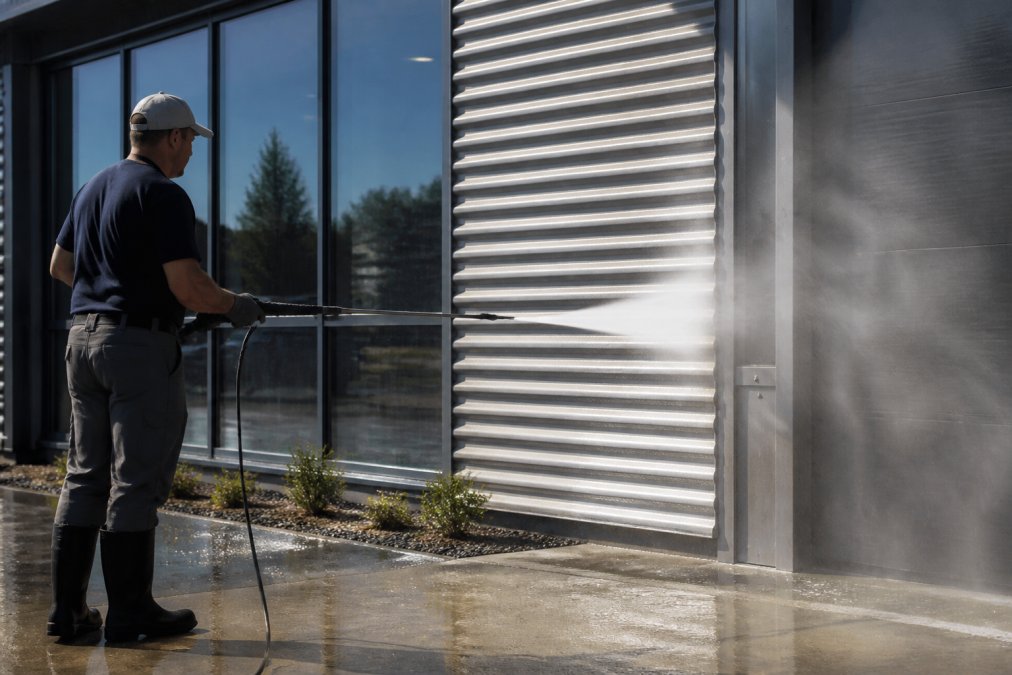
A commercial pressure washing service maintenance plan is a scheduled service agreement that keeps exterior surfaces clean on a recurring basis instead of relying on one-off cleanings. It covers sidewalks, building exteriors, dumpster pads, and parking areas on a fixed calendar, so grime never sets in.
One-off cleanings respond to a problem after it's visible; a maintenance plan prevents it from forming. Buildings on recurring schedules often look better, last longer, and can cost less to maintain over a full year.
Below, we'll break down what a strong maintenance plan includes, how often to schedule cleanings, and how to calculate whether it pays off.
The Real Cost of Neglecting Exterior Surfaces
Organic growth like mold and mildew holds moisture against siding, brick, and concrete, breaking down sealants and paint. Treating these stains as cosmetic is a mistake, they're the early signal of structural wear that gets expensive fast.
The EPA guidance on moisture and mold makes the mechanism clear: mold needs moisture to grow, and once it takes hold on a surface, it accelerates the material's deterioration. Regular cleaning removes the growth before it can do that damage.
How Recurring Service Contracts Protect Property Value
Recurring exterior cleaning protects property value by stopping deterioration before it starts. A clean building envelope can help maintain its appearance longer, and appearance is often one of the first things tenants, buyers, and inspectors notice.
There's also a liability angle. Slick walkways and algae-covered parking areas create slip-and-fall exposure. OSHA's walking-working surfaces standard treats surface conditions as a workplace safety concern, and commercial properties carry the same obligation to keep walkways safe for visitors.
For property managers juggling multiple sites, a single scheduled contract can offer operational efficiency compared to coordinating individual jobs every time something looks dirty.
What a Commercial Pressure Washing Contract Template Should Include
A commercial pressure washing contract template should spell out scope, frequency, response times, and pricing structure in writing. Vague agreements create disputes; a clear contract prevents them.
At minimum, the template should define:
- Surfaces covered (sidewalks, building exterior, dumpster pads, parking garage, gutters)
- Cleaning method for each surface (soft wash versus pressure washing)
- Service frequency and scheduling windows
- Response time for weather events or emergency calls
- Insurance and licensing documentation
- Pricing structure and payment terms
Service Level Agreements and Scheduling Flexibility
A service level agreement defines what "on time" and "done right" actually mean. It's the part most templates skip, and the part that matters when something goes wrong.
A workable SLA includes a maximum response window for unscheduled calls, a defined quality standard, and a process for missed visits. Scheduling flexibility belongs here too, high-traffic properties often need early-morning or weekend service, and the agreement should say so.
Site Assessment and Customized Service Plans
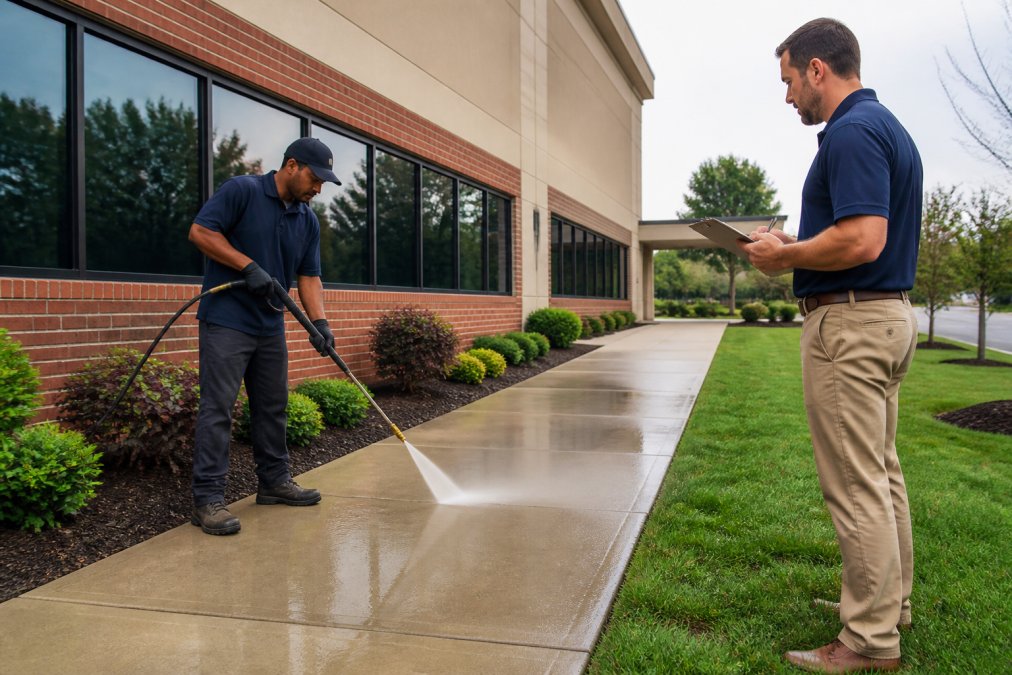
Customized service plans start with a site assessment. A walkthrough identifies which surfaces need which treatment, where drainage issues exist, and how much foot traffic each area sees.
This is where a generic quote falls apart: a single storefront needs a different plan than a multi-building complex with a parking garage. The assessment produces a plan built around the actual property.
How Often to Pressure Wash Commercial Building Exteriors
Most commercial buildings need exterior pressure washing two to four times per year, depending on climate, foot traffic, and surrounding vegetation, the right answer depends on how fast grime accumulates where you are.
Quarterly, Bi-Annual, or Annual: Choosing Your Schedule
Use this table to match frequency to your property's conditions:
| Schedule | Best For | Typical Triggers |
|---|---|---|
| Quarterly | High-traffic retail, food service, parking garages | Grease, heavy foot traffic, visible staining |
| Bi-annual | General commercial buildings, offices | Seasonal pollen, moderate traffic |
| Annual | Low-traffic warehouses, newer construction | Minimal organic growth, sheltered surfaces |
Defaulting to annual cleaning to save money can sometimes lead to paying for surface restoration later. If your property sits near trees or handles heavy traffic, quarterly or bi-annual service keeps surfaces ahead of the buildup.
Seasonal Climate-Specific Planning
Exterior grime is seasonal, so the most effective maintenance plans are built around a climate calendar, not a calendar year. Here is how the seasons drive scheduling decisions.
Winter: salt and de-icer removal. In snowy regions, road salt and de-icing chemicals are the dominant threat to concrete and masonry, corroding concrete, metal railings, and vehicle finishes. Damage is cumulative, so removal before the next freeze-thaw cycle is the priority, a late-winter or early-spring wash is standard in these markets.
Spring: pollen and organic residue. Pollen coats siding, concrete, and glass, bonding to the surface when it mixes with morning dew. Left through summer, it feeds mold and mildew, so a spring wash resets the building before the humid season begins.
Summer: mold, mildew, and algae. Warm, humid air and shaded north-facing surfaces are perfect for organic growth, driving the mid-summer pass in humid climates. Algae on walkways and parking areas is also a slip-and-fall hazard, so summer scheduling has a safety dimension, not just a cosmetic one.
Fall: gutter debris and leaf staining. Falling leaves clog gutters, and standing water backs up under the roofline and into the fascia. Leaf tannins also stain concrete and walkways, so a fall gutter clearing and surface wash protects the drainage system before winter rains arrive.
Building a Climate Calendar for Your Property
A climate-specific plan front-loads cleaning in early spring, adds a mid-summer pass for mold and mildew, and schedules gutter debris removal before fall rains. In cold-winter markets, add a late-winter salt removal pass. That rhythm can be more effective than a fixed annual date because it responds to what's happening on the surface, not a date on a contract.
What Drives the Cost of Commercial Pressure Washing Services
The cost of commercial pressure washing services depends on square footage, surface type, frequency, and access. No single number fits every property, and any provider quoting one without a site visit is guessing.
Still, refusing to discuss pricing is its own failure, facility managers need a range to build a budget line, even if the final number requires a walkthrough. Here is how the pricing math works.
The Variables That Move the Number
Pricing typically reflects:
- Total cleanable square footage. The primary driver. Providers measure actual surface area, not building footprint, because sidewalks, dumpster pads, and parking areas often exceed the building's own square footage.
- Surface materials and cleaning method. Soft washing painted wood or older masonry takes longer and uses different chemistry than flat pressure washing on concrete, raising the per-square-foot rate.
- Frequency of service. Recurring contracts lower the per-visit rate because crews route efficiently and surfaces never reach heavy restoration. A quarterly plan typically costs less per visit than four separate one-off calls.
- Accessibility. Height work, tight alleys, fenced equipment pads, and limited water access add labor time. A multi-level parking garage with drainage grates costs more per square foot than an open lot.
- Additional services. Gutter debris removal, window washing, and post-storm emergency response are usually priced as add-ons or bundled into a higher tier.
A Framework for Estimating Your Budget
Rather than chase a single national average, build your estimate from the bottom up:
- Measure cleanable area. Walk the property and note square footage for each surface type separately.
- Assign a method to each surface. Concrete flatwork, painted siding, and dumpster pads will not share a method.
- Multiply by a per-visit rate range. Ask two or three providers for their per-square-foot range for each method, then apply it to your measurements.
- Multiply by annual frequency. Quarterly means four visits; bi-annual means two.
- Add recurring add-ons. Gutter clearing and window washing should be priced as annual line items, not surprises.
Why Recurring Contracts Cost Less Per Visit
The economics can favor the property manager for a structural reason: the provider can plan. A one-off call requires mobilizing a crew, hauling equipment, and treating whatever condition the surface is in. A scheduled visit can allow the provider to route multiple properties in the same area on the same day, spreading mobilization cost across several jobs.
That efficiency is why recurring contracts can sometimes lower the per-visit rate, and why the cheapest one-off quote is not always the cheapest annual cost. A low bid that skips surface prep or uses the wrong method on delicate materials can create restoration work that dwarfs the original savings.
Getting a Real Number
Because these factors vary so widely, the most reliable way to get an accurate figure is a site assessment and a written quote itemizing each surface, method, and frequency. Soul Cleanse provides both as part of the planning process, so you know exactly what you're paying for before you sign anything.
ROI Calculation Framework: Turning Cleaning Into Asset Protection
Cleaning is an expense. Asset protection is an investment, and the difference shows up in your maintenance budget.
Use this framework to evaluate a maintenance plan:
- Estimate replacement cost. What would it cost to replace or restore your most exposed surface, such as wood siding or a concrete walkway?
- Estimate deferred cost. How much does that surface's lifespan shorten each year it goes uncleaned?
- Estimate prevention cost. What does a year of scheduled cleaning cost for that surface?
- Compare. If prevention costs less than the annualized loss in surface life, the plan pays for itself.
Many property managers find the math lands clearly in favor of recurring service once they run it. The GSA's guidance on preventive maintenance supports the same principle for facilities generally: planned maintenance extends asset life and reduces long-term repair spending.
Sustainability and Eco-Friendly Compliance in Exterior Cleaning
Eco-friendly exterior cleaning comes down to what runs off the surface and where it goes.
Wash water carries dirt, mold spores, and cleaning residue. On a commercial site, that runoff can reach storm drains, and many municipalities regulate what enters them. The EPA stormwater program outlines how commercial properties are expected to manage discharge.
A responsible plan addresses this directly: soft wash methods use lower pressure and less water, reducing runoff volume, and controlling where water flows while avoiding harsh chemicals near landscaping keeps the property compliant. Ask any provider how they handle runoff before you sign.
Common Mistakes Property Managers Make With Maintenance Plans
The biggest mistake can be treating exterior cleaning as reactive. Waiting until surfaces look bad can mean paying for restoration instead of maintenance.
Other frequent errors:
- Skipping the site assessment. Without one, you get a generic plan that misses problem areas.
- Choosing the cheapest quote. Low bids can sometimes mean less thorough work or inadequate insurance. It's advisable to ask for proof of coverage and references first.
- Ignoring scheduling flexibility. A plan that can't accommodate your busy season can create gaps when you need coverage most.
- No written SLA. Verbal agreements fall apart. Get response times and quality standards in the contract.
- Overlooking soft wash for delicate surfaces. High pressure on the wrong material can cause damage. The method should match the surface.
Exterior maintenance is easy to postpone until the damage is done. The fix is a plan that runs on a schedule instead of a reaction. Soul Cleanse builds customized maintenance plans around each property, using gentle but highly efficient methods and state-of-the-art equipment to protect surfaces rather than wear them down. As a family-run company serving Marshall County, we handle everything from storefronts to multi-property portfolios on a recurring schedule. Get a quote and find out what a plan built for your property looks like.
Frequently Asked Questions
How much do you charge for commercial pressure washing?
Pricing depends on square footage, surface type, frequency, and accessibility. A 2,000 sq ft storefront with quarterly service costs less per visit than a multi-level parking garage cleaned monthly. Soul Cleanse provides free site assessments and custom quotes based on your property's specific needs. Contact us for current pricing tailored to your building.
What should be included in a commercial pressure washing maintenance plan?
A solid plan covers building envelope cleaning, walkway and sidewalk washing, parking garage maintenance, dumpster pad degreasing, gutter debris removal, and window washing. It should specify service frequency, surface-specific methods like soft wash for siding, and a commercial pressure washing contract template outlining scope, scheduling flexibility, and liability reduction terms.
How often should commercial properties be pressure washed?
Most commercial properties benefit from quarterly or bi-annual cleaning. High-traffic storefronts and restaurants may need monthly dumpster pad and walkway cleaning. Buildings with heavy tree cover or mold and mildew issues often require quarterly service. A site assessment determines the right frequency based on your exterior surfaces, local climate, and foot traffic.
How do maintenance plans help extend the lifespan of building materials?
Regular exterior building cleaning can remove mold, mildew, and pollutants that can break down siding, brick, and concrete over time. Preventative maintenance can stop organic growth before it can cause surface restoration needs. This asset protection approach can reduce long-term cost savings by avoiding premature repairs and can preserve the building envelope for years longer than reactive cleaning allows.