 how-to
Removing Oil Stains From Concrete Driveway: A 2026 Guide
Table of Contents
- Why Oil Stains Are Stubborn and What Determines Your Approach
- What You Need Before You Start: Supplies and Safety Gear
- Step 1: Blot Fresh Spills and Choose the Right Absorbent
- Step 2: Choosing the Best Concrete Degreaser for Driveway Stains
- Step 3: How Long to Let Degreaser Sit on Concrete (Dwell Time)
- Step 4: Scrubbing, Rinsing, and Pressure Washing Oil Stains Away
- Troubleshooting Stubborn Stains and Protecting Your Driveway Afterward
- When DIY Fails: Signs You Need Professional Help
- Frequently Asked Questions
Last Updated: September 9, 2026
Why Oil Stains Are Stubborn and What Determines Your Approach
Removing oil stains from concrete driveway surfaces is a challenge because concrete is naturally porous, meaning spilled oil penetrates below the surface rather than sitting on top. Once the hydrocarbon soaks into the slab, it bonds with the material, and the longer it sits, the deeper it travels and the harder it becomes to extract (concrete.org). We see driveways across Marshall County every week, and the single biggest factor that determines whether a stain comes out is not the product you buy, but how quickly you act after the spill.
The age of the stain dictates your entire strategy. Fresh spills, under a few days old, respond well to simple absorbents and degreasers. Older, embedded stains from months of vehicle drips require a combination of chemical penetration, mechanical scrubbing, and often a pressure washer to flush the oil out of the pores. Before you spend money on any cleaning solution, identify whether the stain is fresh or set-in, because the approach for one will waste time on the other.
What You Need Before You Start: Supplies and Safety Gear
Gather your supplies first so the job goes smoothly once you start. For fresh spills, you need an absorbent material like kitty litter, baking soda, or sawdust. For older stains, you need a commercial degreaser, a stiff-bristle brush, and access to a water source or pressure washer.
Safety gear is non-negotiable when working with chemical cleaners. Wear chemical-resistant gloves, safety glasses, and old clothes or boots you do not mind ruining. Many degreasers are alkaline or solvent-based, and direct skin contact can cause irritation. Work in a well-ventilated area, and check the product label for specific handling instructions from the manufacturer.
Step 1: Blot Fresh Spills and Choose the Right Absorbent
Act immediately when a fresh spill occurs. Cover the oil generously with an absorbent material such as clay kitty litter, baking soda, or commercial oil absorbent. Press the material into the spill with your foot or a board to maximize contact, then let it sit for several hours or overnight.
The absorbent works by wicking the liquid oil out of the concrete pores through capillary action. Sweep up the saturated material and dispose of it properly; oil-soaked absorbent should go in a sealed bag in the trash, not down a storm drain. For the best chance at full removal, repeat the absorbent application once or twice before moving on to chemical treatments.
Step 2: Choosing the Best Concrete Degreaser for Driveway Stains
For stains that have set in, the best concrete degreaser for driveway use is a product specifically formulated to emulsify hydrocarbons. Look for a degreaser labeled as biodegradable and safe for concrete, and check whether it is alkaline-based, which works well on most motor oils, or solvent-based, which is stronger but requires more caution.
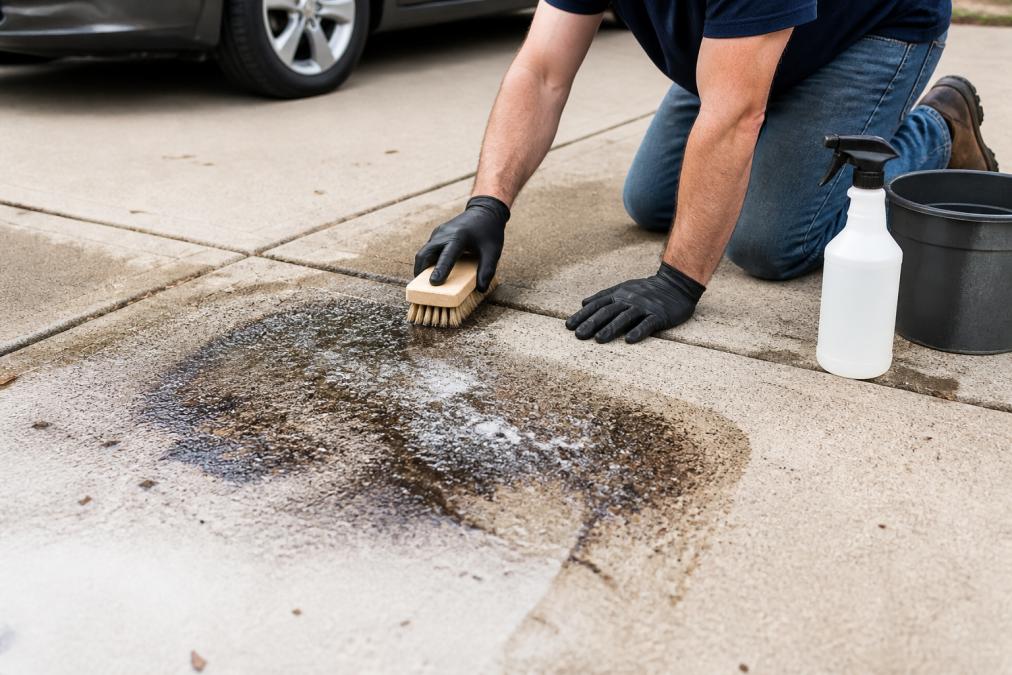
Apply the degreaser directly to the dry stain and work it into the surface with your brush. The goal is to break the surface tension between the oil and the concrete so the cleaner can penetrate the pores. Many homeowners make the mistake of using dish soap, which only cleans the surface and leaves the embedded oil untouched. A dedicated degreaser is designed to lift the oil out of the slab rather than just wash the top layer.
Step 3: How Long to Let Degreaser Sit on Concrete (Dwell Time)
The dwell time, or how long to let degreaser sit on concrete, is the most critical step in the entire process. Most quality degreasers need between 15 and 30 minutes to penetrate and break down the oil, but you should always follow the specific timing on the product label.
Do not let the degreaser dry out completely. If the surface starts to dry, lightly mist it with water to keep it active. The chemical reaction that emulsifies the oil takes time, and rushing this step is the most common reason a stain survives the first attempt. A good rule of thumb is to wait until the degreaser visibly changes the appearance of the stain, often turning it lighter or foamier, before you begin scrubbing.
Step 4: Scrubbing, Rinsing, and Pressure Washing Oil Stains Away
After the dwell time, scrub the area vigorously with a stiff-bristle brush. The mechanical action is what lifts the emulsified oil out of the pores, so do not skip this step. Work in a circular motion and apply firm pressure, focusing on the darkest part of the stain. For larger areas, a long-handled scrub brush saves your back and gives you more leverage.
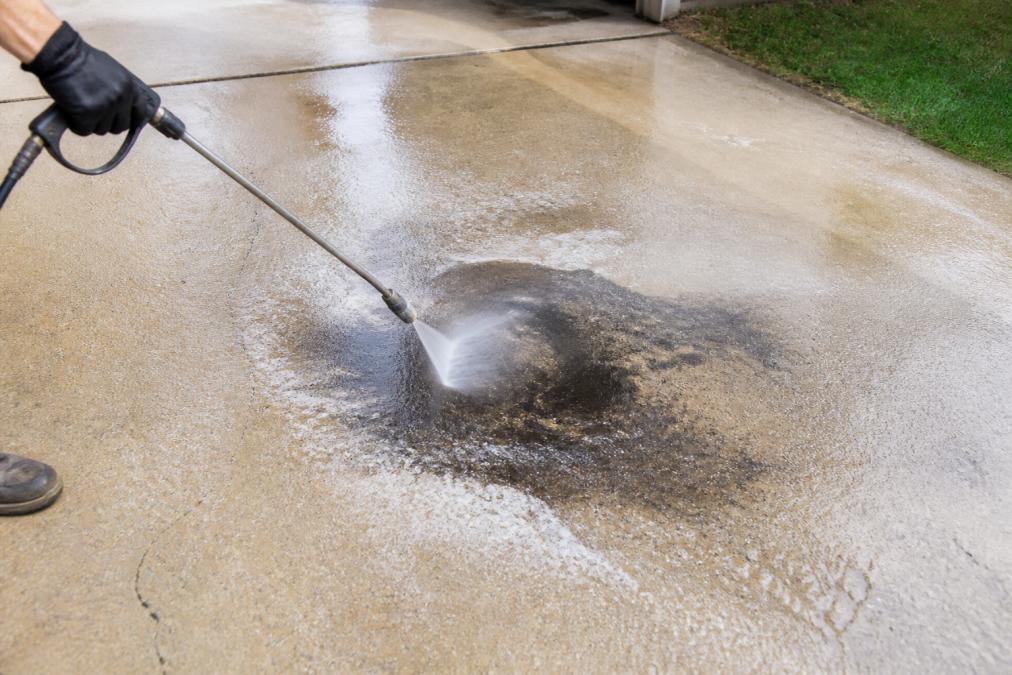
Once you have scrubbed the entire area, rinse thoroughly. Pressure washing oil stains is the most effective rinsing method because the high-pressure water flushes the dissolved oil out of the concrete pores. If you do not own a pressure washer, a garden hose with a high-pressure nozzle can work, but expect to repeat the degreaser and scrub process a few more times to achieve the same result. Always rinse from the clean edge of the stain toward the center to avoid spreading the oil.
Managing Runoff: A Critical Step Most Guides Skip
Here is where most DIY guides stop, but responsible cleanup requires thinking about where that rinse water goes. The water that runs off your driveway is now carrying dissolved oil, degreaser chemicals, and heavy metals. In the United States, this runoff is classified as a potential pollutant under the Clean Water Act, and discharging it directly into storm drains is prohibited in many municipalities because storm drains often lead untreated to local waterways (the EPA).
A common pattern is for homeowners to let the rinse water flow across the lawn or into a gravel area. This is not a safe disposal method either. The oil and chemicals can contaminate soil and eventually reach groundwater. Instead, contain the runoff where possible. Use a wet/dry vacuum to collect the rinse water from smaller stains, or block the flow with a length of rubber weatherstripping or a rolled-up towel and direct it into a bucket or sump area where it can be disposed of properly.
Eco-Friendly Alternatives to Harsh Chemicals
If you are concerned about the environmental impact of solvent-based degreasers, you have effective alternatives. Citrus-based degreasers, often labeled with d-limonene as the active ingredient, break down oil without the harsh fumes of petroleum-based solvents. Enzyme-based cleaners are another option; they use biological agents to digest the oil over a longer period, usually requiring multiple applications and a longer dwell time of several hours.
For a truly low-impact approach, a mixture of baking soda and a small amount of water forms a paste that can lift light stains, though it requires more elbow grease. Another practical method is using a poultice of sawdust or kitty litter saturated with a citrus degreaser, which pulls the oil out as it dries. These options are safer for your lawn, your garden, and the local water table, and they reduce the risk of damaging nearby plants that harsh chemicals can kill.
If you use a pressure washer, be mindful of the pressure setting. Consumer-grade units typically deliver between 1,500 and 2,500 PSI, which is sufficient for this task. Exceeding that range, or using a commercial unit without experience, can etch the concrete surface or create divots, permanently damaging the driveway. Start at a lower pressure and increase only if needed, keeping the nozzle at least 12 inches from the surface and moving in a sweeping motion.
Troubleshooting Stubborn Stains and Protecting Your Driveway Afterward
If the stain remains after your first full treatment, do not assume the concrete is ruined. Reapply the degreaser and extend the dwell time, or try a poultice method where you mix the degreaser with an absorbent powder into a paste and let it dry overnight. The drying process pulls the oil out of the concrete as the moisture evaporates.
Why a Stain Might Survive Your Best Effort
Before you repeat the process, understand why the stain is still there. The most common reason is depth. Oil that has penetrated more than a quarter-inch into the concrete is beyond the reach of surface-applied degreasers. In this case, no amount of scrubbing will help; you need a poultice that draws the oil out from deep within the slab.
Another reason is incomplete dwell time. If the degreaser dried out before you scrubbed, the chemical reaction stopped prematurely. Reapply and keep the surface misted with water for the full duration listed on the label. A third possibility is that the stain is not oil at all. Rust from metal furniture or tools, or a dark residue from tire rubber, requires a different treatment. Rust responds to oxalic acid-based cleaners, while tire marks often need a stronger solvent or a specialized rubber remover (the CDC).
The Missing Final Step: Sealing Your Concrete
Once the stain is gone, the job is not finished. Most guides stop at cleaning, but the real long-term value comes from protecting the surface so you never have to repeat this ordeal. Sealing your concrete driveway after cleaning is the single most effective way to prevent future oil from penetrating the pores.
A penetrating sealer is the right choice for driveways. Unlike a topical acrylic sealer that sits on the surface and can peel or become slippery when wet, a penetrating sealer soaks into the concrete and bonds with the material. It does not change the appearance of the driveway, does not create a glossy finish, and it blocks oil and water from soaking in. Products containing silanes or siloxanes are the most common penetrating sealers for exterior concrete. They are breathable, meaning moisture inside the slab can still escape, which prevents cracking from trapped water during freeze-thaw cycles.
Apply the sealer only after the concrete is completely dry, which can take 24 to 48 hours after rinsing. Check the weather forecast; the sealer needs a dry day with no rain for at least 12 hours after application. Use a pump sprayer or a roller to apply an even coat, and follow the manufacturer's coverage rate, typically around 200 to 400 square feet per gallon depending on the porosity of the concrete.
Remember that removing oil stains from concrete driveway surfaces is often a multi-attempt process, and patience with repeated applications usually wins. But once you have won, seal the surface to lock in your work and protect your driveway for years to come.
When DIY Fails: Signs You Need Professional Help
Some stains are simply too deep or too large for home treatments. If you have tried a degreaser and scrubbing multiple times without visible improvement, or if the stain covers a large area from a long-term leak, professional equipment is likely needed. Industrial-grade pressure washers can heat the water and use specialized cleaning solutions that break down oil more effectively than some consumer products.
For property owners in Marshall County preparing a home for sale, a stained driveway can be a noticeable negative during showings. A professional service like Soul Cleanse uses state-of-the-art equipment and skilled techniques to remove embedded oil stains. Our gentle yet highly efficient methods preserve the integrity of your driveway while restoring its appearance, helping you enhance curb appeal and avoid the cost of a full driveway replacement.
Frequently Asked Questions
Is it possible to remove old oil stains from concrete?
Yes, old oil stains are removable, but they require more effort than fresh spills. As oil penetrates the porous surface, it needs a solvent or degreaser to break the bond and time to dwell. For stains that have set for months, you may need to repeat the treatment process. A poultice, which is a paste that draws oil out, can also be effective. If these methods fail, professional pressure washing equipment might be necessary to extract the embedded stain.
What is the best household cleaner for oil on concrete?
For a DIY approach, a heavy-duty degreaser is more effective than standard household cleaners. Look for a product labeled as a degreaser, ideally one that is biodegradable and safe for concrete. Baking soda or kitty litter can absorb fresh spills, but they won't break down the oil. For set-in stains, a commercial alkaline or solvent-based degreaser is often the best choice because it can emulsify the oil so water can rinse it away.
How long should I leave a poultice on an oil stain?
A poultice needs adequate time to draw the oil out of the concrete, which typically means leaving it on for 24 to 48 hours. The paste should be applied thickly over the stain and covered with plastic sheeting to prevent it from drying out too quickly. As it dries, it pulls the oil from the pores. After the waiting period, remove the plastic, let the poultice dry completely, and then sweep it up. You may need a second application for heavy stains.
Will pressure washing alone remove oil stains from my driveway?
Pressure washing alone is rarely enough to remove an oil stain because water and oil do not mix. The force of the water can clean the surface, but it cannot break down the oil that has penetrated the concrete. To effectively remove the stain, you must first apply a chemical degreaser to emulsify the oil, allowing it to be rinsed away. Pressure washing then serves as the final step to flush out the residue and clean the surrounding area.
Tackling a stubborn oil stain takes the right sequence of absorbents, the best concrete degreaser for driveway conditions, and enough dwell time to break the bond. When DIY efforts fall short, professional pressure washing from Soul Cleanse offers a reliable solution that protects your concrete and boosts your property's value. Get a quote today and let our family-run team handle the stains that will not budge.