 How-to
Budget for Commercial Exterior Maintenance: A 7-Step Guide
Table of Contents
- Step 1: Define Your Exterior Maintenance Scope
- Step 2: Assess Preventative vs. Reactive Maintenance Costs
- Step 3: Calculate Commercial Building Maintenance Cost Per Square Foot
- Step 4: Build a Preventative Maintenance Checklist for Commercial Properties
- Step 5: Understand Commercial Pressure Washing Service Pricing
- Step 6: Create Your Annual Maintenance Calendar and Budget Allocation
- Step 7: Account for Emergency Repairs and Inflation Adjustments
- Frequently Asked Questions
Last Updated: October 2, 2026
Step 1: Define Your Exterior Maintenance Scope
Your commercial exterior maintenance budget starts with a clear picture of what actually needs cleaning and upkeep. Most property managers skip this step and guess at costs later. That's how budgets blow up.
Exterior maintenance scope means identifying every surface, system, and area outside your building that requires regular attention. This includes:
- Building facades (brick, siding, stucco, stone)
- Roofing and gutters
- Parking lots and driveways
- Sidewalks and entryways
- Windows and glass surfaces
- Landscaping and grounds
- Dumpster pads and service areas
- Loading docks and exterior stairs
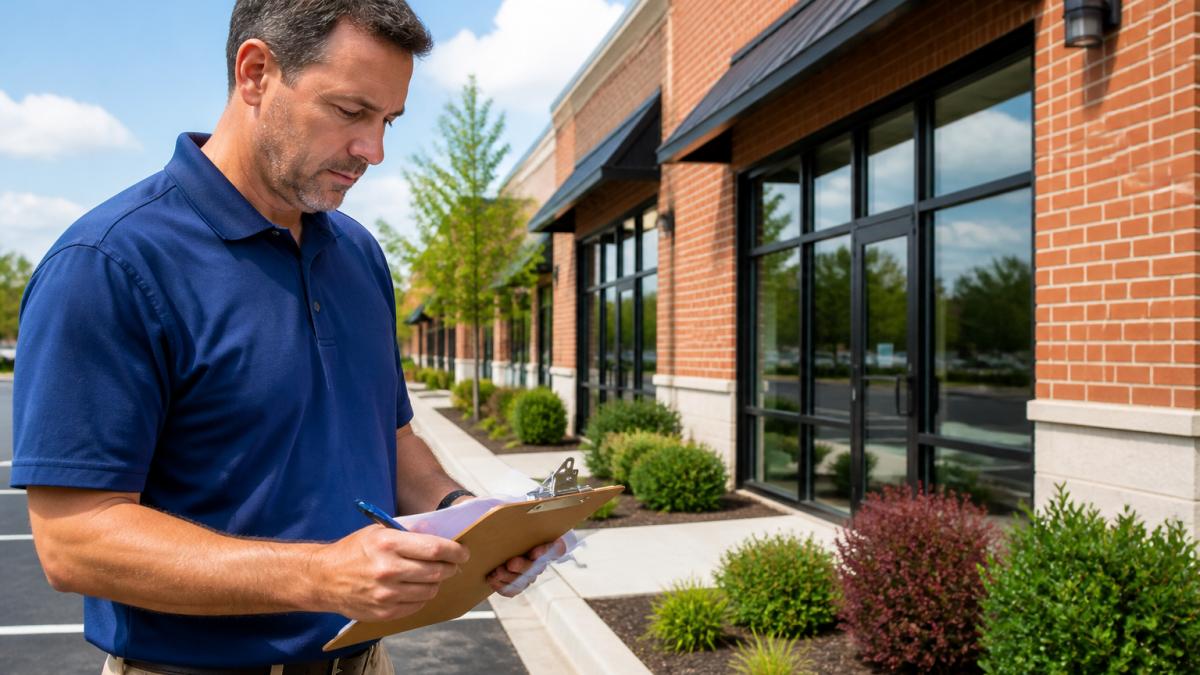
Walk your property with a checklist. Note which surfaces show dirt, mold, mildew, or staining. Document problem areas like shaded spots that stay damp or high-traffic zones that accumulate grime faster.
Properties with defined maintenance scopes typically stay cleaner longer because the team knows exactly what to prioritize each season. Without this clarity, you're reacting to visible problems instead of preventing them.
Your scope also determines which cleaning methods work best. Pressure washing works for concrete and hardy surfaces. Gentler methods protect delicate materials like cedar siding or aged brick. Knowing your materials upfront saves costly mistakes.
Step 2: Assess Preventative vs. Reactive Maintenance Costs
The biggest budget mistake is treating all maintenance the same. Preventative maintenance and reactive repairs cost very differently, and the choice between them shapes your entire annual budget.
Preventative maintenance stops problems before they start. You clean gutters twice yearly before leaves clog them. You pressure wash the parking lot before stains become permanent. You treat mold on siding before it spreads into the building envelope.
Reactive maintenance happens after damage appears. A clogged gutter causes water damage to fascia. Permanent stains require aggressive cleaning that costs more. Mold spreads inside walls, creating expensive structural repairs.
The math is straightforward: preventative work costs less than emergency repairs. A regular cleaning schedule prevents the costly damage that forces you to shut down operations or face liability claims.
When budgeting, allocate funds for both approaches. Set aside money for scheduled cleanings (preventative) and a separate emergency fund for unexpected damage (reactive). This dual approach keeps you prepared without overspending.
Your commercial exterior maintenance budget should reflect this reality. Properties that invest in preventative schedules report fewer emergency calls and lower total maintenance costs over five years.
Step 3: Calculate Commercial Building Maintenance Cost Per Square Foot
Understanding cost per square foot gives you a realistic baseline for your commercial exterior maintenance budget. This metric lets you compare your spending to industry norms and catch overspending early.
Cost per square foot accounts for the size of your property. A 5,000-square-foot building requires different spending than a 50,000-square-foot facility. Breaking costs into per-square-foot figures makes budgets comparable across properties of different sizes.
To calculate this:
- Identify your total building footprint (exterior square footage)
- Add annual cleaning and maintenance costs
- Divide total costs by square footage
Example: A 10,000-square-foot commercial building with annual maintenance costs of $3,000 equals $0.30 per square foot annually.
Properties with regular maintenance schedules typically fall within predictable cost ranges. Your actual costs depend on:
- Building materials (brick costs more to maintain than vinyl)
- Local climate (rainy regions need more gutter cleaning)
- Property condition (older buildings often cost more)
- Foot traffic levels (high-traffic areas need frequent cleaning)
Tracking cost per square foot across multiple properties reveals patterns. If one building costs twice as much per square foot as similar buildings, something needs attention. Maybe the cleaning schedule is too frequent, or maybe surfaces need preventative treatment.
Soul Cleanse can help property managers establish realistic per-square-foot baselines by assessing actual conditions and recommending appropriate cleaning frequencies. This prevents both underspending (which leads to damage) and overspending (which wastes budget).
Step 4: Build a Preventative Maintenance Checklist for Commercial Properties
A preventative maintenance checklist for commercial properties transforms vague intentions into specific, trackable tasks. Without a checklist, "maintain the exterior" stays abstract. With one, your team knows exactly what to do each month.
Your checklist should organize tasks by season and frequency. Some items need quarterly attention. Others require monthly checks. A few demand weekly inspection during problem seasons.
Spring tasks:
- Clear winter debris from gutters and downspouts
- Inspect for ice damage on roofing
- Check parking lot for winter salt damage
- Pressure wash building entrance areas
- Inspect landscaping for storm damage
Summer tasks:
- Monitor for mold growth in shaded areas
- Clean windows and glass surfaces
- Inspect parking lot for cracks expanding in heat
- Check irrigation systems for leaks
- Power wash high-traffic sidewalk areas
Fall tasks:
- Heavy gutter cleaning before winter
- Inspect roofing for loose or damaged shingles
- Pressure wash building facade
- Check drainage around foundation
- Trim trees away from building and roof
Winter tasks:
- Monitor for ice dam formation
- Clear snow and ice from walkways
- Check for salt damage on metal surfaces
- Inspect for water intrusion during freeze-thaw cycles
Assign responsibility for each task.
Document what you find at each inspection. Note which areas need cleaning urgently and which can wait. This data feeds directly into your annual budget, making costs predictable rather than reactive.
Step 5: Understand Commercial Pressure Washing Service Pricing
Pressure washing costs depend on several variables:
-
Surface type. Concrete costs less to clean than brick or stone. Delicate surfaces require gentler equipment, which takes longer and costs more.
-
Square footage. Larger areas cost less per square foot because equipment setup time is spread across more space.
-
Condition. Heavily stained or moldy surfaces require multiple passes or specialized treatments, increasing cost.
-
Frequency. Regular customers often negotiate better rates than one-time jobs.
-
Equipment and method. Professional-grade equipment and eco-friendly treatments cost more than basic pressure washing.
-
What pressure levels they use (prevents surface damage)
-
Whether they use eco-friendly cleaning solutions
-
How long results typically last
-
What surfaces they recommend cleaning annually versus quarterly
Your commercial exterior maintenance budget should reflect professional-grade service, not bargain basement pricing. The difference between $500 and $2,000 for a parking lot cleaning often reflects method quality, not greed.
Step 6: Create Your Annual Maintenance Calendar and Budget Allocation
Sample annual allocation:
- Spring cleaning and inspection: 20% of budget
- Summer monitoring and spot cleaning: 15% of budget
- Fall heavy cleaning and preparation: 30% of budget
- Winter monitoring and emergency response: 15% of budget
- Contingency for unexpected issues: 20% of budget
Your calendar should show:
- What gets cleaned each month
- Estimated cost for each task
- Who performs the work
- When to schedule (book services in advance)
- Success metrics (how to know if cleaning worked)
Review your calendar quarterly. Did actual costs match estimates? Did cleaning frequencies prevent problems? Adjust next year's calendar based on what you learned. Over time, your calendar becomes increasingly accurate.
Step 7: Account for Emergency Repairs and Inflation Adjustments
Common factors driving cost increases:
- Labor wage increases
- Fuel and equipment costs
- Material price fluctuations
- Supply chain disruptions
- Regulatory compliance costs
Soul Cleanse can help property managers review spending patterns and adjust budgets for inflation. Regular communication about cost factors, fuel surcharges, labor increases, material shortages, keeps budgets realistic and prevents mid-year surprises.
Frequently Asked Questions
What is the average annual budget for commercial exterior maintenance?
Commercial exterior maintenance budgets vary based on property size, condition, and climate. The actual cost depends on the condition of the building envelope, hardscape surfaces, and whether preventative maintenance is prioritized. Contact Soul Cleanse for a customized assessment of your specific property's maintenance needs.
How often should commercial exterior surfaces be professionally cleaned?
Most commercial properties benefit from professional exterior cleaning 2-4 times annually, depending on weather, foot traffic, and surface type. High-traffic storefronts and properties in humid climates may need quarterly cleaning to prevent mold and mildew buildup. Parking lots and hardscape areas typically require annual or semi-annual attention. Regular cleaning extends the lifespan of materials, maintains curb appeal, and prevents costly damage from deferred maintenance.
Should my commercial maintenance budget include a contingency fund for emergency repairs?
Yes. Industry best practice is to allocate 10-20% of your annual maintenance budget as an emergency fund for unexpected repairs. This covers reactive repairs from weather damage, equipment failures, or deferred maintenance issues that surface unexpectedly. Without a contingency buffer, a single emergency repair can derail your entire fiscal plan and compromise property value and asset management goals.
What is the difference between preventative and reactive maintenance budgeting?
Preventative maintenance involves scheduled, routine care like regular pressure washing and inspections to catch problems early. Reactive maintenance is emergency repairs made after damage occurs. Preventative maintenance costs less long-term because routine cleaning prevents mold, staining, and material deterioration. Reactive repairs are often 3-5 times more expensive and can damage property value.